Uncategorized

The Psychology Behind Gaming Addiction – A Scientific Perspective

As you explore into the world of gaming, you may find yourself wondering what drives your behavior and motivates you to continue playing. You might ask yourself why you feel an overwhelming urge to keep gaming, even when it starts to interfere with your daily life. Your curiosity is valid, and understanding the psychological factors at play can help you make sense of your actions and develop a healthier relationship with gaming.

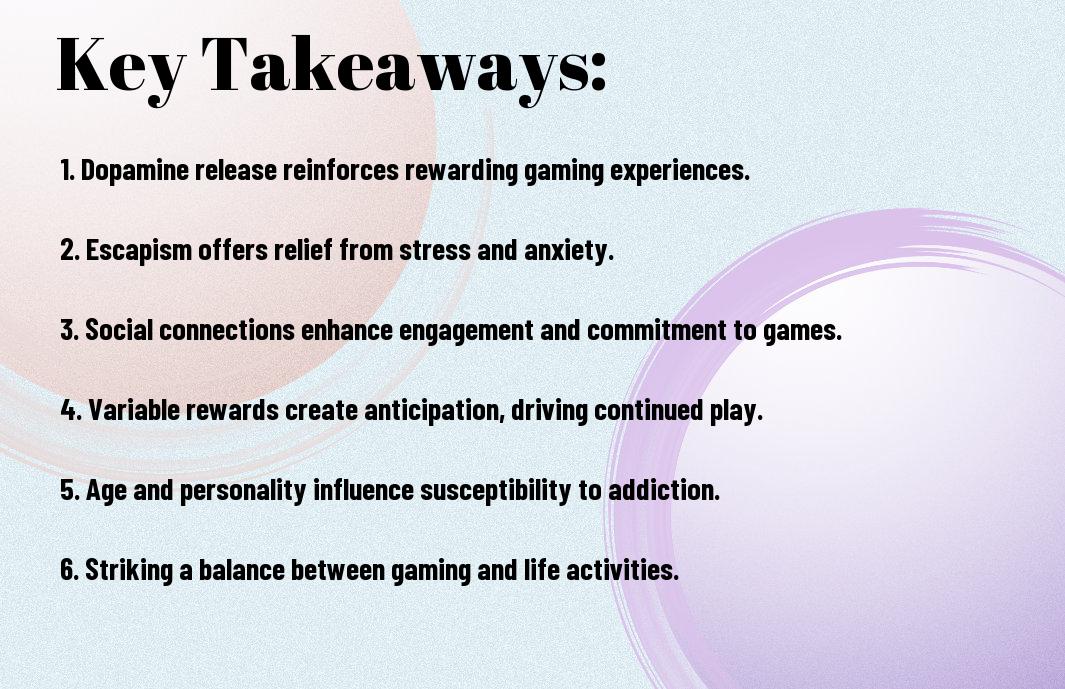
Key Takeaways:

  • The brain’s reward system plays a significant role in gaming addiction, as games activate the release of dopamine, a neurotransmitter associated with pleasure and motivation, leading to a cycle of craving and consumption.
  • Gaming addiction can be classified as a behavioral addiction, sharing similarities with substance use disorders, and can have negative effects on mental and physical health, relationships, and daily life.
  • Personal characteristics, such as personality traits, coping mechanisms, and life experiences, can contribute to an individual’s susceptibility to gaming addiction, making some people more prone to addictive behaviors.
  • Social interactions and online communities can both positively and negatively impact gaming habits, as social support and camaraderie can enhance the gaming experience, but also facilitate excessive gaming and social isolation.
  • Cognitive factors, including attention, perception, and decision-making, are affected by gaming, and can lead to a state of “flow,” where gamers become fully engaged and immersed in the game, losing track of time and neglecting other responsibilities.
  • Neuroplasticity, the brain’s ability to reorganize and adapt, is influenced by gaming, and can lead to long-term changes in brain structure and function, particularly in regions related to reward, motivation, and impulse control.
  • Treatment and prevention strategies for gaming addiction should focus on a multidisciplinary approach, incorporating psychological, social, and environmental factors, and addressing underlying issues, such as stress, anxiety, and low self-esteem, to promote healthy gaming habits and overall well-being.

Brain Chemistry and Gaming

For a deeper understanding of gaming addiction, it’s imperative to explore the brain chemistry involved. You’ll discover that gaming affects your brain’s reward system, releasing feel-good chemicals that can lead to addiction.

Dopamine Release Patterns

Any time you engage in a rewarding activity, such as gaming, your brain releases dopamine, a neurotransmitter associated with pleasure and motivation. You experience a surge of excitement and satisfaction, encouraging you to continue playing.

Neural Reward Systems

Above all, neural reward systems play a significant role in gaming addiction. You see, your brain is wired to respond to rewards, and gaming provides a constant stream of rewards, activating your brain’s reward system and releasing dopamine.

Gaming activates the same neural pathways as other addictive behaviors, releasing dopamine and creating a feeling of pleasure and satisfaction. As you continue to game, your brain adapts, requiring more stimulation to achieve the same feeling, leading to a cycle of addiction that can be challenging to break. You may find yourself spending more time gaming, neglecting other aspects of your life, and experiencing withdrawal symptoms when you try to stop.
Behavioral Patterns

Any gamer can develop habits that lead to addiction, as you explore the psychology behind gaming addiction. You can learn more about this topic by visiting The Psychology of Video Games: Current Research on Video Games and Learning to understand the underlying factors.

Compulsive Gaming Cycles

Along with the thrill of gaming, you may experience compulsive cycles that drive your behavior, leading to extended gaming sessions and neglect of daily responsibilities.

Time Displacement Effects

Gaming can lead to time displacement effects, where you spend more time playing games than engaging in other activities, affecting your daily routine and social interactions.

Even as you enjoy gaming, you should be aware of the potential time displacement effects, which can impact your work, relationships, and overall well-being, making it vital to maintain a balance between gaming and other aspects of your life.

Risk Factors

All individuals can be susceptible to gaming addiction, but certain factors increase your risk. Consider the following:

  • Family history
  • Mental health
  • Social environment
  • After understanding these factors, you can better assess your vulnerability.

    Psychological Predispositions

    Besides your personality, psychological traits like stress and anxiety can contribute to your susceptibility. You may find that your emotional state plays a significant role in your gaming habits.

    Environmental Triggers

    By surrounding yourself with gaming opportunities, you increase your chances of developing an addiction. You should be aware of the potential risks in your environment.

    It is imperative to recognize that environmental triggers, such as social pressures and accessibility of games, can significantly influence your behavior. You need to consider how your surroundings affect your gaming habits and take steps to mitigate potential risks, ensuring you maintain a healthy balance in your life.

    Social Impact

    Unlike other addictions, gaming addiction can have a significant impact on your social life, affecting your relationships and daily interactions with others.

    Relationship Deterioration

    Prior to the onset of gaming addiction, you may have had strong, healthy relationships, but as your addiction progresses, you may find yourself withdrawing from social interactions and neglecting your loved ones.

    Academic/Professional Decline

    Beneath the surface of your gaming addiction, your academic or professional performance may be suffering, as you spend more time gaming and less time focusing on your responsibilities and goals.

    Further, as your addiction takes hold, you may find that your decline in academic or professional performance has serious consequences, such as poor grades, job loss, or missed opportunities, ultimately affecting your overall well-being and future prospects, making it crucial for you to seek help and address your gaming addiction.

    Digital Environment

    Once again, you find yourself immersed in the digital world, where the boundaries between reality and fantasy blur. To understand this phenomenon, you can explore the psychology of video game addiction, which sheds light on the underlying factors contributing to your gaming habits.

    Game Design Elements

    Apparently, the design of games influences your behavior, with elements such as rewards, challenges, and social interactions shaping your experience and encouraging you to continue playing.

    Psychological Manipulation

    Digitally, you are exposed to various techniques that can manipulate your behavior, including personalized notifications, emotive soundtracks, and persuasive storytelling, all of which can impact your emotional state and decision-making.

    For instance, you may notice that certain games use psychological manipulation to keep you engaged, such as variable rewards, social pressure, or emotional investment, which can activate your brain’s reward system and motivate you to continue playing, often at the expense of other aspects of your life, and it’s imperative to be aware of these tactics to maintain control over your gaming habits and overall well-being.

    Treatment Approaches

    Many treatment approaches are available to help you overcome gaming addiction, and it’s crucial to find the one that suits your needs. You can explore various options, including therapy, support groups, and self-help strategies, to manage your addiction effectively.

    Cognitive Behavioral Interventions

    Alongside other treatments, cognitive behavioral interventions can help you identify and change negative thought patterns and behaviors associated with gaming addiction, allowing you to develop healthier habits and improve your overall well-being.

    Digital Detox Methods

    Detaching from digital devices and gaming platforms can be an effective way for you to break the cycle of addiction, and digital detox methods can provide you with a much-needed break from the constant stream of gaming-related stimuli.

    Also, as you consider digital detox methods, you may want to explore options such as device-free zones, app blockers, or scheduled downtime, which can help you establish a healthier balance between your gaming habits and other aspects of your life, allowing you to regain control over your behavior and make positive changes.

    To wrap up

    The psychology behind gaming addiction is a complex issue that affects your life in various ways. As you investigate into the world of gaming, you become aware of the factors that contribute to your addiction. You understand that your brain chemistry, social interactions, and emotional state all play a role in your gaming habits. By recognizing these factors, you can take control of your gaming experience and make informed decisions about your behavior, ultimately improving your overall well-being.

    FAQ

    Q: What are the underlying psychological factors that contribute to gaming addiction?

    A: From a scientific perspective, gaming addiction can be attributed to a combination of psychological factors, including dopamine release, social interaction, and escapism. Dopamine, a neurotransmitter associated with pleasure and reward, is released in abundance during gaming, particularly when players experience accomplishments or achievements. This can create a cycle of craving and consumption, as individuals seek to recreate the feeling of pleasure. Additionally, online gaming communities provide a sense of belonging and social connection, which can be particularly appealing to individuals who struggle with social interactions in real life. Lastly, gaming can serve as an escape from stress, anxiety, or other negative emotions, leading to a pattern of avoidance and reliance on gaming as a coping mechanism.

    Q: How does the brain’s reward system contribute to gaming addiction?

    A: The brain’s reward system, which is mediated by the release of dopamine, plays a significant role in gaming addiction. When gamers experience rewards, such as leveling up, completing challenges, or receiving loot, their brain releases dopamine, reinforcing the behavior and motivating them to continue playing. This can lead to a phenomenon known as operant conditioning, where the behavior is repeated in anticipation of the reward. Furthermore, the variable ratio schedule of rewards in many games, where rewards are provided at unpredictable intervals, can activate the brain’s reward system, releasing dopamine and encouraging continued play. This can result in a state of hypofrontality, where the prefrontal cortex, responsible for decision-making and impulse control, is diminished, leading to impulsive and compulsive behavior.

    Q: Can gaming addiction be treated, and what are the most effective interventions?

    A: Yes, gaming addiction can be treated, and a comprehensive approach that incorporates multiple interventions is often the most effective. Cognitive-behavioral therapy (CBT) has been shown to be particularly effective in addressing gaming addiction, as it helps individuals identify and challenge negative thought patterns and behaviors associated with gaming. Additionally, family therapy can be beneficial in addressing underlying relationship issues and developing strategies for supporting the individual in their recovery. Other interventions, such as mindfulness-based therapies, self-help groups, and medication, may also be useful in addressing underlying mental health issues, such as anxiety or depression, that may be contributing to the gaming addiction. A multidisciplinary approach, incorporating the support of mental health professionals, family, and friends, is often necessary to achieve lasting recovery from gaming addiction.

Building Community – The Power of Forums and Social Media in Gaming

As you navigate the world of online gaming, you’re likely aware of the significant role that community plays in enhancing your experience. You’ve probably encountered forums and social media platforms where gamers gather to share tips, discuss strategies, and connect with like-minded players. Your participation in these online spaces can greatly impact your gaming journey, allowing you to access valuable resources, get feedback, and build lasting relationships with fellow gamers, ultimately enriching your overall gaming experience.

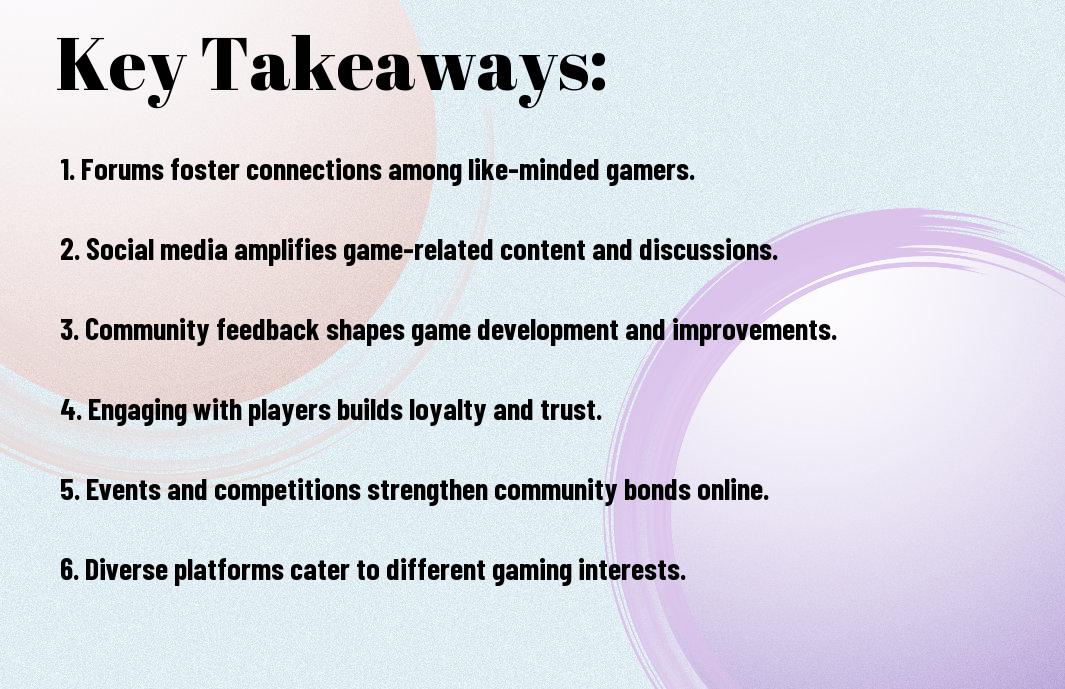
Key Takeaways:

  • Building a strong community around a game can significantly enhance player engagement and loyalty, with forums and social media serving as primary tools for fostering connections among players.
  • Forums provide a dedicated space for players to discuss game-related topics, share tips, and collaborate, which can lead to a sense of belonging and investment in the game.
  • Social media platforms can be leveraged to share updates, behind-the-scenes content, and developer insights, helping to build a personal connection between the development team and the player base.
  • Effective community management is vital for maintaining a positive and inclusive environment, with moderators and community managers playing a key role in resolving conflicts and encouraging constructive discussion.
  • Player-generated content, such as fan art and cosplay, can be a powerful indicator of a game’s community strength, and can be encouraged through social media campaigns and community challenges.
  • Analytics and feedback from social media and forums can provide valuable insights for game development, allowing developers to identify areas for improvement and make data-driven decisions.
  • By fostering a strong community, game developers can create a loyal player base that will advocate for the game, provide support, and drive long-term success through word-of-mouth and online reviews.

The Evolution of Gaming Communities

Before the rise of modern social media, gaming communities were limited to in-person interactions and online forums. You likely encountered these communities through your favorite games or gaming websites.

Traditional Gaming Forums

Among the earliest forms of online gaming communities, traditional forums allowed you to connect with fellow gamers, share tips, and discuss your favorite games. Your interactions were often limited to text-based posts and replies.

Modern Social Media Platforms

Along with the growth of social media, your options for connecting with other gamers have expanded exponentially. You can now join groups, follow influencers, and share your gaming experiences with a global audience.

But as you explore deeper into modern social media platforms, you’ll find that they offer more than just basic connectivity. You can participate in live streams, join discussions, and even collaborate with other gamers on content creation, allowing you to become an integral part of a vibrant and dynamic community that transcends geographical boundaries.

Forum Culture and Community Building

You are likely aware that online forums play a significant role in shaping the culture of your gaming community. By participating in discussions and engaging with others, you can help create a positive and inclusive environment that fosters meaningful interactions and relationships.

Moderator Roles and Guidelines

Behind every successful forum is a team of dedicated moderators who work tirelessly to ensure that discussions remain respectful and on-topic. You will notice that moderators enforce guidelines and rules to maintain a positive atmosphere, allowing you to focus on sharing your thoughts and ideas with others.

User Engagement Patterns

Around the clock, users are engaging with your forum, sharing their experiences and opinions on various topics. You can observe how users interact with each other, forming friendships and collaborating on projects, which helps to build a sense of community and belonging.

But as you investigate deeper into the world of user engagement patterns, you will discover that there is more to it than just posting and responding. You can analyze the types of content that generate the most engagement, the times of day when users are most active, and the ways in which users respond to different topics and discussions, allowing you to refine your community-building strategies and create a more engaging experience for your users.

Social Media Impact on Gaming

Now, as you explore the world of gaming, you’ll notice that social media plays a significant role in shaping your experience. You can connect with fellow gamers, share tips, and stay updated on the latest developments in the gaming community.

Real-time Interaction Benefits

Following your engagement with social media, you’ll find that real-time interactions enhance your gaming experience. You can discuss strategies, participate in live events, and get instant feedback from your peers.

Content Sharing Dynamics

One of the key aspects of social media in gaming is the way it facilitates content sharing. You can share your achievements, screenshots, and videos with your friends and followers, creating a sense of community and camaraderie.

It allows you to showcase your gaming personality, and as you share your content, you’ll notice that it helps to build your reputation and attract like-minded gamers to your network, enabling you to discover new games, learn from others, and stay connected with your gaming community.

Community Management Strategies

To build a thriving community, you need to understand the power of forums and social media in gaming, as discussed in Are forums limited to gamers and tech communities? to create a strong foundation for your community.

Fostering Positive Environments

Alongside this, you’ll want to focus on fostering positive environments where your community members feel welcome and valued, which can be achieved by setting clear guidelines and encouraging respectful interactions.

Conflict Resolution Methods

Methods for resolving conflicts in your community are vital, and you should establish a clear process for addressing issues and disputes in a fair and transparent manner.

The key to effective conflict resolution is to remain neutral and listen to all parties involved, allowing you to make informed decisions that benefit your community as a whole, and you can achieve this by setting up a system that encourages open communication and provides a clear channel for your members to voice their concerns.

Cross-Platform Integration

All gamers know that a unified gaming experience is key to building a strong community. You can connect with others across different platforms, sharing tips and strategies to enhance your gaming experience.

Connecting Different Communities

The ability to connect with gamers from various backgrounds and platforms is a significant advantage of cross-platform integration, allowing you to learn from others and share your own knowledge.

Unified Gaming Experiences

Before stepping into the world of cross-platform gaming, you should consider the benefits of a unified experience, where you can play with friends regardless of their platform, creating a more inclusive and engaging community.

A key aspect of unified gaming experiences is the ability to access your game progress and account information across all platforms, allowing you to pick up where you left off on any device, and you can enjoy a seamless gaming experience, free from the constraints of a single platform, giving you the freedom to play with your friends whenever and wherever you want.

Future of Gaming Communities

Your gaming experience is about to get a whole lot more interactive, with forums and social media playing a significant role in shaping the future of gaming communities, enabling you to connect with others and share your passion for gaming.

Emerging Technologies

Evolving technologies are changing the way you interact with others in the gaming world, with advancements in virtual and augmented reality set to further enhance your online gaming experience and create new opportunities for community building.

Community-Driven Development

Between the lines of code and the screens, you are helping to shape the future of gaming, with your feedback and input influencing the development of new games and features, allowing you to have a say in what you want to see in your favorite games.

Future gaming communities will rely heavily on your input, as developers increasingly turn to you for feedback and guidance on game development, ensuring that the games you play are tailored to your needs and preferences, and that you have a stake in the gaming experience.

Summing up

On the whole, you now understand the significance of forums and social media in building a gaming community. You have seen how these platforms can enhance your gaming experience, allowing you to connect with others, share tips, and stay updated on the latest developments. By leveraging these tools, you can expand your social circle, improve your skills, and become an integral part of a vibrant community that shares your passions. Your participation can help foster a sense of belonging and camaraderie.

FAQ

Q: What is the role of forums in building a gaming community?

A: Forums provide a dedicated space for gamers to discuss their favorite games, share tips and strategies, and connect with like-minded individuals. They offer a platform for users to create and engage with content, such as threads, posts, and polls, which helps to foster a sense of belonging and community. By participating in forums, gamers can build relationships, collaborate on projects, and stay updated on the latest developments in the gaming world.

Q: How can social media be utilized to enhance the gaming community experience?

A: Social media platforms, such as Twitter, Facebook, and Instagram, can be leveraged to expand the reach and engagement of a gaming community. By creating official social media accounts, game developers and community managers can share updates, behind-the-scenes content, and exclusive promotions, which helps to build hype and encourage user-generated content. Additionally, social media enables gamers to connect with each other, share their gaming experiences, and participate in online events, such as live streams and Q&A sessions, which further strengthens the sense of community.

Q: What are the benefits of combining forums and social media in building a gaming community?

A: Combining forums and social media offers a powerful synergy that can amplify the growth and engagement of a gaming community. By integrating these two platforms, gamers can seamlessly transition between in-depth discussions on forums and real-time interactions on social media, creating a holistic and immersive community experience. This integration also enables community managers to share content across multiple platforms, reach a broader audience, and track user engagement more effectively, ultimately leading to a more vibrant, diverse, and loyal gaming community.

The Business of Gaming – Revenue Models in the Digital Age

As you research into the world of gaming, you’ll notice the industry’s rapid evolution, driven by innovative revenue models. You’re likely aware that the gaming sector has become a significant player in the digital economy, with your favorite games generating substantial revenue through various channels. Your understanding of these models will help you appreciate the complexity and sophistication of the gaming industry, and how it continues to shape the way you engage with games and the digital landscape as a whole.

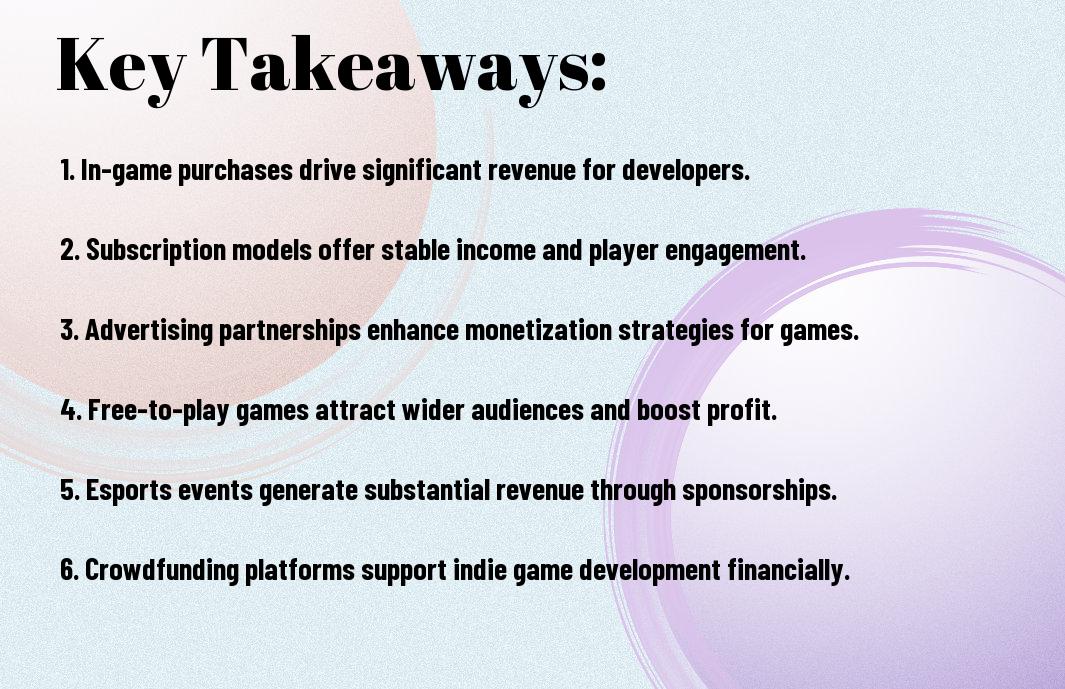
Key Takeaways:

  • The video game industry has shifted towards digital distribution, offering new revenue streams and changing the way games are monetized, with many companies adopting subscription-based models and in-game purchases.
  • Free-to-play games have become increasingly popular, generating revenue through microtransactions, advertising, and sponsored content, allowing players to play for free while still contributing to the game’s revenue.
  • Games as a service (GaaS) has emerged as a dominant business model, where games are treated as ongoing services with continuous updates, expansions, and new content, providing a steady stream of revenue for game developers.
  • Esports and competitive gaming have created new revenue opportunities, including sponsorships, advertising, and media rights, with many companies investing heavily in esports teams and events.
  • Virtual goods and in-game items have become a significant source of revenue, with many players willing to pay for customization options, exclusive content, and other digital items, driving the growth of the virtual goods market.
  • Cloud gaming is changing the way games are consumed, allowing players to access high-quality games on any device with an internet connection, and opening up new revenue streams for game developers and publishers.
  • The use of data analytics and player behavior tracking has become vital for game developers, allowing them to optimize their games, identify new revenue opportunities, and create more engaging experiences for players, driving business growth and profitability.

Traditional Gaming Revenue Models

For decades, the gaming industry has relied on various revenue models to generate income. You will notice that these models have evolved over time, adapting to changes in technology and consumer behavior.

One-Time Purchase Model

Generally, you will find that the one-time purchase model involves buying a game outright, giving you full ownership and access to the content. You can play the game as many times as you want without incurring additional costs.

Physical Distribution and Retail

With the rise of digital distribution, you may think that physical distribution and retail are becoming obsolete. You will still find that many gamers prefer to purchase physical copies of games from retail stores, often due to concerns about digital rights management or simply for the tactile experience of owning a physical copy.

In addition, you should consider that physical distribution and retail also involve the sale of gaming consoles, accessories, and merchandise, which can be a significant source of revenue for game developers and publishers, allowing you to explore various revenue streams and maximize your profits.

Digital Transformation in Gaming

If you’re invested in the gaming industry, you’ve likely noticed the significant shift towards digital platforms, offering you a range of new opportunities for revenue and engagement.

Digital Distribution Platforms

To take advantage of the digital landscape, you can utilize platforms like Steam and the App Store, which provide you with a direct line to your target audience and a means to manage your game’s distribution effectively.

Cloud Gaming Services

After adopting cloud gaming, you’ll find that it allows you to play high-quality games on various devices, eliminating the need for expensive hardware and enabling you to access your games from anywhere.

Transformation of the gaming industry through cloud services means you can now enjoy seamless gaming experiences without the hassle of downloads or updates, giving you more time to focus on what matters most – the gameplay itself, and as you explore this new frontier, you’ll discover how it opens up new avenues for social interaction and community building within the gaming world.

Modern Monetization Strategies

Keep in mind that the gaming industry has evolved, and you can explore various revenue streams, as discussed in Current Revenue (Monetisation) Models of Video Game Developers research, to maximize your earnings.

Free-to-Play Model

Among the popular models, you’ll find the free-to-play approach, where you offer games at no initial cost, generating revenue through ads or in-game purchases, allowing you to attract a large player base.

Microtransactions and Virtual Goods

Microtransactions enable you to buy or sell virtual items, enhancing your gaming experience, and you can purchase these goods using real money, providing an additional revenue stream for game developers.

The use of microtransactions and virtual goods has become increasingly popular, as you can purchase customizations, bonuses, or exclusive content, and game developers can offer these items to generate ongoing revenue, encouraging you to continue playing and investing in the game, which can lead to a significant increase in your overall gaming expenditure.

Subscription-Based Gaming

Many gamers are familiar with subscription-based gaming, which offers access to a library of games for a monthly fee. You can learn more about Revenue models for video games and how they impact your gaming experience.

Gaming Service Platforms

Betwixt the various options, you’ll find that gaming service platforms like Xbox Game Pass and PlayStation Now offer a wide range of games for a flat monthly fee, allowing you to play your favorite titles without having to purchase them outright.

Cross-Platform Subscriptions

By exploring cross-platform subscriptions, you can enjoy a seamless gaming experience across multiple devices, including consoles, PCs, and mobile devices, with your progress and saves synced across all platforms.

For instance, with cross-platform subscriptions, you can start playing a game on your console and pick up where you left off on your mobile device, making it easier to fit gaming into your busy schedule, and allowing you to make the most of your subscription, as you can play your favorite games wherever and whenever you want.

Mobile Gaming Economics

Your mobile gaming experience is shaped by various revenue models, and understanding these models is imperative to navigating the digital gaming landscape.

Ad-Based Revenue

Following the rise of mobile gaming, ad-based revenue has become a significant source of income for developers, allowing you to play games for free while being exposed to advertisements.

Hybrid Monetization Models

One of the most effective ways to generate revenue in mobile gaming is through hybrid monetization models, which combine different revenue streams to create a more sustainable income source for you.

Hybrid models allow you to choose how you want to engage with the game, whether through in-app purchases, subscriptions, or ads, giving you more control over your gaming experience and allowing developers to cater to different player preferences.

Emerging Revenue Streams

Now, as you explore the evolving landscape of gaming revenue, you’ll notice a shift towards innovative and diverse streams. Your understanding of these models will help you navigate the industry’s growth.

Esports and Competitive Gaming

Following the rise of professional gaming, you’ll find that esports and competitive gaming have become significant revenue generators. Your involvement in these areas can lead to new opportunities for sponsorship and engagement.

Content Creator Economy

Above the traditional revenue models, the content creator economy has emerged as a powerful force. Your ability to create and distribute content can help you tap into this lucrative market.

Plus, as you research deeper into the content creator economy, you’ll discover that platforms like Twitch and YouTube have given rise to a new generation of gaming personalities and influencers. Your participation in this space can help you build a loyal following and generate revenue through subscriptions, donations, and sponsorships, allowing you to monetize your passion for gaming.

To wrap up

Hence, as you examine into the business of gaming, you will find that understanding revenue models is key to your success. You will need to consider your target audience and develop strategies that cater to their preferences. By doing so, you can create a profitable and sustainable business in the digital age, maximizing your revenue and staying ahead of the competition, ultimately driving your gaming business forward.

FAQ

Q: What are the different revenue models used in the digital gaming industry?

A: The digital gaming industry utilizes various revenue models to generate income, including subscription-based models, where players pay a recurring fee to access premium content or services, and free-to-play models, which offer games for free but generate revenue through in-game purchases or advertisements. Additionally, some games employ a pay-to-play model, where players buy the game outright, and others use a freemium model, which provides a basic version of the game for free and charges for additional features or content.

Q: How do in-game purchases and microtransactions contribute to the revenue of digital games?

A: In-game purchases and microtransactions have become a significant source of revenue for digital games, allowing players to buy virtual items, currency, or other digital goods. These transactions can be made using real money and are often used to enhance gameplay, customize characters, or access exclusive content. The revenue generated from in-game purchases can be substantial, with some games earning millions of dollars from these transactions alone. Game developers use various strategies to encourage players to make in-game purchases, such as offering limited-time discounts, exclusive items, or bonus rewards.

Q: What role does esports play in the revenue generation of digital games, and how do game developers monetize esports events?

A: Esports has become a significant aspect of the digital gaming industry, with professional teams and players competing in organized tournaments and leagues. Game developers can generate revenue from esports events through various means, including sponsorship deals, advertising, and ticket sales. Additionally, some games offer virtual goods or items that are specific to esports events, such as custom skins or accessories, which can be purchased by players. Game developers also partner with esports organizations to create exclusive content, such as branded tournaments or game modes, which can attract new players and increase engagement. The popularity of esports has created new revenue streams for game developers, and its growth is expected to continue in the coming years.

How Streaming Platforms Are Changing the Way We Play

As you explore the world of gaming, you’re likely noticing a significant shift in how you access and enjoy your favorite games. Your gaming experience is being revolutionized by streaming platforms, which are transforming the way you play, interact, and connect with others. You can now play high-quality games on various devices, at any time, and with greater flexibility than ever before, giving you unparalleled freedom to play your way.

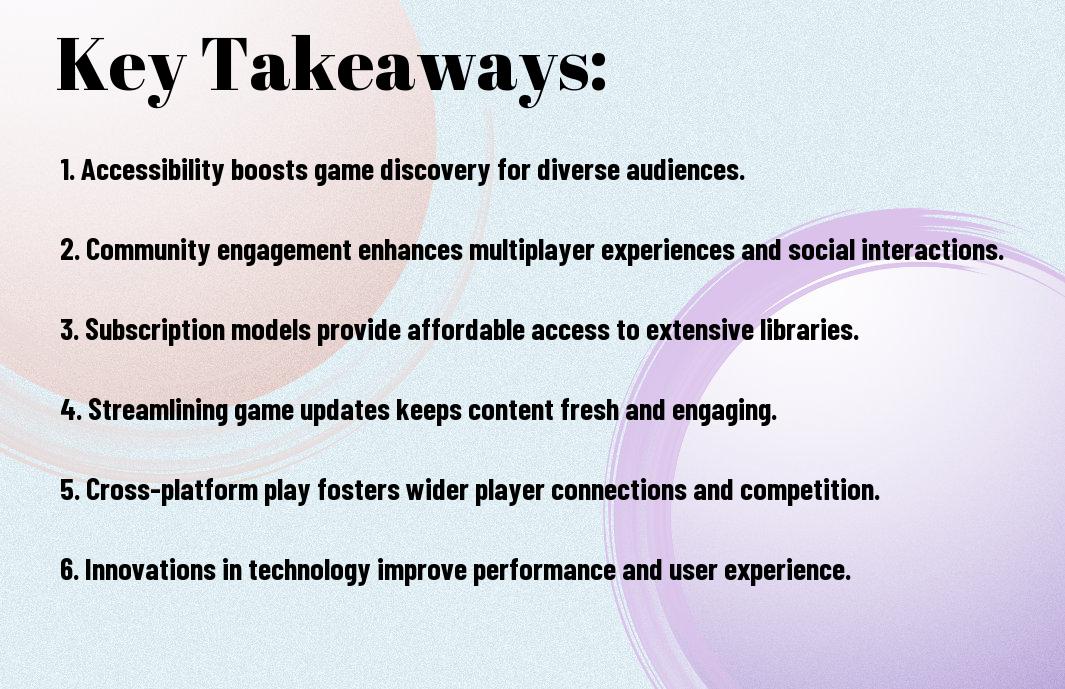
Key Takeaways:

  • Streaming platforms have revolutionized the gaming industry by providing users with instant access to a vast library of games, eliminating the need for physical copies or lengthy downloads.
  • The rise of cloud gaming has enabled players to access high-quality games on various devices, including smartphones, tablets, and smart TVs, without the need for expensive hardware.
  • Streaming services have also changed the way games are developed, with many developers now focusing on creating games that are optimized for streaming, with faster loading times and more efficient gameplay.
  • The shift to streaming has also led to new business models, such as subscription-based services, which provide users with access to a library of games for a flat monthly fee.
  • Streaming platforms have also enabled new forms of social interaction, such as live streaming and online multiplayer, which have become increasingly popular among gamers.
  • The growth of streaming has also led to increased competition in the gaming industry, with new players entering the market and established companies adapting to the changing landscape.
  • Overall, streaming platforms are transforming the way we play games, offering greater convenience, accessibility, and variety, and changing the way the gaming industry operates and evolves.

The Rise of Cloud Gaming

To experience the latest games without the need for expensive hardware, you can now turn to cloud gaming, which allows you to play high-quality games on various devices with a stable internet connection.

From Downloads to Instant Access

For instance, you can access your favorite games instantly, without waiting for downloads or updates, and enjoy a seamless gaming experience on your preferred device, making it more convenient for you to play whenever you want.

Infrastructure Evolution

Cloud-based infrastructure is enabling faster and more efficient game processing, allowing you to enjoy high-quality graphics and fast loading times, making your gaming experience more enjoyable and immersive.

From the perspective of infrastructure, you will notice significant improvements in the way games are delivered to your devices, with cloud gaming services investing heavily in their infrastructure to provide you with a high-quality gaming experience, ensuring that you can play your favorite games without any interruptions or lag.

Economic Shifts in Gaming

It is clear that the rise of streaming platforms has led to significant economic shifts in the gaming industry, affecting the way you purchase and access games, and altering your overall gaming experience.

Subscription Models

Obviously, the introduction of subscription-based services has changed the way you engage with games, offering you access to a vast library of titles for a flat monthly fee, and allowing you to discover new games without having to purchase them outright.

Free-to-Play Revolution

Apparently, the free-to-play model has revolutionized the way you experience games, providing you with the opportunity to play games without an initial purchase, and instead, generating revenue through in-game purchases and advertisements.

Models like free-to-play have become increasingly popular, and as you explore this model further, you’ll find that it offers a range of benefits, including reduced upfront costs and the ability to try out games before committing to a purchase, allowing you to make more informed decisions about your gaming investments.

Social Gaming Transformation

Once again, streaming platforms are revolutionizing the way you interact with others while playing games, offering a more immersive experience. You can now connect with fellow gamers, share tips, and join forces to overcome challenges.

Cross-Platform Integration

Among the key benefits of streaming platforms is the ability to play with friends across different devices, allowing you to join your friends’ gaming sessions seamlessly, regardless of the platform they’re using.

Community-Driven Features

Integration of social features enables you to engage with your gaming community, participate in discussions, and share your achievements, making your gaming experience more enjoyable and social.

Another aspect of community-driven features is the ability to create and join groups, where you can collaborate with other players, share strategies, and learn from each other, taking your gaming skills to the next level, and making your overall experience more engaging and rewarding.

Mobile Gaming Integration

Not only are streaming platforms changing the way you play, but they are also integrating mobile gaming into your experience. You can now access your favorite games on various devices, making it easier to play wherever you are.

Platform Convergence

Genuinely, gaming platforms are converging, allowing you to play with friends across different devices. You can now join your friends in a game, regardless of whether they are playing on a console, PC, or mobile device.

Touch-to-Controller Adaptation

Behind the scenes, touch-to-controller adaptation is becoming more prevalent, enabling you to switch between touch controls and traditional controllers seamlessly. You can now choose the control method that suits your gaming style.

For instance, when playing a game on your mobile device, you can use touch controls, but when you switch to a console or PC, you can use a traditional controller, allowing you to adapt your gaming experience to your preferred setup.

Content Creation and Streaming

Many streaming platforms have transformed the way you engage with content, allowing you to access a vast library of games, music, and videos. You can now discover new titles, artists, and creators, and even interact with them in real-time.

User-Generated Content

Around the concept of user-generated content, you’ll find that streaming platforms provide you with tools to create and share your own content, giving you a sense of ownership and community involvement. You can share your gaming highlights, music playlists, or videos, and connect with like-minded individuals.

Live Streaming Impact

On the live streaming front, you’re able to experience events, concerts, and gaming sessions in real-time, allowing you to feel more connected to the action. You can interact with the streamer, influence the outcome, and be part of a larger audience.

Streaming live content has a significant impact on your experience, as you’re able to witness events unfold in real-time. You can react, participate, and engage with the streamer and other viewers, creating a sense of community and shared experience. Your ability to influence the stream, through live chat or polls, adds a new layer of interactivity to your viewing experience.

Gaming Library Management

Now, streaming platforms are revolutionizing the way you manage your gaming library, offering a seamless and convenient experience. You can easily access and play your favorite games across various devices, without the need for physical copies or lengthy downloads.

Digital Collections

By building your digital collection, you can enjoy your games anywhere, at any time, and share them with others. You can also discover new titles and genres, and explore different gaming communities.

Multi-Platform Access

Access to your games is now more flexible than ever, allowing you to play on different platforms, including consoles, PCs, and mobile devices. You can switch between devices effortlessly, picking up where you left off.

A key benefit of multi-platform access is that you can play with friends across different platforms, creating a more inclusive and social gaming experience. You can join multiplayer sessions, share tips and strategies, and participate in online tournaments, regardless of the device you use, making your gaming experience more enjoyable and interactive.

Summing up

Following this, you can see how streaming platforms are revolutionizing your gaming experience. As you explore the world of online gaming, you’ll find that your options are expanding rapidly. For more insights, visit How Live Streaming is Changing the Game to discover the latest trends shaping your entertainment landscape, and how you can make the most of these advancements in your daily life.

FAQ

Q: What impact are streaming platforms having on the gaming industry?

A: Streaming platforms are revolutionizing the way we play games by providing users with instant access to a vast library of titles without the need for expensive hardware or physical copies. This shift towards cloud gaming is not only changing the way we consume games but also altering the business models of game developers and publishers. With streaming, gamers can now play high-quality games on various devices, including smartphones, tablets, and smart TVs, making gaming more accessible and convenient than ever before.

Q: How are streaming platforms changing the way game developers create and distribute their content?

A: Streaming platforms are enabling game developers to create and distribute their content in new and innovative ways. With the ability to update games in real-time, developers can now respond quickly to player feedback, fix bugs, and add new features without the need for cumbersome patching processes. Additionally, streaming platforms are providing developers with access to a vast audience, allowing them to reach a broader market and generate revenue through subscription-based models or in-game purchases. This is also leading to the creation of new types of games that are designed specifically for streaming, such as cloud-native games that take advantage of the unique capabilities of cloud computing.

Q: What are the benefits and drawbacks of streaming platforms for gamers, and how will they shape the future of gaming?

A: The benefits of streaming platforms for gamers include increased accessibility, convenience, and affordability, as well as the ability to play a wide range of games without the need for expensive hardware. However, there are also drawbacks, such as the requirement for a stable internet connection, potential lag or latency issues, and concerns over game ownership and preservation. As streaming platforms continue to evolve, they will likely shape the future of gaming by driving innovation, improving game quality, and expanding the reach of the gaming industry. Moreover, the rise of streaming platforms will also lead to new business models, such as game subscription services, and will change the way gamers discover, play, and engage with games, ultimately transforming the gaming landscape forever.

Video Game Localization – Bringing Global Games to Local Audiences

As you explore the world of gaming, you may have noticed that your favorite games are available in multiple languages. You can play them with your friends from different countries, and the experience is seamless. This is thanks to video game localization, a process that allows games to reach a global audience. You can now enjoy games from around the world, tailored to your local culture and language, making your gaming experience more immersive and engaging.

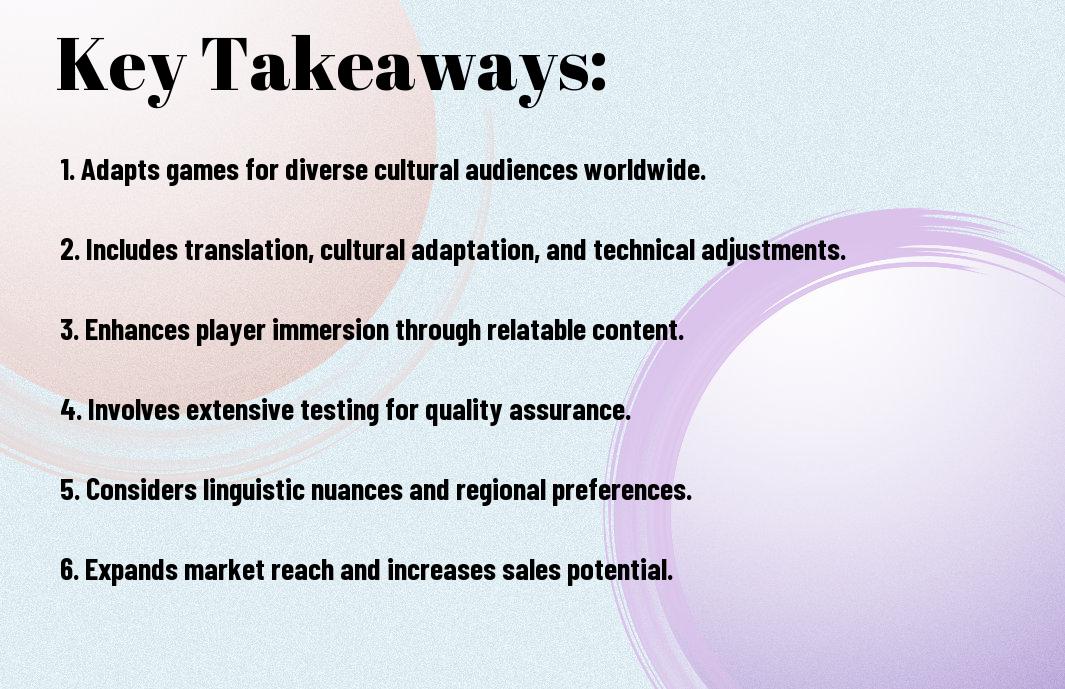
Key Takeaways:

  • Video game localization is the process of adapting a game for different languages, cultures, and regions to make it accessible and enjoyable for a global audience.
  • Cultural sensitivity and awareness are imperative in game localization to avoid unintended offense or misinterpretation of cultural references and nuances.
  • Localization involves translating text, audio, and visual elements, as well as adapting gameplay mechanics, user interfaces, and overall user experience to suit local preferences.
  • Effective localization requires a deep understanding of the target audience, including their language, culture, and gaming habits, to ensure the game resonates with local players.
  • Game developers should consider localization from the outset, rather than as an afterthought, to ensure a smooth and efficient localization process.
  • Localization can significantly impact a game’s commercial success, as a well-localized game can attract a larger and more engaged player base in new markets.
  • The rise of digital distribution platforms and online gaming communities has made it easier for developers to reach global audiences, highlighting the importance of localization in the modern gaming industry.

Cultural Adaptation Process

A key aspect of video game localization is adapting the game to fit the cultural context of your target audience, ensuring that your game is both accessible and enjoyable for players from diverse backgrounds.

Language Translation Fundamentals

One of the primary steps in localizing a game is translating the language, which involves converting the text, audio, and visual elements into the target language, allowing you to reach a broader audience and making your game more appealing to your players.

Cultural Context Modifications

Beside language translation, cultural context modifications are vital to ensure that your game is sensitive to the cultural nuances of your target audience, and you need to consider factors such as customs, traditions, and values when adapting your game.

Translation of cultural context involves more than just language conversion, as you will need to consider the cultural references, symbolism, and imagery used in your game, and adapt them to fit the cultural context of your target audience, ensuring that your game is both respectful and engaging to your players.

Technical Aspects

Now that you’re familiar with the importance of localization, it’s time to explore the technical aspects of bringing your game to a global audience. You’ll need to consider various factors, including text implementation, audio localization, and cultural adaptation, to ensure a seamless gaming experience for your players.

Text Implementation

Implementing translated text into your game is a complex process, and you’ll need to consider factors such as font styles, character limits, and formatting to ensure that your text is displayed correctly across different languages and regions.

Audio Localization

Along with text, audio elements such as voiceovers, sound effects, and music also require localization to create an immersive experience for your players. You’ll need to adapt your audio content to suit the cultural and linguistic preferences of your target audience.

In addition to translating dialogue and subtitles, you may also need to adjust the tone, pitch, and volume of your audio elements to ensure that they resonate with your local audience, taking into account their unique cultural nuances and expectations, and you should consider hiring local voice actors and audio engineers to ensure that your audio content sounds authentic and engaging.

Market Considerations

To successfully localize a video game, you need to consider the target market’s unique characteristics, including cultural nuances, player preferences, and regulatory requirements. Your goal is to create an immersive experience that resonates with local audiences.

Regional Gaming Preferences

Above all, you should understand the regional gaming preferences that shape your target audience’s expectations. You will need to adapt your game to cater to these preferences, ensuring that the gameplay, storyline, and characters appeal to local players.

Regulatory Requirements

Gaming companies must comply with the regulatory requirements of each region, which can vary significantly. You will need to ensure that your game meets the specific standards and guidelines set by local authorities, such as age ratings, content restrictions, and technical specifications.

Hence, as you navigate the complex landscape of regulatory requirements, you will need to conduct thorough research and consult with local experts to guarantee compliance. This will help you avoid potential pitfalls, such as fines, bans, or reputational damage, and ensure a smooth launch of your game in the target market.

Quality Assurance

All aspects of video game localization require careful attention to detail, and quality assurance is no exception. You need to ensure that your localized game meets the highest standards of quality, from translation to cultural adaptation.

Cultural Sensitivity Testing

About the cultural nuances of your game, you should consider testing to ensure that your content is respectful and appropriate for your target audience. You can test your game with a diverse group of players to identify any potential issues.

Linguistic Accuracy Verification

The accuracy of your in-game text and dialogue is vital to the overall gaming experience. You should verify that all text has been translated correctly and is free of errors, ensuring that your game is enjoyable and immersive for players.

But as you investigate deeper into linguistic accuracy verification, you will find that it involves more than just checking for grammatical errors. You need to consider the context and tone of the text, as well as the cultural references and nuances that may be lost in translation, to ensure that your game’s message is conveyed accurately and effectively to your target audience.

Challenges in Game Localization

Unlike other forms of localization, game localization presents unique obstacles, as you can learn more about Adapting Video Games for Global Audiences to understand the complexity involved.

Timing and Space Constraints

Above all, after you begin the localization process, you will face tight deadlines and limited space for text and audio, requiring careful planning and execution to ensure a smooth gaming experience.

Cultural Nuances and Idioms

Behind every successful game localization is a deep understanding of cultural differences, as you need to consider the subtleties of language and cultural references that may not translate directly.

Due to the complexity of cultural nuances and idioms, you must conduct thorough research and testing to ensure that your game is respectful and engaging for your target audience, avoiding unintended offense or misinterpretation that could harm your game’s reputation and sales.

Impact on Global Gaming

After successful localization, your game can reach a broader audience, increasing its global appeal and player base, which can lead to increased revenue and recognition for your brand.

Player Experience

For instance, when you play a game that has been well-localized, you can fully immerse yourself in the game world, enjoying the story, characters, and gameplay without any language or cultural barriers.

Market Success Factors

To achieve market success, you should consider the following factors:

  • Cultural adaptation
  • Language translation
  • Regional preferences

Thou can then use these factors to create a localized game that meets the needs and expectations of your target audience.

Plus, when you take the time to properly localize your game, you can increase player engagement and satisfaction, which can lead to positive reviews and word-of-mouth marketing, ultimately driving your game’s success in the global market:

  • Accurate translation
  • Cultural sensitivity
  • Regional customization

Thou can then enjoy the benefits of a successful game launch, with a loyal player base and a strong reputation in the gaming industry.

Summing up

Drawing together the various aspects of video game localization, you can see how it enables your favorite games to reach a broader audience. As you explore the world of gaming, you’ll notice how localization brings global games to your local market, allowing you to enjoy them in your native language. Your gaming experience is enhanced, and you can appreciate the cultural nuances that make each game unique, thanks to the efforts of localizers who work tirelessly to bring these games to your doorstep.

FAQ

Q: What is video game localization and why is it important for game developers?

A: Video game localization is the process of adapting a game to meet the cultural, linguistic, and technical requirements of a specific region or country. This involves translating text, audio, and video content, as well as modifying game mechanics, art, and user interface to ensure that the game is accessible and enjoyable for local players. Game localization is important because it allows developers to reach a broader audience, increase revenue, and build a stronger global brand. By localizing their games, developers can tap into new markets, improve player engagement, and stay competitive in the global gaming industry.

Q: What are the key steps involved in the video game localization process?

A: The video game localization process typically involves several key steps, including: internationalization, which involves preparing the game for localization by separating code from content and making it adaptable to different languages and cultures; translation, which involves converting text, audio, and video content into the target language; culturalization, which involves adapting game content to meet local cultural and regulatory requirements; testing, which involves verifying that the localized game meets quality and functionality standards; and certification, which involves obtaining necessary approvals and ratings from local authorities. Each step requires careful planning, coordination, and execution to ensure that the localized game meets the needs and expectations of local players.

Q: How can game developers ensure that their localized games are of high quality and meet the needs of local audiences?

A: To ensure that their localized games are of high quality and meet the needs of local audiences, game developers should work with experienced localization teams and follow best practices, such as: conducting thorough market research to understand local player preferences and cultural nuances; using native-speaking translators and testers to ensure accuracy and authenticity; testing the game extensively to identify and fix bugs and cultural issues; collaborating with local partners and experts to ensure compliance with local regulations and standards; and monitoring player feedback and reviews to identify areas for improvement. By taking a player-centric approach and prioritizing quality and cultural sensitivity, game developers can create localized games that resonate with local audiences and drive business success.

HT-fff Skip to content