
As you research into the world of gaming, you’ll notice the industry’s rapid evolution, driven by innovative revenue models. You’re likely aware that the gaming sector has become a significant player in the digital economy, with your favorite games generating substantial revenue through various channels. Your understanding of these models will help you appreciate the complexity and sophistication of the gaming industry, and how it continues to shape the way you engage with games and the digital landscape as a whole.
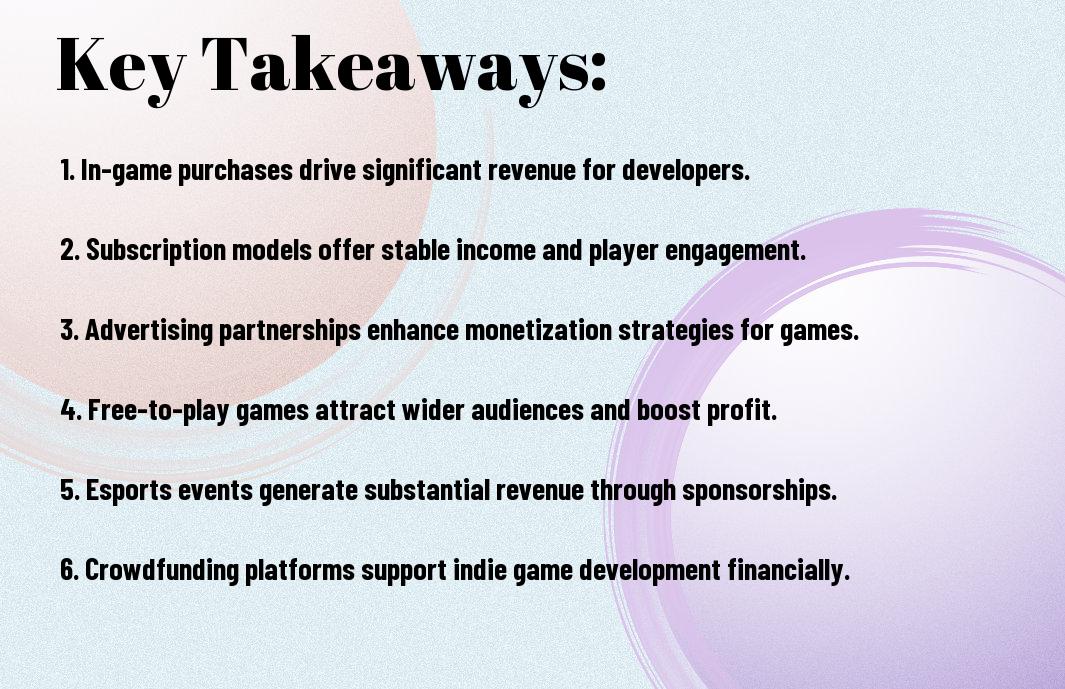
Key Takeaways:
- The video game industry has shifted towards digital distribution, offering new revenue streams and changing the way games are monetized, with many companies adopting subscription-based models and in-game purchases.
- Free-to-play games have become increasingly popular, generating revenue through microtransactions, advertising, and sponsored content, allowing players to play for free while still contributing to the game’s revenue.
- Games as a service (GaaS) has emerged as a dominant business model, where games are treated as ongoing services with continuous updates, expansions, and new content, providing a steady stream of revenue for game developers.
- Esports and competitive gaming have created new revenue opportunities, including sponsorships, advertising, and media rights, with many companies investing heavily in esports teams and events.
- Virtual goods and in-game items have become a significant source of revenue, with many players willing to pay for customization options, exclusive content, and other digital items, driving the growth of the virtual goods market.
- Cloud gaming is changing the way games are consumed, allowing players to access high-quality games on any device with an internet connection, and opening up new revenue streams for game developers and publishers.
- The use of data analytics and player behavior tracking has become vital for game developers, allowing them to optimize their games, identify new revenue opportunities, and create more engaging experiences for players, driving business growth and profitability.
Traditional Gaming Revenue Models
For decades, the gaming industry has relied on various revenue models to generate income. You will notice that these models have evolved over time, adapting to changes in technology and consumer behavior.
One-Time Purchase Model
Generally, you will find that the one-time purchase model involves buying a game outright, giving you full ownership and access to the content. You can play the game as many times as you want without incurring additional costs.
Physical Distribution and Retail
With the rise of digital distribution, you may think that physical distribution and retail are becoming obsolete. You will still find that many gamers prefer to purchase physical copies of games from retail stores, often due to concerns about digital rights management or simply for the tactile experience of owning a physical copy.
In addition, you should consider that physical distribution and retail also involve the sale of gaming consoles, accessories, and merchandise, which can be a significant source of revenue for game developers and publishers, allowing you to explore various revenue streams and maximize your profits.

Digital Transformation in Gaming
If you’re invested in the gaming industry, you’ve likely noticed the significant shift towards digital platforms, offering you a range of new opportunities for revenue and engagement.
Digital Distribution Platforms
To take advantage of the digital landscape, you can utilize platforms like Steam and the App Store, which provide you with a direct line to your target audience and a means to manage your game’s distribution effectively.
Cloud Gaming Services
After adopting cloud gaming, you’ll find that it allows you to play high-quality games on various devices, eliminating the need for expensive hardware and enabling you to access your games from anywhere.
Transformation of the gaming industry through cloud services means you can now enjoy seamless gaming experiences without the hassle of downloads or updates, giving you more time to focus on what matters most – the gameplay itself, and as you explore this new frontier, you’ll discover how it opens up new avenues for social interaction and community building within the gaming world.
Modern Monetization Strategies
Keep in mind that the gaming industry has evolved, and you can explore various revenue streams, as discussed in Current Revenue (Monetisation) Models of Video Game Developers research, to maximize your earnings.
Free-to-Play Model
Among the popular models, you’ll find the free-to-play approach, where you offer games at no initial cost, generating revenue through ads or in-game purchases, allowing you to attract a large player base.
Microtransactions and Virtual Goods
Microtransactions enable you to buy or sell virtual items, enhancing your gaming experience, and you can purchase these goods using real money, providing an additional revenue stream for game developers.
The use of microtransactions and virtual goods has become increasingly popular, as you can purchase customizations, bonuses, or exclusive content, and game developers can offer these items to generate ongoing revenue, encouraging you to continue playing and investing in the game, which can lead to a significant increase in your overall gaming expenditure.
Subscription-Based Gaming
Many gamers are familiar with subscription-based gaming, which offers access to a library of games for a monthly fee. You can learn more about Revenue models for video games and how they impact your gaming experience.
Gaming Service Platforms
Betwixt the various options, you’ll find that gaming service platforms like Xbox Game Pass and PlayStation Now offer a wide range of games for a flat monthly fee, allowing you to play your favorite titles without having to purchase them outright.
Cross-Platform Subscriptions
By exploring cross-platform subscriptions, you can enjoy a seamless gaming experience across multiple devices, including consoles, PCs, and mobile devices, with your progress and saves synced across all platforms.
For instance, with cross-platform subscriptions, you can start playing a game on your console and pick up where you left off on your mobile device, making it easier to fit gaming into your busy schedule, and allowing you to make the most of your subscription, as you can play your favorite games wherever and whenever you want.
Mobile Gaming Economics
Your mobile gaming experience is shaped by various revenue models, and understanding these models is imperative to navigating the digital gaming landscape.
Ad-Based Revenue
Following the rise of mobile gaming, ad-based revenue has become a significant source of income for developers, allowing you to play games for free while being exposed to advertisements.
Hybrid Monetization Models
One of the most effective ways to generate revenue in mobile gaming is through hybrid monetization models, which combine different revenue streams to create a more sustainable income source for you.
Hybrid models allow you to choose how you want to engage with the game, whether through in-app purchases, subscriptions, or ads, giving you more control over your gaming experience and allowing developers to cater to different player preferences.
Emerging Revenue Streams
Now, as you explore the evolving landscape of gaming revenue, you’ll notice a shift towards innovative and diverse streams. Your understanding of these models will help you navigate the industry’s growth.
Esports and Competitive Gaming
Following the rise of professional gaming, you’ll find that esports and competitive gaming have become significant revenue generators. Your involvement in these areas can lead to new opportunities for sponsorship and engagement.
Content Creator Economy
Above the traditional revenue models, the content creator economy has emerged as a powerful force. Your ability to create and distribute content can help you tap into this lucrative market.
Plus, as you research deeper into the content creator economy, you’ll discover that platforms like Twitch and YouTube have given rise to a new generation of gaming personalities and influencers. Your participation in this space can help you build a loyal following and generate revenue through subscriptions, donations, and sponsorships, allowing you to monetize your passion for gaming.
To wrap up
Hence, as you examine into the business of gaming, you will find that understanding revenue models is key to your success. You will need to consider your target audience and develop strategies that cater to their preferences. By doing so, you can create a profitable and sustainable business in the digital age, maximizing your revenue and staying ahead of the competition, ultimately driving your gaming business forward.
FAQ
Q: What are the different revenue models used in the digital gaming industry?
A: The digital gaming industry utilizes various revenue models to generate income, including subscription-based models, where players pay a recurring fee to access premium content or services, and free-to-play models, which offer games for free but generate revenue through in-game purchases or advertisements. Additionally, some games employ a pay-to-play model, where players buy the game outright, and others use a freemium model, which provides a basic version of the game for free and charges for additional features or content.
Q: How do in-game purchases and microtransactions contribute to the revenue of digital games?
A: In-game purchases and microtransactions have become a significant source of revenue for digital games, allowing players to buy virtual items, currency, or other digital goods. These transactions can be made using real money and are often used to enhance gameplay, customize characters, or access exclusive content. The revenue generated from in-game purchases can be substantial, with some games earning millions of dollars from these transactions alone. Game developers use various strategies to encourage players to make in-game purchases, such as offering limited-time discounts, exclusive items, or bonus rewards.
Q: What role does esports play in the revenue generation of digital games, and how do game developers monetize esports events?
A: Esports has become a significant aspect of the digital gaming industry, with professional teams and players competing in organized tournaments and leagues. Game developers can generate revenue from esports events through various means, including sponsorship deals, advertising, and ticket sales. Additionally, some games offer virtual goods or items that are specific to esports events, such as custom skins or accessories, which can be purchased by players. Game developers also partner with esports organizations to create exclusive content, such as branded tournaments or game modes, which can attract new players and increase engagement. The popularity of esports has created new revenue streams for game developers, and its growth is expected to continue in the coming years.