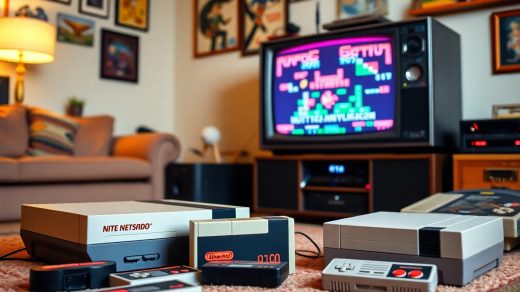
As you explore the world of gaming, you’ll discover a rich history that spans decades. You’ll learn about the evolution of video games, from their humble beginnings in arcades to the sophisticated consoles you use today. Your journey will take you through the iconic games and characters that shaped the industry, and you’ll gain a deeper understanding of how video games have become an integral part of your entertainment landscape.
Key Takeaways:
- The evolution of video games has been shaped by advancements in technology, leading to a transition from arcade machines to home consoles and eventually to online gaming platforms, offering a wider range of gaming experiences.
- The introduction of iconic consoles such as the Nintendo Entertainment System (NES) and the Sony PlayStation played a significant role in popularizing home gaming, bringing beloved characters and games into living rooms worldwide.
- The history of video games is marked by innovation and experimentation, with various genres and gameplay styles emerging over the years, from classic arcade shooters to immersive role-playing games and multiplayer online experiences.
The Dawn of Arcade Gaming
For your journey through the history of video games, it’s vital to understand the significance of arcade gaming, which marked the beginning of the industry’s growth.
Pong and the First Wave
Amidst the emergence of new technologies, you’ll find that Atari’s Pong, released in 1972, was one of the first successful arcade games, paving the way for your exploration of the early days of gaming.
The Golden Age of Arcades
Before diving deeper into the world of console gaming, you should know that the late 1970s to the mid-1980s are often referred to as the Golden Age of Arcades, a period that saw the release of iconic games like Space Invaders and Pac-Man.
Hence, as you explore this era, you’ll discover that the Golden Age of Arcades was a time of great innovation, with games becoming increasingly sophisticated, and arcades becoming popular hangouts for people of all ages, shaping your understanding of the industry’s evolution.
Home Console Revolution
Clearly, the introduction of home consoles marked a significant shift in the gaming industry, allowing you to experience your favorite arcade games from the comfort of your own home.
Atari and Early Competitors
At this point, Atari was a leading player, and you had a range of options to choose from, including the Atari 2600 and Intellivision, which offered you a variety of games to enjoy.
The Great Gaming Crash of 1983
Among the factors that contributed to the crash, you’ll find a flooded market and poor game quality, which led to a significant decline in sales and a loss of confidence in the industry.
The Great Gaming Crash of 1983 had a lasting impact on the industry, and as you explore this period, you’ll see how it led to a major restructuring of the market, with many companies going bankrupt or being sold, and you can learn from the mistakes of the past to understand how the industry recovered and evolved into what it is today.

Nintendo’s Game-Changing Era
Keep in mind that Nintendo’s impact on the gaming industry was significant, as you can learn more about in From Arcade to Console: The Evolution of Video Game Technology, which shaped your gaming experience.
The NES Renaissance
Before submerging into the details, you’ll find that the NES brought a resurgence in home console gaming, offering you a wide range of iconic games that still influence your gaming experience today.
Game Boy and Portable Gaming
Game-changing moments in gaming history include the introduction of the Game Boy, which allowed you to play games on-the-go, revolutionizing your gaming habits.
For instance, the Game Boy’s impact on portable gaming was massive, enabling you to play games like Tetris and Pokémon anywhere, anytime, and this freedom has since become a staple of your gaming experience, with modern handheld consoles continuing to innovate and improve upon this concept, giving you even more options to enjoy your favorite games.
The 16-bit Wars
Now, as you examine into the world of 16-bit gaming, you’ll find a plethora of information in books like A History of Videogames: In 14 Consoles, 5 Computers, 2 Arcades, which provides a comprehensive overview of the era. This period was marked by intense competition between console manufacturers.
Super Nintendo vs. Sega Genesis
On the forefront of this battle were the Super Nintendo and Sega Genesis, each vying for your attention with their unique games and features. You had to choose between iconic characters and gameplay styles that defined the era.
Rise of Gaming Mascots
Around this time, you started to see the emergence of gaming mascots, such as Sonic the Hedgehog and Mario, who became synonymous with their respective consoles. These characters helped to shape your gaming experience and influenced the industry as a whole.
Also, as you explore the rise of gaming mascots, you’ll notice how they not only represented their games but also became cultural icons, appearing in various forms of media beyond video games. You can see how these mascots played a significant role in shaping the identity of their respective consoles and the gaming industry, making them an integral part of your gaming history.
3D Gaming Evolution
Your journey through the history of video games now takes you to the era of 3D gaming, where you’ll experience a significant shift in gameplay and graphics.
PlayStation’s Market Disruption
Between the introduction of 3D graphics and the rise of console wars, you’ll notice how PlayStation disrupted the market with its CD-ROM technology and 3D capabilities.
Nintendo 64 and 3D Innovation
PlayStations may have popularized 3D gaming, but you’ll see how Nintendo 64 innovated with its 3D controller and iconic games like Super Mario 64, setting a new standard for 3D platformers.
Further exploration of Nintendo 64’s 3D innovation reveals that you can appreciate the console’s impact on the industry, as it introduced analog stick controls and Z-buffering, enhancing your 3D gaming experience with smoother graphics and more precise character movement.
Modern Gaming Landscape
Unlike the early days of gaming, you now have access to a vast array of gaming options. You can learn more about the evolution of gaming by visiting the history of arcade video games to understand how the industry has transformed over time.
Console Wars in the Digital Age
The rise of digital gaming has led to intense competition among console manufacturers, and you can see this play out in the market as companies vie for your attention with exclusive titles and innovative hardware.
Mobile Gaming Integration
An interesting development in modern gaming is the integration of mobile devices, allowing you to play games on-the-go and access a wide range of titles from your smartphone or tablet.
But as you investigate deeper into mobile gaming, you’ll find that it offers more than just convenience, with many games designed specifically to take advantage of mobile devices’ unique capabilities, such as touch screens and location-based services, providing you with a unique gaming experience that complements your console or PC gaming habits.
Conclusion
On the whole, you have seen the evolution of video games from arcades to consoles. You now understand how your gaming experience has been shaped by technological advancements. Your journey through the history of video games has equipped you with knowledge of the industry’s transformation over time, allowing you to appreciate the complexity of your favorite games.
FAQ
Q: What were the first video games and when did they originate?
A: The first video games emerged in the 1950s and 1960s, with the development of simple computer games such as “Tennis for Two” and “Spacewar!”. These early games were played on mainframe computers and were primarily used for research and entertainment purposes. The first commercial video game, “Computer Space”, was released in 1971, but it was not until the release of “Pong” in 1972 that video games began to gain popularity.
Q: How did arcades contribute to the growth of the video game industry?
A: Arcades played a significant role in the growth of the video game industry in the 1970s and 1980s. They provided a public space where people could play and experience new games, and they helped to popularize iconic games such as “Pac-Man”, “Donkey Kong”, and “Galaga”. Arcades also served as a testing ground for new games and technologies, allowing developers to refine their products and gauge consumer interest.
Q: What were some of the key factors that led to the transition from arcades to home consoles?
A: Several factors contributed to the shift from arcades to home consoles, including advancements in technology, changes in consumer behavior, and the introduction of new business models. The development of more powerful and affordable home consoles, such as the Atari 2600 and the Nintendo Entertainment System (NES), made it possible for people to play high-quality games in the comfort of their own homes. Additionally, the rise of home computers and the introduction of cartridge-based systems made it easier for consumers to purchase and play games at home.
Q: How did the introduction of 3D graphics and CD-ROM technology impact the video game industry?
A: The introduction of 3D graphics and CD-ROM technology in the 1990s revolutionized the video game industry. Games such as “Super Mario 64” and “The Legend of Zelda: Ocarina of Time” showcased the potential of 3D gaming, while the use of CD-ROM technology enabled developers to create games with richer soundtracks, fuller stories, and more complex gameplay mechanics. This led to the creation of more immersive and engaging gaming experiences, and helped to establish the video game industry as a major player in the entertainment sector.
Q: What is the current state of the video game industry, and how has it evolved over time?
A: The video game industry has undergone significant changes over the years, with the rise of online gaming, mobile devices, and virtual reality (VR) and augmented reality (AR) technologies. Today, the industry is characterized by a diverse range of platforms, including PCs, consoles, and mobile devices, and a wide variety of game genres and styles. The industry has also become more global and interconnected, with developers and players from around the world contributing to the creation and enjoyment of games. As technology continues to advance, the video game industry is likely to continue evolving, with new innovations and trends emerging in the years to come.