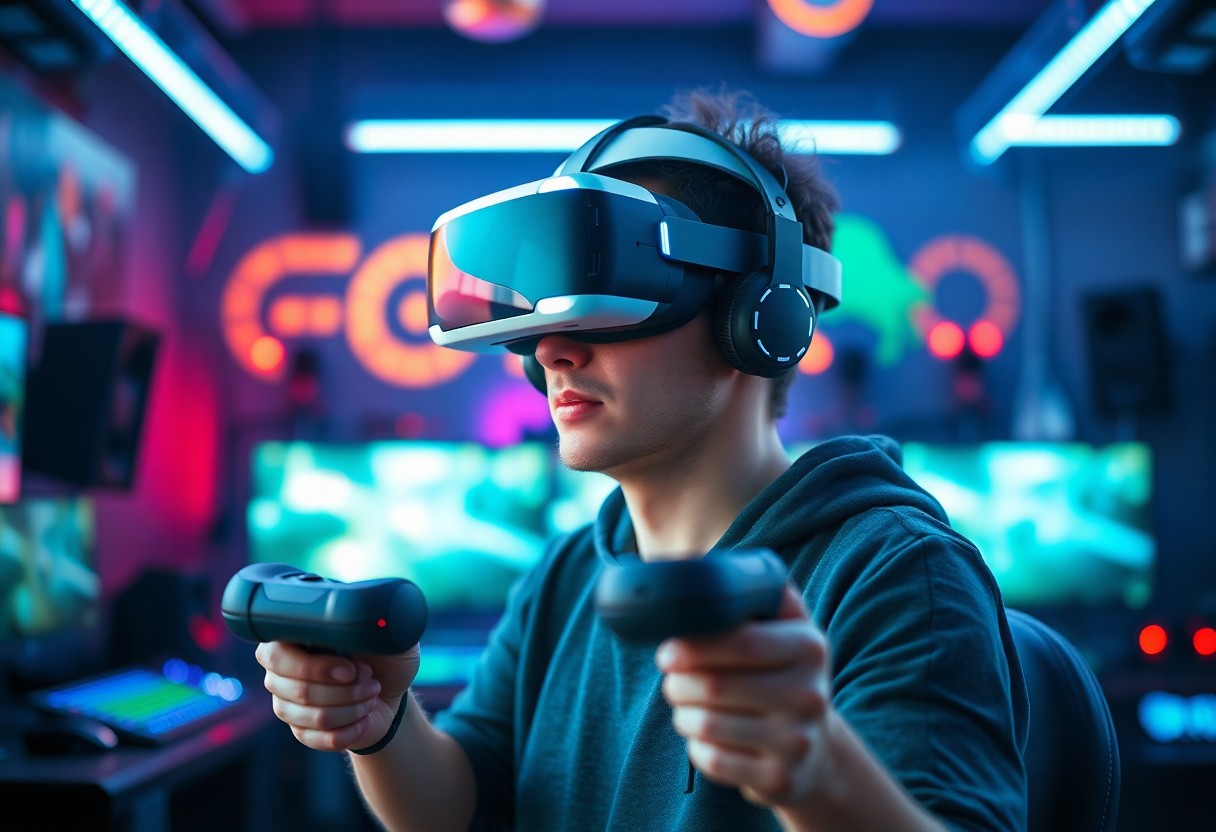
VR

The Evolution of Video Games – From Pong to VR

As you explore the world of video games, you’ll discover a rich history that spans decades. You’ve likely witnessed significant advancements in technology, from simple arcade games to immersive virtual reality experiences. Your journey through the evolution of video games will take you from the iconic Pong to the latest VR innovations, highlighting the key milestones that have shaped the industry into what it is today, and you’re about to experience it all.

Key Takeaways:

  • The video game industry has undergone significant transformations since the release of the first home console game, Pong, in 1972, with advancements in technology leading to improved graphics, gameplay, and immersive experiences.
  • The introduction of new genres, such as 3D gaming and online multiplayer, has expanded the gaming landscape, offering players a wide range of options and contributing to the industry’s massive growth and popularity.
  • The emergence of Virtual Reality (VR) and Augmented Reality (AR) technologies is revolutionizing the gaming experience, providing players with unprecedented levels of interaction and engagement, and paving the way for future innovations in the industry.

The Dawn of Gaming (1970s)

For your journey through the evolution of video games, the 1970s mark the beginning of an exciting era. This decade saw the introduction of the first home console and arcade games, laying the foundation for the industry’s future growth.

Pong and Arcade Origins

Around this time, you’ll find that Pong, one of the first successful arcade games, was released, captivating players with its simple yet addictive gameplay, and paving the way for other iconic arcade titles.

Home Console Revolution

Any exploration of the 1970s gaming scene will lead you to the first home consoles, such as the Magnavox Odyssey, which brought gaming into your living room, offering a new way to experience interactive entertainment.

Revolution was in the air as you witnessed the emergence of home consoles, with companies like Atari and Coleco entering the market, and you began to see the potential for gaming to become a mainstream form of entertainment, with your own home becoming a hub for interactive fun.

The 8-bit Era (1980s)

Some of the most iconic games emerged during this period, and as you explore the history of video games, you can learn more about The Evolution of the Video Game Industry: From Pong to Virtual Reality in our related blog post. This era saw significant advancements in technology, leading to improved graphics and gameplay.

Nintendo’s Market Dominance

Against the backdrop of a burgeoning industry, you’ll find that Nintendo’s influence was significant, with the company’s consoles and games dominating the market and setting the standard for others to follow.

Rise of Iconic Franchises

Beside the major players like Nintendo, you’ll notice the emergence of iconic franchises that still exist today, with characters and storylines that have become an integral part of your gaming experience.

Even as you look back on the 8-bit era, you can see how these iconic franchises, such as Super Mario and The Legend of Zelda, have evolved over time, with new installments and updates that continue to captivate audiences and inspire new generations of gamers, making them an crucial part of your gaming journey.

3D Revolution (1990s)

Keep in mind that the 1990s marked a significant shift in the video game industry, as you witnessed the introduction of 3D graphics, changing the way you experienced games forever.

Transition to 3D Graphics

Across the globe, developers were experimenting with 3D technology, and you saw the release of iconic games that paved the way for future innovations, offering you a new level of immersion.

PlayStation’s Impact

Along with the launch of the PlayStation, you entered a new era of gaming, as 3D graphics became the norm, and you enjoyed a wide range of games that showcased the console’s capabilities.

With the PlayStation’s success, you had access to a vast library of 3D games, from platformers to role-playing games, which further solidified the console’s position in the market, and you were able to experience the thrill of 3D gaming in your own home, shaping your expectations for future gaming experiences.

Online Gaming Emergence (2000s)

All gamers witnessed a significant shift in the industry with the advent of online gaming in the 2000s. You saw the rise of massively multiplayer online games (MMOs) and online multiplayer capabilities, changing the way you interacted with others in virtual worlds.

Internet Integration

Alongside the growth of internet connectivity, you experienced seamless integration of online features into your favorite games, enabling you to download updates, access new content, and connect with your friends effortlessly.

Multiplayer Evolution

Before the 2000s, multiplayer gaming was limited to local networks or split-screen modes. You can now engage in competitive and cooperative gameplay with players worldwide, thanks to advancements in online infrastructure.

For instance, you can participate in large-scale battles, collaborate on complex puzzles, or simply socialize with your friends in virtual environments, creating a more immersive and engaging experience that enhances your overall gaming enjoyment, allowing you to explore new worlds and connect with like-minded individuals from around the globe.

Mobile Gaming Transformation (2010s)

Unlike previous decades, the 2010s saw a significant shift in the gaming landscape with the rise of mobile devices, allowing you to play games anywhere, anytime.

Smartphone Gaming Impact

For your convenience, smartphones enabled seamless gaming experiences, with app stores offering a wide range of games at your fingertips, changing the way you interact with games.

Casual Gaming Rise

Among the many benefits of mobile gaming, you’ll find that casual games became increasingly popular, providing you with a quick and easy way to pass the time.

Casual gaming has become a staple of your daily routine, with many of you turning to mobile games as a way to unwind and have fun, and as you explore the world of casual gaming, you’ll discover a wide range of genres and styles to suit your tastes and preferences.

Virtual Reality Era (Present)

To experience the latest advancements in gaming, you’ve entered the virtual reality era, where technology has transformed the way you play games.

VR Technology Advancement

Between the introduction of VR headsets and motion controllers, you’ve seen significant improvements in your gaming experience, with more realistic graphics and immersive gameplay.

New Gaming Paradigms

Advancing beyond traditional gaming, you’re now experiencing new ways to interact with virtual worlds, with VR enabling you to step into the game like never before.

Virtual reality has opened up new possibilities for you, allowing you to explore virtual environments, interact with objects, and engage in experiences that simulate real-life situations, taking your gaming experience to a whole new level, and you can expect even more innovative developments in the future.

Conclusion

Drawing together the threads of the past and present, you can see the remarkable evolution of video games from Pong to VR. As you explore this journey, you witness your gaming experience transform with advancements in technology. Your understanding of the industry’s growth and innovation deepens, allowing you to appreciate the complex, immersive worlds that now surround you in virtual reality, a testament to the power of human creativity and innovation.

FAQ

Q: What were the first video games like, and how did they pave the way for the modern gaming industry?

A: The first video games, such as Pong (1972) and Space Invaders (1978), were simple, 2D, and often text-based. These early games were played on arcade machines and home consoles, and they laid the foundation for the modern gaming industry. They introduced basic game mechanics, such as scoring, lives, and level progression, which have evolved over time to become more complex and immersive. The success of these early games sparked innovation and investment in the industry, leading to the development of more advanced technologies and game designs.

Q: How did the introduction of 3D graphics and CD-ROM technology impact the evolution of video games?

A: The introduction of 3D graphics and CD-ROM technology in the 1990s revolutionized the gaming industry. Games like Super Mario 64 (1996) and Final Fantasy VII (1997) showcased the potential of 3D graphics, offering immersive and interactive experiences that captivated players. CD-ROM technology enabled the creation of larger, more complex games with higher-quality audio and visuals. This led to the development of new genres, such as 3D platformers and survival horror games, and paved the way for the modern gaming industry’s focus on storytelling, characters, and cinematic experiences.

Q: What role did the rise of online gaming and multiplayer play in shaping the modern gaming landscape?

A: The rise of online gaming and multiplayer play in the late 1990s and early 2000s transformed the gaming industry. Games like Quake (1996) and World of Warcraft (2004) introduced players to new ways of interacting with each other, enabling real-time competition, cooperation, and community-building. Online gaming platforms, such as Xbox Live and PlayStation Network, further expanded the possibilities for multiplayer play, enabling seamless matchmaking, voice chat, and social features. Today, online gaming is a core aspect of the industry, with many games offering robust multiplayer modes, regular updates, and dynamic content.

Q: How have advancements in virtual reality (VR) and augmented reality (AR) technology impacted the gaming industry?

A: The development of VR and AR technology has opened up new avenues for immersive and interactive experiences in gaming. VR games, such as Beat Saber (2018) and Job Simulator (2016), offer players a fully immersive experience, with 360-degree visuals and motion controls. AR games, such as Pokémon Go (2016), blend the physical and virtual worlds, encouraging players to explore and interact with their surroundings in new and innovative ways. These technologies have also enabled new types of gameplay, such as spatial puzzles and interactive storytelling, and have expanded the possibilities for game design and development.

Q: What can we expect from the future of video games, and how will emerging technologies continue to shape the industry?

A: The future of video games is likely to be shaped by emerging technologies, such as cloud gaming, artificial intelligence, and machine learning. Cloud gaming services, like Google Stadia and Microsoft xCloud, will enable players to access high-quality games on any device, without the need for dedicated hardware. AI and machine learning will enable more realistic NPC behavior, dynamic difficulty adjustment, and personalized gameplay experiences. Additionally, the growth of cross-platform play, game streaming, and community-driven development will continue to blur the lines between different platforms and genres, creating new opportunities for innovation and creativity in the gaming industry.
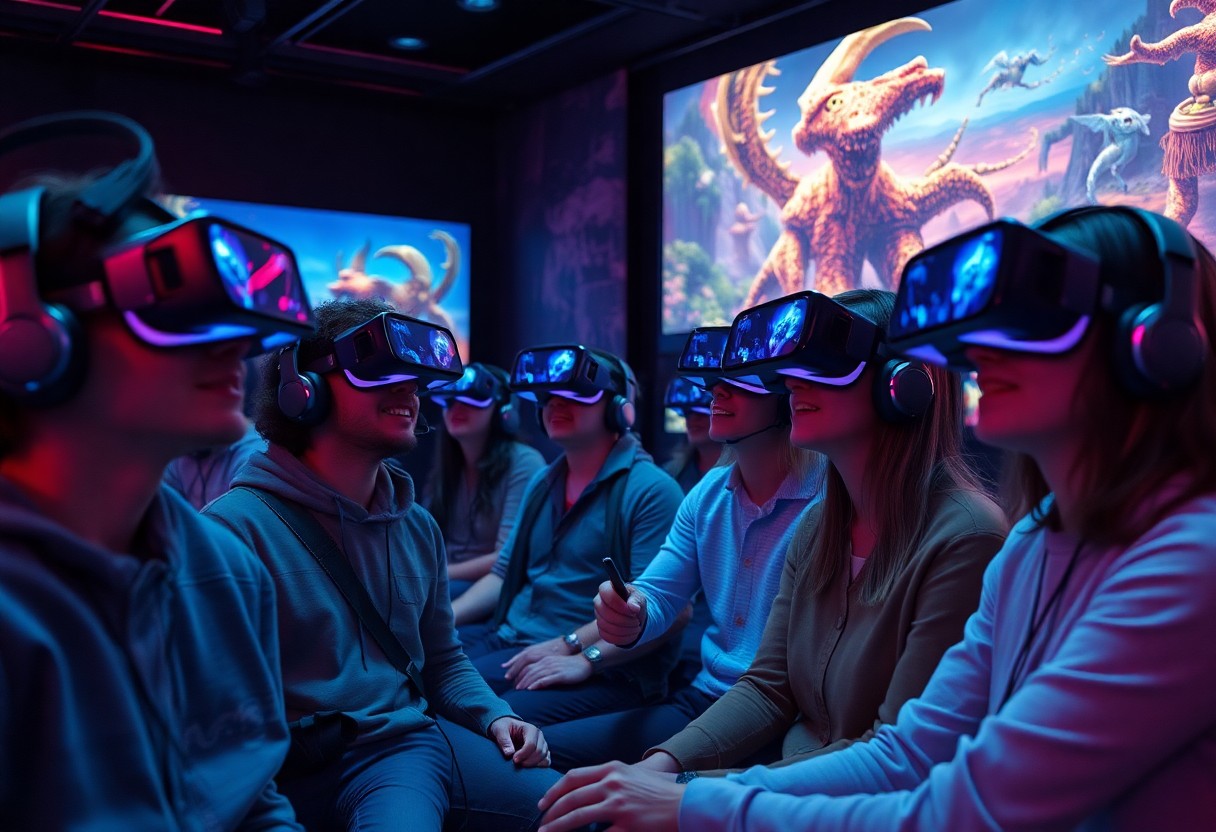
Breaking Boundaries – The Evolution of Virtual Reality Gaming

As you explore into the world of virtual reality gaming, you’ll discover a realm where technology knows no limits. You’re about to experience a journey through the advancements that have transformed the gaming landscape. Your understanding of immersive gaming will expand as you explore the innovative developments that have led to the creation of breathtaking virtual worlds, pushing the boundaries of what you thought was possible in gaming.

Key Takeaways:

  • The evolution of virtual reality (VR) gaming has transformed the industry, offering immersive experiences that simulate real-world environments and scenarios, allowing players to engage with games in entirely new ways.
  • Advances in VR technology have enabled the development of more sophisticated and interactive games, with improved graphics, motion tracking, and haptic feedback, further enhancing the gaming experience.
  • The growth of VR gaming has also led to new opportunities for social interaction and community building, as players can now connect with others in virtual environments, creating a more dynamic and shared experience.

The Birth of Virtual Reality Gaming

While exploring the history of virtual reality gaming, you’ll discover that it has undergone significant transformations.

Early Experiments and Prototypes

You’ll find that early experiments involved:

  • Head-mounted displays

After this, the technology advanced rapidly.

Year Development
1960s First VR headsets
1970s Virtual environment research
1980s First VR games
1990s Improved VR technology
2000s Modern VR gaming

First Commercial VR Systems

Beneath the surface of early VR systems, you’ll find that they were often expensive and inaccessible.

Gaming companies began to develop more affordable VR systems, making them available to your average consumer. As you explore the world of VR gaming, you’ll notice that these early systems paved the way for the immersive experiences you enjoy today.

Technical Evolution

Some of the most significant advancements in virtual reality gaming have come from technical innovations, allowing you to experience immersive and interactive worlds like never before. As you explore the evolution of VR gaming, you’ll notice significant improvements in both hardware and software.

Hardware Breakthroughs

Technologically, advancements in hardware have enabled faster processing, higher resolution, and more precise tracking, giving you a seamless VR experience. You can now enjoy sharper graphics and more realistic interactions, drawing you deeper into the game.

Software Development Milestones

For instance, developments in software have led to more sophisticated game engines, allowing you to engage with virtual environments in a more realistic way. You can now explore complex worlds, interact with objects, and experience physics-based simulations.

With the latest software developments, you can expect even more realistic and engaging experiences, as game developers push the boundaries of what’s possible in VR gaming. You’ll be able to interact with characters, objects, and environments in a more intuitive and immersive way, making your gaming experience even more enjoyable and realistic.

Gaming Revolution

After the introduction of virtual reality (VR) technology, you witnessed a significant shift in the gaming industry, as VR gaming began to push the boundaries of immersive entertainment, offering you new and innovative ways to engage with your favorite games.

Immersive Gameplay Mechanics

Among the key features of VR gaming, you’ll find advanced gameplay mechanics that simulate real-world experiences, allowing you to interact with virtual environments in a more intuitive and engaging way, making your gaming experience more realistic and enjoyable.

Genre Transformations

Before the advent of VR, certain genres were limited by traditional gaming technologies, but with the advent of VR, you can now explore new dimensions of gameplay, as genres such as adventure, horror, and simulation are redefined to take advantage of VR capabilities.

With the transformation of genres, you can expect to see new and innovative gameplay styles emerge, as developers experiment with the unique capabilities of VR technology, offering you a wider range of gaming options and more diverse experiences, and enabling you to explore new worlds and interact with them in ways that were previously impossible.

Social Impact

Your social interactions are changing with the evolution of virtual reality gaming, as you connect with others in new and innovative ways, creating a sense of community and shared experience.

Multiplayer VR Experiences

Across various platforms, you can engage in immersive multiplayer experiences, collaborating or competing with others in virtual environments that simulate real-world scenarios or fantastical worlds.

Virtual Communities

Along with the growth of virtual reality, you are seeing the emergence of virtual communities, where you can interact with others who share similar interests and passions, forming connections and friendships that transcend geographical boundaries.

To further explore virtual communities, you can join online forums, social media groups, or virtual reality platforms, where you can connect with others, share experiences, and participate in discussions, creating a sense of belonging and social connection in the virtual world, and you will find that your social interactions become more diverse and engaging as a result.

Industry Disruption

Many innovations have transformed the gaming industry, and you can learn more about the impact of VR and AR by visiting The Evolution of VR and AR in Gaming: A Historical Perspective to understand the shift in your gaming experience.

Market Dynamics

By analyzing the current trends, you will notice that the virtual reality gaming market is expanding rapidly, offering you a wide range of options to choose from, and changing your expectations from the gaming industry.

Developer Adaptation

Among the key players in this transformation are game developers, who are adapting to the new technologies, and you are benefiting from their innovative approaches to virtual reality gaming, with more immersive experiences.

Hence, as you explore the world of virtual reality gaming, you will find that developers are constantly pushing the boundaries of what is possible, creating new and exciting experiences that draw you into the game like never before, and you will be eager to see what the future holds for your gaming experience.

Current Challenges

To fully immerse yourself in virtual reality gaming, you need to understand the obstacles that developers face. As you explore this technology, you’ll encounter various limitations that hinder its growth.

Technical Limitations

Above all, the technical constraints of virtual reality gaming are significant, affecting your overall experience. You’ll notice issues with latency, resolution, and processing power, which can disrupt your gameplay.

User Experience Issues

For instance, as you engage with virtual reality games, you may encounter problems with motion sickness, eye strain, and controller limitations, which can detract from your enjoyment.

Hence, as you explore deeper into the world of virtual reality gaming, you’ll find that user experience issues are a major concern. You’ll need to consider factors like comfort, accessibility, and intuitive controls to ensure a seamless and enjoyable experience, and developers are working to address these challenges to create more immersive and engaging games for you.

Conclusion

Ultimately, as you explore the world of virtual reality gaming, you will find that it has come a long way in breaking boundaries. You can learn more about this evolution by visiting Breaking boundaries with video games – The Rochester Effect, which showcases your potential to experience immersive gaming like never before, and discover how your gaming experience will continue to evolve in the future.

FAQ

Q: What is the current state of virtual reality gaming and how has it evolved over the years?

A: Virtual reality (VR) gaming has undergone significant transformations since its inception. From humble beginnings with basic graphics and limited gameplay, VR gaming has evolved to become a highly immersive and interactive experience. With advancements in technology, modern VR games offer stunning visuals, realistic sound effects, and sophisticated controllers that simulate real-world movements. The evolution of VR gaming has been shaped by innovations in hardware, software, and content creation, paving the way for a new era of immersive gaming experiences.

Q: What are the key technologies driving the growth of virtual reality gaming?

A: The growth of virtual reality gaming is driven by several key technologies, including high-resolution displays, advanced graphics processing units (GPUs), and sophisticated tracking systems. These technologies enable the creation of seamless and realistic VR experiences, allowing players to fully engage with virtual environments. Additionally, the development of affordable and user-friendly VR headsets, such as Oculus and Vive, has made VR gaming more accessible to a wider audience, further fueling its growth.

Q: How does virtual reality gaming differ from traditional gaming, and what are its unique benefits?

A: Virtual reality gaming differs from traditional gaming in its ability to provide a fully immersive and interactive experience. Unlike traditional gaming, which is limited to a screen, VR gaming transports players into the game environment, allowing them to explore, interact, and engage with virtual objects and characters in a highly realistic way. The unique benefits of VR gaming include enhanced engagement, increased emotional resonance, and improved spatial awareness, making it an attractive option for gamers seeking a more immersive experience.

Q: What are some of the most popular virtual reality games currently available, and what genres are they representative of?

A: Some of the most popular virtual reality games currently available include action-adventure games like Beat Saber and Job Simulator, puzzle games like Tetris Effect and Astro Bot, and first-person shooters like Superhot VR and Robo Recall. These games showcase the diversity of VR gaming, with genres ranging from action and adventure to puzzle and simulation. Other popular genres in VR gaming include horror, sports, and social games, demonstrating the versatility and breadth of VR gaming content.

Q: What does the future hold for virtual reality gaming, and how will it continue to evolve and improve?

A: The future of virtual reality gaming holds much promise, with ongoing advancements in technology and content creation expected to further enhance the VR experience. Next-generation VR headsets will offer improved resolution, higher frame rates, and more advanced tracking systems, while the development of new controllers and input devices will enable more intuitive and natural interactions. Additionally, the growth of cloud gaming and cross-platform play will make VR gaming more accessible and convenient, allowing players to enjoy VR experiences on a variety of devices and platforms, and paving the way for a new era of immersive and interactive gaming.

Breaking Boundaries – The Evolution of Virtual Reality Gaming

As you explore into the world of virtual reality gaming, you’ll discover a realm where technology knows no limits. You’re about to experience a journey through the advancements that have transformed the gaming landscape. Your understanding of immersive gaming will expand as you explore the innovative developments that have led to the creation of breathtaking virtual worlds, pushing the boundaries of what you thought was possible in gaming.

Key Takeaways:

  • The evolution of virtual reality (VR) gaming has transformed the industry, offering immersive experiences that simulate real-world environments and scenarios, allowing players to engage with games in entirely new ways.
  • Advances in VR technology have enabled the development of more sophisticated and interactive games, with improved graphics, motion tracking, and haptic feedback, further enhancing the gaming experience.
  • The growth of VR gaming has also led to new opportunities for social interaction and community building, as players can now connect with others in virtual environments, creating a more dynamic and shared experience.

The Birth of Virtual Reality Gaming

While exploring the history of virtual reality gaming, you’ll discover that it has undergone significant transformations.

Early Experiments and Prototypes

You’ll find that early experiments involved:

  • Head-mounted displays

After this, the technology advanced rapidly.

Year Development
1960s First VR headsets
1970s Virtual environment research
1980s First VR games
1990s Improved VR technology
2000s Modern VR gaming

First Commercial VR Systems

Beneath the surface of early VR systems, you’ll find that they were often expensive and inaccessible.

Gaming companies began to develop more affordable VR systems, making them available to your average consumer. As you explore the world of VR gaming, you’ll notice that these early systems paved the way for the immersive experiences you enjoy today.

Technical Evolution

Some of the most significant advancements in virtual reality gaming have come from technical innovations, allowing you to experience immersive and interactive worlds like never before. As you explore the evolution of VR gaming, you’ll notice significant improvements in both hardware and software.

Hardware Breakthroughs

Technologically, advancements in hardware have enabled faster processing, higher resolution, and more precise tracking, giving you a seamless VR experience. You can now enjoy sharper graphics and more realistic interactions, drawing you deeper into the game.

Software Development Milestones

For instance, developments in software have led to more sophisticated game engines, allowing you to engage with virtual environments in a more realistic way. You can now explore complex worlds, interact with objects, and experience physics-based simulations.

With the latest software developments, you can expect even more realistic and engaging experiences, as game developers push the boundaries of what’s possible in VR gaming. You’ll be able to interact with characters, objects, and environments in a more intuitive and immersive way, making your gaming experience even more enjoyable and realistic.

Gaming Revolution

After the introduction of virtual reality (VR) technology, you witnessed a significant shift in the gaming industry, as VR gaming began to push the boundaries of immersive entertainment, offering you new and innovative ways to engage with your favorite games.

Immersive Gameplay Mechanics

Among the key features of VR gaming, you’ll find advanced gameplay mechanics that simulate real-world experiences, allowing you to interact with virtual environments in a more intuitive and engaging way, making your gaming experience more realistic and enjoyable.

Genre Transformations

Before the advent of VR, certain genres were limited by traditional gaming technologies, but with the advent of VR, you can now explore new dimensions of gameplay, as genres such as adventure, horror, and simulation are redefined to take advantage of VR capabilities.

With the transformation of genres, you can expect to see new and innovative gameplay styles emerge, as developers experiment with the unique capabilities of VR technology, offering you a wider range of gaming options and more diverse experiences, and enabling you to explore new worlds and interact with them in ways that were previously impossible.

Social Impact

Your social interactions are changing with the evolution of virtual reality gaming, as you connect with others in new and innovative ways, creating a sense of community and shared experience.

Multiplayer VR Experiences

Across various platforms, you can engage in immersive multiplayer experiences, collaborating or competing with others in virtual environments that simulate real-world scenarios or fantastical worlds.

Virtual Communities

Along with the growth of virtual reality, you are seeing the emergence of virtual communities, where you can interact with others who share similar interests and passions, forming connections and friendships that transcend geographical boundaries.

To further explore virtual communities, you can join online forums, social media groups, or virtual reality platforms, where you can connect with others, share experiences, and participate in discussions, creating a sense of belonging and social connection in the virtual world, and you will find that your social interactions become more diverse and engaging as a result.

Industry Disruption

Many innovations have transformed the gaming industry, and you can learn more about the impact of VR and AR by visiting The Evolution of VR and AR in Gaming: A Historical Perspective to understand the shift in your gaming experience.

Market Dynamics

By analyzing the current trends, you will notice that the virtual reality gaming market is expanding rapidly, offering you a wide range of options to choose from, and changing your expectations from the gaming industry.

Developer Adaptation

Among the key players in this transformation are game developers, who are adapting to the new technologies, and you are benefiting from their innovative approaches to virtual reality gaming, with more immersive experiences.

Hence, as you explore the world of virtual reality gaming, you will find that developers are constantly pushing the boundaries of what is possible, creating new and exciting experiences that draw you into the game like never before, and you will be eager to see what the future holds for your gaming experience.

Current Challenges

To fully immerse yourself in virtual reality gaming, you need to understand the obstacles that developers face. As you explore this technology, you’ll encounter various limitations that hinder its growth.

Technical Limitations

Above all, the technical constraints of virtual reality gaming are significant, affecting your overall experience. You’ll notice issues with latency, resolution, and processing power, which can disrupt your gameplay.

User Experience Issues

For instance, as you engage with virtual reality games, you may encounter problems with motion sickness, eye strain, and controller limitations, which can detract from your enjoyment.

Hence, as you explore deeper into the world of virtual reality gaming, you’ll find that user experience issues are a major concern. You’ll need to consider factors like comfort, accessibility, and intuitive controls to ensure a seamless and enjoyable experience, and developers are working to address these challenges to create more immersive and engaging games for you.

Conclusion

Ultimately, as you explore the world of virtual reality gaming, you will find that it has come a long way in breaking boundaries. You can learn more about this evolution by visiting Breaking boundaries with video games – The Rochester Effect, which showcases your potential to experience immersive gaming like never before, and discover how your gaming experience will continue to evolve in the future.

FAQ

Q: What is the current state of virtual reality gaming and how has it evolved over the years?

A: Virtual reality (VR) gaming has undergone significant transformations since its inception. From humble beginnings with basic graphics and limited gameplay, VR gaming has evolved to become a highly immersive and interactive experience. With advancements in technology, modern VR games offer stunning visuals, realistic sound effects, and sophisticated controllers that simulate real-world movements. The evolution of VR gaming has been shaped by innovations in hardware, software, and content creation, paving the way for a new era of immersive gaming experiences.

Q: What are the key technologies driving the growth of virtual reality gaming?

A: The growth of virtual reality gaming is driven by several key technologies, including high-resolution displays, advanced graphics processing units (GPUs), and sophisticated tracking systems. These technologies enable the creation of seamless and realistic VR experiences, allowing players to fully engage with virtual environments. Additionally, the development of affordable and user-friendly VR headsets, such as Oculus and Vive, has made VR gaming more accessible to a wider audience, further fueling its growth.

Q: How does virtual reality gaming differ from traditional gaming, and what are its unique benefits?

A: Virtual reality gaming differs from traditional gaming in its ability to provide a fully immersive and interactive experience. Unlike traditional gaming, which is limited to a screen, VR gaming transports players into the game environment, allowing them to explore, interact, and engage with virtual objects and characters in a highly realistic way. The unique benefits of VR gaming include enhanced engagement, increased emotional resonance, and improved spatial awareness, making it an attractive option for gamers seeking a more immersive experience.

Q: What are some of the most popular virtual reality games currently available, and what genres are they representative of?

A: Some of the most popular virtual reality games currently available include action-adventure games like Beat Saber and Job Simulator, puzzle games like Tetris Effect and Astro Bot, and first-person shooters like Superhot VR and Robo Recall. These games showcase the diversity of VR gaming, with genres ranging from action and adventure to puzzle and simulation. Other popular genres in VR gaming include horror, sports, and social games, demonstrating the versatility and breadth of VR gaming content.

Q: What does the future hold for virtual reality gaming, and how will it continue to evolve and improve?

A: The future of virtual reality gaming holds much promise, with ongoing advancements in technology and content creation expected to further enhance the VR experience. Next-generation VR headsets will offer improved resolution, higher frame rates, and more advanced tracking systems, while the development of new controllers and input devices will enable more intuitive and natural interactions. Additionally, the growth of cloud gaming and cross-platform play will make VR gaming more accessible and convenient, allowing players to enjoy VR experiences on a variety of devices and platforms, and paving the way for a new era of immersive and interactive gaming.

VR vs. AR – Which Technology Is Shaping the Future of Gaming?

As you explore the world of gaming, you’re likely wondering which technology will revolutionize your experience: Virtual Reality (VR) or Augmented Reality (AR). You’re considering how these technologies will impact your gaming sessions, and which one will provide the most immersive experience. Your curiosity is justified, as both VR and AR are transforming the gaming landscape, offering unique benefits and drawbacks that will influence your gaming future.

Key Takeaways:

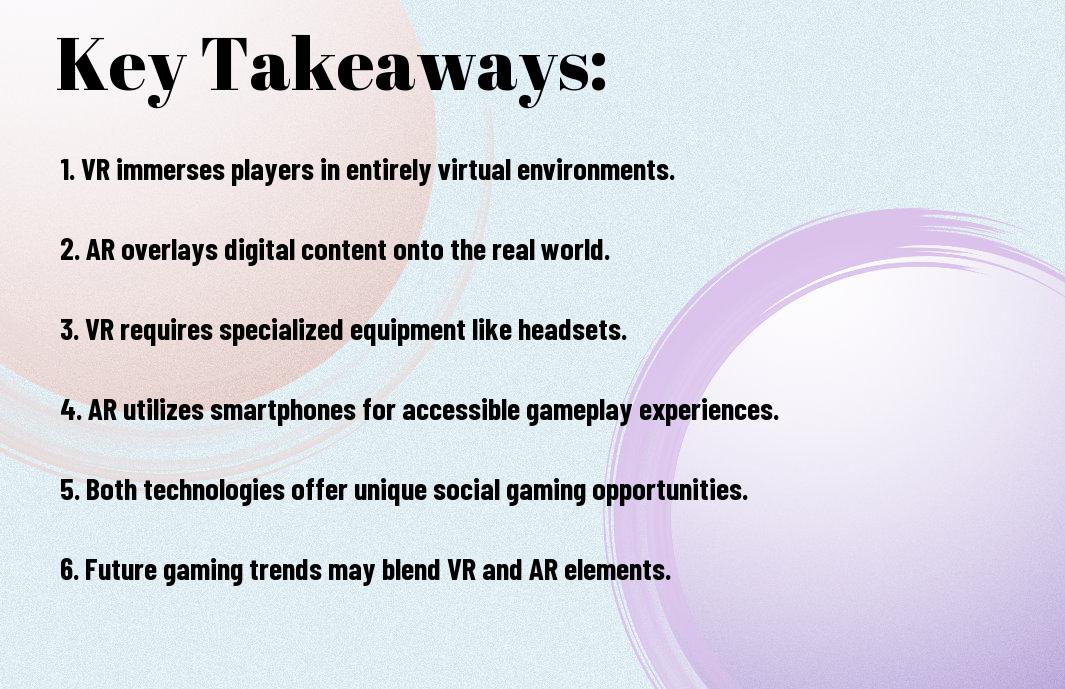
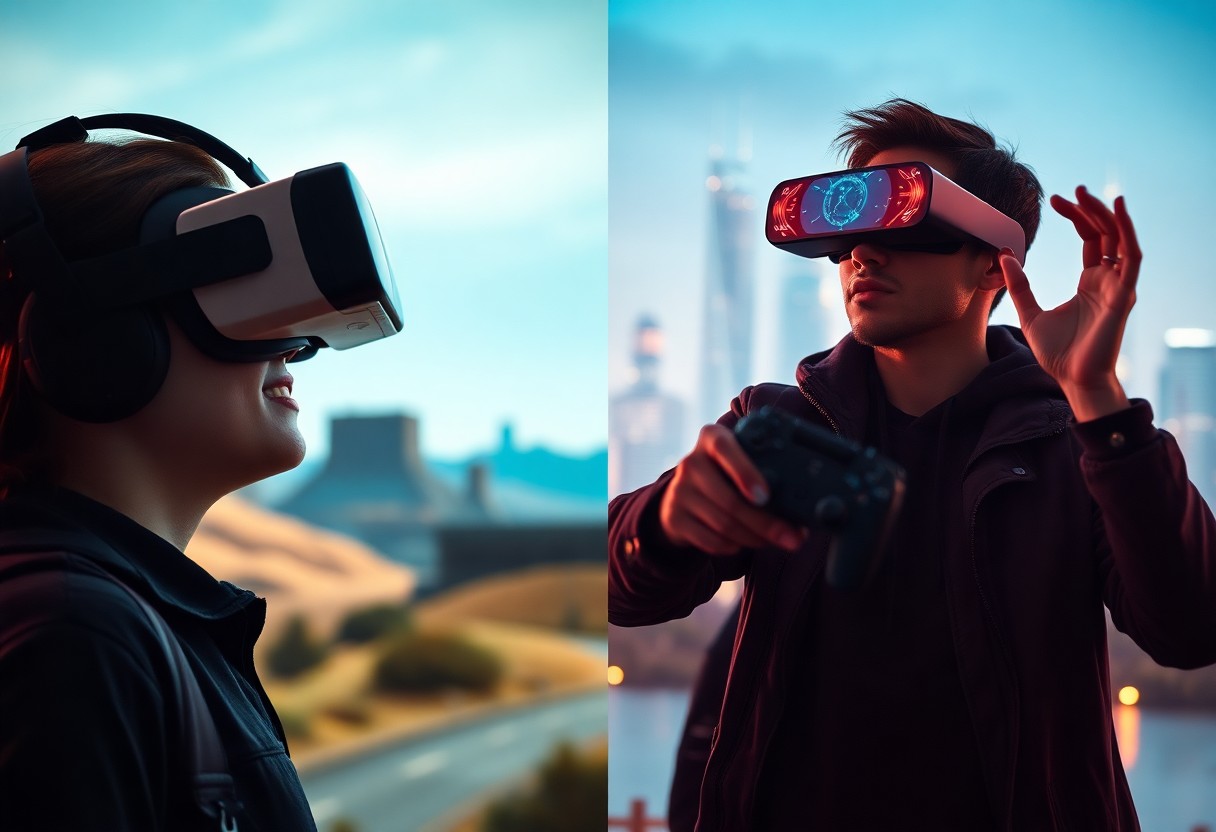
  • Virtual Reality (VR) and Augmented Reality (AR) are two distinct technologies that are transforming the gaming industry in different ways, with VR providing a fully immersive experience and AR enhancing the real world with virtual elements.
  • VR technology is currently more advanced in terms of gaming applications, with popular devices like Oculus and Vive offering high-end experiences, while AR is still developing its gaming capabilities.
  • AR has the potential to reach a broader audience due to its accessibility on mobile devices and its ability to blend seamlessly into everyday life, making it a significant player in the future of gaming.
  • The cost of VR equipment is currently a barrier to adoption, while AR can be experienced through smartphones and tablets, making it more affordable and widely available.
  • Both VR and AR offer new opportunities for game developers to create innovative and interactive experiences, with VR focusing on immersive storytelling and AR on interactive, real-world engagements.
  • The future of gaming is likely to involve a combination of both VR and AR technologies, as they complement each other and offer unique experiences that can coexist and enhance the gaming landscape.
  • As technology continues to evolve, we can expect to see significant advancements in both VR and AR, leading to new and exciting developments in the gaming industry that will shape the future of interactive entertainment.

The Core Foundations

To understand the differences between VR and AR, you can explore the pros and cons of each technology, as discussed in Virtual Reality vs Augmented Reality in Gaming: Pros and Cons, to make an informed decision about which one is shaping the future of gaming.

Virtual Reality Fundamentals

With the basics of VR, you’ll discover how it immerses you in a completely virtual world, shutting out your physical surroundings, and offering an engaging gaming experience.

Augmented Reality Essentials

After exploring AR, you’ll find that it enhances your real-world environment with virtual objects and information, creating a unique gaming experience that blends the physical and digital worlds.

Hence, as you research deeper into AR, you’ll notice how it uses your device’s camera to display virtual objects in the real world, allowing you to interact with them in a more immersive way, and opening up new possibilities for gaming and beyond, which will likely influence your perception of what gaming can be.

Hardware Evolution

If you’re considering the future of gaming, you need to look at the advancements in hardware. You’ll notice significant improvements in both VR and AR technologies, enabling more immersive experiences.

VR Headsets and Controllers

Contrary to what you might think, VR headsets and controllers have become more sophisticated, offering better tracking and higher resolution. You can expect a more realistic experience with your VR games.

AR Devices and Wearables

Among the latest developments, AR devices and wearables have started to gain traction, with companies investing heavily in this technology. You can expect to see more AR-enabled devices in the near future.

And as you explore the world of AR devices and wearables, you’ll find that they offer a more integrated experience, allowing you to interact with your surroundings in a more seamless way, enhancing your overall gaming experience with augmented reality.

Gaming Applications

Your gaming experience is about to change with the integration of VR and AR technologies, as you can learn more about in AR VR Shaping Gaming’s Future: A Billion-Dollar Industry.

VR Gaming Experiences

Previously, you had to imagine immersive gaming worlds, but now VR technology brings them to life, offering you unparalleled gaming experiences.

AR Gaming Innovations

Beneath the surface of traditional gaming lies a new world of AR innovations, waiting for you to explore and engage with your surroundings in entirely new ways.

Further, as you examine into AR gaming, you’ll discover how it blends the physical and digital worlds, creating interactive and dynamic experiences that you can’t find in traditional gaming, and this is just the beginning of what you can expect from this emerging technology.

Market Impact

After analyzing the current landscape, you can see that both VR and AR are making significant waves in the gaming industry, with each having its own unique advantages and disadvantages that will impact your gaming experience.

Current Gaming Trends

Prior to the latest developments, you were likely accustomed to traditional gaming methods, but now you have the option to explore new immersive experiences that are changing the way you play games.

Consumer Adoption Rates

Acceptance of these technologies is growing rapidly, and as you consider which one to invest in, you should look at the adoption rates of VR and AR to determine which one is leading the charge in the gaming industry.

And as you probe deeper into the consumer adoption rates, you will notice that VR has a strong following among gamers who value immersive experiences, while AR is gaining traction among those who prefer a more interactive experience that blends the virtual and real worlds, allowing you to make a more informed decision about which technology is right for your gaming needs.

Technical Challenges

Many technical hurdles need to be overcome for VR and AR to reach their full potential in gaming. You will encounter various obstacles, including high costs, limited content, and technical issues.

VR Limitations

Around the time you start exploring VR, you’ll notice limitations such as restricted movement and image resolution. You will need to consider these limitations when developing your gaming experience.

AR Development Hurdles

Behind the scenes, you’ll find that developing AR games poses significant challenges, including complex software and hardware requirements. You will need to navigate these hurdles to create an immersive experience.

Challenges in AR development also involve ensuring seamless integration with real-world environments, which can be complex and time-consuming. You will need to consider factors such as lighting, sound, and user interaction to create a realistic and engaging experience, and as you examine deeper into AR development, you’ll find that overcoming these challenges is necessary to creating immersive and interactive games that push the boundaries of what is possible.

Future Prospects

All signs point to a future where VR and AR technologies continue to evolve and improve, offering you new and innovative gaming experiences. As you consider the potential of these technologies, you’ll want to explore the latest developments and advancements.

Next-Gen VR Technologies

Across the industry, you’ll find advancements in VR technologies that are set to revolutionize your gaming experience, with improved graphics, faster processing, and more immersive gameplay, allowing you to engage with virtual worlds like never before.

AR Gaming Potential

Gaming enthusiasts like you will be excited to explore the vast potential of AR, which promises to blur the lines between the physical and virtual worlds, creating new and interactive experiences that you can enjoy in your daily life.

Due to the rapid growth of AR technology, you can expect to see more sophisticated and engaging AR games that leverage your surroundings, using your location and environment to create a unique gaming experience that’s tailored to your preferences and playing style.

Summing up

So, as you weigh the pros and cons of VR and AR, you’ll find that both are revolutionizing the gaming industry. You can expect your gaming experience to become more immersive and interactive. Your choice between VR and AR will depend on your preferences, as both technologies offer unique benefits. You’ll need to consider what type of experience you want, and then decide which technology is best for your gaming needs.

FAQ

Q: What is the main difference between VR and AR, and how do they impact the gaming experience?

A: The main difference between Virtual Reality (VR) and Augmented Reality (AR) lies in the way they interact with the user’s environment. VR creates a completely immersive, computer-generated world that shuts out the physical environment, while AR overlays digital information onto the real world. In gaming, VR provides a more immersive and interactive experience, allowing players to step into the game world, whereas AR enhances the real world with virtual objects and information, blurring the lines between the physical and digital. This fundamental difference shapes the type of games that can be developed for each technology, with VR focusing on fully immersive experiences and AR on enhancing real-world interactions.

Q: Which technology, VR or AR, is more likely to shape the future of gaming, and why?

A: Both VR and AR have the potential to significantly impact the future of gaming, but in different ways. VR is likely to continue to evolve and improve, offering more sophisticated and realistic experiences, especially with advancements in hardware and content creation. On the other hand, AR, with its ability to seamlessly integrate into daily life, might see more mainstream adoption, especially with the development of AR-enabled smartphones and other portable devices. The future of gaming could be shaped by both, with VR offering deep, immersive experiences and AR providing accessible, interactive enhancements to everyday activities. The choice between them may ultimately depend on the type of gaming experience players prefer.

Q: How are VR and AR technologies being developed and improved to enhance gaming, and what can we expect in the near future?

A: Both VR and AR technologies are being rapidly developed and improved with significant investments in research and development. For VR, advancements in areas like resolution, field of view, and motion tracking are expected to enhance the immersive experience. Additionally, the development of standalone VR headsets that do not require a PC or console is making VR more accessible. For AR, improvements in areas like object recognition, spatial audio, and cloud rendering are expected to make AR experiences more realistic and interactive. In the near future, we can expect to see more sophisticated games that utilize these technologies, offering players unprecedented levels of immersion and interaction. Furthermore, the integration of other technologies like artificial intelligence and 5G networks will further enhance the capabilities of both VR and AR, opening up new possibilities for gaming and beyond.

VR and Motion Controls – Redefining Physical Interaction in Gaming

As you investigate into the world of virtual reality, you’ll discover a new dimension of gaming that revolutionizes your physical interaction with virtual environments. With VR and motion controls, you can engage in immersive experiences that simulate real-world movements, enhancing your gaming experience. You’ll explore new ways to interact with games, using your body to influence the virtual world, and experience a level of realism that was previously unimaginable.

Key Takeaways:

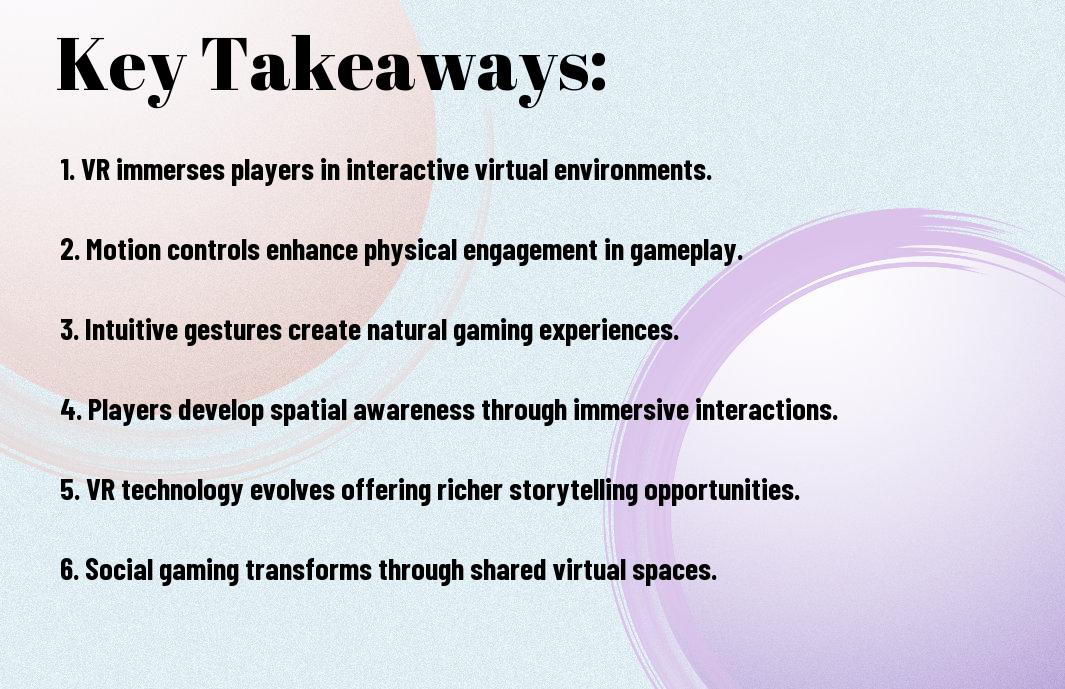
  • Virtual reality (VR) technology has revolutionized the gaming industry by introducing immersive and interactive experiences that simulate real-world environments, allowing players to engage with virtual objects and spaces in a more intuitive way.
  • Motion controls have become an imperative component of VR gaming, enabling players to interact with virtual objects and environments using natural gestures and movements, enhancing the overall sense of presence and immersion.
  • The combination of VR and motion controls has enabled the creation of new types of games and experiences that were not possible with traditional controllers, such as sports games that require physical movement and strategy games that involve manipulating virtual objects.
  • VR and motion controls have also improved the accessibility of gaming, allowing players with disabilities to participate in games that would be difficult or impossible for them to play with traditional controllers.
  • The use of VR and motion controls has raised new questions about the design of games and user interfaces, requiring developers to think creatively about how to create intuitive and engaging interactions that take advantage of the unique capabilities of these technologies.
  • As VR technology continues to evolve, we can expect to see even more sophisticated and realistic motion controls, enabling new types of games and experiences that blur the line between the physical and virtual worlds.
  • The integration of VR and motion controls is likely to have a significant impact on the future of gaming, enabling new forms of storytelling, social interaction, and entertainment that are more immersive, interactive, and engaging than ever before.

Evolution of Motion Controls

To understand the impact of VR on gaming, you need to consider the evolution of motion controls, which have revolutionized the way you interact with games, enabling a more immersive experience.

From Nintendo Wii to Modern VR

One of the key milestones in this evolution is the introduction of motion controls in consoles like the Nintendo Wii, which paved the way for modern VR systems that you use today.

Breaking Traditional Input Barriers

Traditionally, gaming input has been limited to controllers and keyboards, but with the advent of motion controls, you can now engage with games in a more natural and intuitive way, breaking free from these limitations.

Also, as you explore the world of motion controls, you’ll find that your gaming experience becomes more engaging and interactive, allowing you to fully immerse yourself in the virtual environment, and with the advancements in VR technology, your interactions will become even more sophisticated and realistic.

VR Hardware Innovations

Some of the most significant advancements in VR technology can be found in VR and AR in Gaming: Redefining Immersive Experiences with Innovative Solutions, which are changing the way you interact with virtual worlds. As you explore the latest VR hardware, you’ll notice significant improvements in tracking and feedback systems.

Hand Tracking Technologies

Innovative hand tracking technologies are allowing you to control your virtual environment with precision, using your natural hand movements to interact with objects and characters. This technology enables you to manipulate virtual objects with ease, creating a more immersive experience.

Haptic Feedback Systems

Systems like haptic feedback are revolutionizing the way you feel virtual interactions, providing a tactile experience that simulates the sensations of touch and texture. As you engage with virtual objects, you’ll feel a sense of resistance and feedback, further blurring the line between the physical and virtual worlds.

Hence, haptic feedback systems are becoming increasingly sophisticated, allowing you to feel a wide range of sensations, from the thrill of holding a virtual weapon to the sensation of walking on different textures. As you explore the capabilities of haptic feedback, you’ll discover new ways to engage with virtual environments, creating a more realistic and engaging experience that draws you deeper into the game.

Physical Movement Translation

Unlike traditional gaming methods, VR and motion controls allow you to experience a more immersive and interactive environment, where your physical movements are translated into in-game actions, enabling a more engaging and realistic experience.

Natural Gesture Recognition

Prior to the advancement of motion controls, you were limited to using controllers with buttons and joysticks, but now you can use natural gestures to interact with your games, making the experience feel more intuitive and immersive.

Real-world Movement Mapping

Actually, real-world movements are mapped to in-game actions, allowing you to perform actions in a way that feels natural and intuitive, such as swinging a virtual sword or throwing a virtual ball, and this mapping enables a more realistic and engaging experience.

Understanding how real-world movement mapping works, you can see that it involves sophisticated algorithms and sensors that track your movements and translate them into in-game actions, allowing you to fully immerse yourself in the virtual world and interact with it in a way that feels authentic and engaging, and as you explore this technology, you will discover new ways to enhance your gaming experience.

Gaming Design Adaptation

Your gaming experience is about to undergo a significant transformation with the integration of VR and motion controls, as developers adapt their designs to accommodate these innovative technologies.

Interface Reimagining

The traditional interface is being rethought to incorporate intuitive gestures and movements, allowing you to interact with virtual objects in a more natural way.

Spatial Awareness Integration

Before plunging into the world of VR, you need to understand how spatial awareness will enhance your gaming experience, enabling you to navigate and interact with virtual environments in a more immersive way.

Hence, as you explore the possibilities of spatial awareness integration, you’ll discover how it enables you to judge distances, track objects, and move through virtual spaces with greater ease and precision, creating a more engaging and realistic experience.

Physical Immersion Elements

Many gamers are drawn to VR and motion controls because they offer a more immersive experience. You can engage with virtual worlds in a way that feels more natural and intuitive, using your body to interact with the environment.

Body Position Tracking

With advanced tracking technology, you can move around and have your movements mirrored in the virtual world, creating a seamless experience. You can use your body to control the game, making it feel more like you are actually there.

Environmental Interaction

After putting on your VR headset, you can start interacting with the virtual environment in a way that feels incredibly realistic. You can pick up objects, manipulate them, and use them to solve puzzles or complete tasks.

Plus, as you explore the virtual world, you’ll notice that your interactions have a direct impact on the environment. You can see the effects of your actions, and the world responds to your presence, making the experience feel even more immersive and engaging. You’ll feel like you’re an active participant in the game, rather than just a passive observer.

Future Applications

Keep in mind that the potential of VR and motion controls extends far beyond gaming, with applications in fields like education, healthcare, and entertainment on the horizon, allowing you to experience new ways of interaction.

Cross-Platform Integration

Following the current trend, you will see seamless integration across different platforms, enabling you to enjoy your favorite games and experiences on various devices, from consoles to PCs and mobile devices, with your motion controls and VR headset.

Mixed Reality Possibilities

For instance, you can expect mixed reality to revolutionize the way you interact with virtual objects and environments, blurring the lines between the physical and digital worlds, and opening up new possibilities for your gaming experiences.

Considering the rapid advancements in mixed reality technology, you will soon be able to project virtual objects into your real-world environment, allowing you to interact with them in a more immersive and intuitive way, and taking your gaming experiences to a whole new level, with your VR and motion controls enabling you to manipulate and engage with these virtual objects in a highly realistic manner.

To wrap up

The evolution of VR and motion controls is redefining your gaming experience. As you explore this new world, you’ll discover how it enhances your interaction with virtual environments. For a deeper investigate this topic, visit The Impact of VR on Gaming Experience to learn more about the advancements shaping your gaming future.

FAQ

Q: What is the role of motion controls in Virtual Reality (VR) gaming, and how do they enhance the overall gaming experience?

A: Motion controls play a significant role in VR gaming by allowing players to interact with virtual objects and environments in a more intuitive and immersive way. With motion controls, players can use gestures, movements, and actions to engage with the game world, creating a more engaging and interactive experience. This technology enables players to feel as though they are actually inside the game, rather than just controlling a character on a screen. By providing a more natural and physical way of interacting with the game, motion controls help to increase the sense of presence and immersion, making the gaming experience more realistic and enjoyable.

Q: How do VR and motion controls work together to redefine physical interaction in gaming, and what are some examples of games that utilize this technology effectively?

A: VR and motion controls work together to redefine physical interaction in gaming by tracking the player’s movements and translating them into in-game actions. This is achieved through the use of sensors, cameras, and other technologies that monitor the player’s body and hand movements. Games like Beat Saber, Job Simulator, and Superhot VR are excellent examples of how VR and motion controls can be used to create unique and engaging gaming experiences. In these games, players use motion controls to manipulate objects, interact with environments, and engage in physical activities like dancing, throwing, or shooting, creating a more immersive and interactive experience.

Q: What are the potential benefits and limitations of using VR and motion controls in gaming, and how might this technology evolve in the future to further enhance physical interaction in gaming?

A: The potential benefits of using VR and motion controls in gaming include increased immersion, improved engagement, and enhanced interactivity. However, there are also limitations, such as the cost and accessibility of VR hardware, the potential for motion sickness, and the need for more advanced tracking technologies. As the technology continues to evolve, we can expect to see more advanced motion control systems, improved tracking accuracy, and more sophisticated VR hardware. This could lead to even more immersive and interactive gaming experiences, such as full-body tracking, advanced haptic feedback, and more realistic physics simulations, further redefining the way we interact with games and virtual environments.

HT-fff Skip to content