Video games

How Video Games Address Social Issues Through Storytelling

As you explore the world of video games, you’ll notice that many titles tackle complex social issues, such as inequality and injustice, through engaging storytelling. You’ll discover that your favorite games often weave in thought-provoking narratives that encourage you to think critically about the world around you. By examining these stories, you’ll gain insight into how video games address social issues, sparking meaningful conversations and inspiring positive change, making your gaming experience more impactful and thought-provoking.

Key Takeaways:

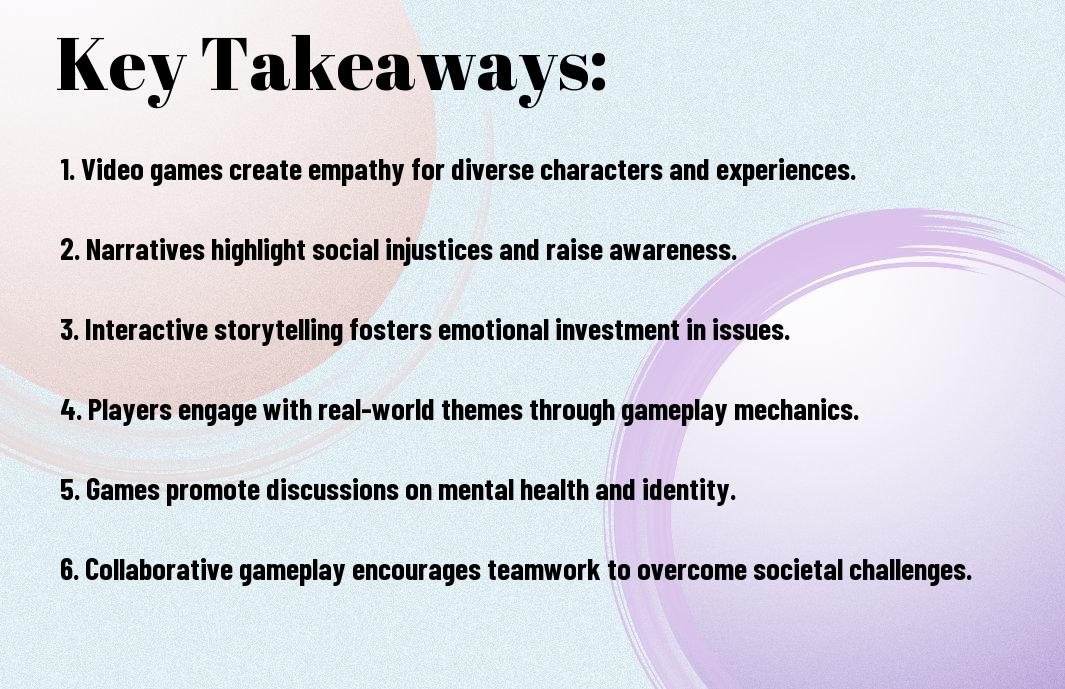
  • Video games have the ability to tackle complex social issues, such as racism, sexism, and inequality, through engaging storytelling and immersive gameplay, allowing players to experience and understand different perspectives.
  • Games like “This War of Mine” and “Papers, Please” use narrative to highlight the human cost of war and the consequences of bureaucratic oppression, promoting empathy and self-reflection in players.
  • Story-driven games can raise awareness about social issues, such as mental health, disability, and LGBTQ+ rights, by incorporating realistic and relatable characters, plotlines, and dialogue.
  • The interactive nature of video games enables players to make choices that impact the story, allowing them to explore the consequences of their actions and develop a deeper understanding of the social issues presented.
  • Games can also serve as a platform for social commentary, using satire, allegory, and other literary devices to critique societal norms and spark meaningful conversations among players.
  • By incorporating diverse characters, settings, and storylines, video games can promote inclusivity and representation, helping to break down stereotypes and challenge players’ assumptions about different social groups.
  • Ultimately, the storytelling in video games has the power to inspire positive change, encouraging players to think critically about social issues and take action to make a difference in their own communities and the world at large.

The Evolution of Social Commentary in Games

Your exploration of video games as a medium for social commentary will lead you to consider whether they should address such issues, as discussed in Should video games address social issues?, and how they have evolved over time.

From Simple Narratives to Complex Social Issues

After delving into the history of video games, you’ll notice that they have transitioned from simple narratives to tackling complex social issues, reflecting your changing world and societal concerns.

The Rise of Choice-Based Storytelling

By examining modern games, you’ll find that choice-based storytelling has become a key aspect of the medium, allowing you to engage with social issues in a more personal way.

Consequently, this shift towards choice-based storytelling enables you to experience different perspectives and outcomes, making you more invested in the game’s social commentary and encouraging you to think critically about the issues presented.
Representation and Identity

Some of the most impactful stories in video games come from their ability to tackle complex social issues, allowing you to experience different perspectives and identities. As you play through these games, you’ll notice how they address representation and identity in a way that’s both thought-provoking and engaging.

Gender and Sexuality in Gaming Narratives

Across various gaming platforms, you’ll find narratives that explore gender and sexuality in a way that’s both authentic and relatable, allowing you to connect with characters on a deeper level and understand their struggles and triumphs.

Cultural Diversity and Perspective

By exploring different cultures and perspectives, you’ll gain a broader understanding of the world and its complexities, as video games provide a unique lens through which to experience and learn about various cultural identities and backgrounds.

Hence, as you investigate into games that focus on cultural diversity and perspective, you’ll discover how they can enrich your understanding of the world, allowing you to appreciate the nuances of different cultures and fostering empathy and tolerance, which is crucial in today’s global community, and enabling you to become a more informed and open-minded individual.

Political and Economic Themes

Unlike other forms of media, video games can tackle complex political and economic issues in a unique and engaging way, allowing you to experience different perspectives and scenarios firsthand.

Power Structures and Authority

For instance, you can explore the impact of authoritarian regimes and corrupt governments on individuals and societies, and consider how your own actions can influence the balance of power in a virtual world.

Resource Distribution and Class Struggle

Between the haves and have-nots, video games often highlight the disparities in resource distribution, enabling you to witness the consequences of economic inequality and ponder your own role in perpetuating or challenging these systems.

It is through these virtual experiences that you can gain a deeper understanding of the complexities surrounding resource distribution and class struggle, and develop a more nuanced perspective on the social and economic issues that affect your own community, allowing you to think critically about your own place within the larger economic landscape and how your choices can impact others.

Environmental Messaging

Now, as you explore the world of video games, you’ll notice that many titles incorporate environmental messaging into their storytelling, prompting you to think about the impact of human actions on the planet. You can find discussions on How can video games tell more nuanced stories like TV and film, which often tackle complex issues like climate change.

Climate Change and Conservation

At the forefront of environmental messaging in video games is the issue of climate change and conservation, where you, as a player, are tasked with navigating the consequences of environmental degradation and finding ways to mitigate its effects.

Human Impact on Virtual Worlds

Changing the way you think about your actions in virtual worlds, many games now highlight the human impact on the environment, encouraging you to consider the consequences of your in-game decisions.

Even as you play games that allow you to build and manage your own virtual worlds, you’re forced to confront the consequences of your actions, such as pollution, deforestation, and resource depletion, making you think about your real-world impact and how you can make a positive change.

Mental Health and Personal Struggles

Many video games tackle mental health and personal struggles, offering you a unique perspective on these complex issues. You’ll find that these games often use storytelling to convey the emotional depth of their characters, making you invested in their journeys.

Character Development Through Trauma

Traumatizing events shape characters, allowing you to understand their motivations and backstories. You see how trauma affects their behavior, making their development more believable and relatable.

Healing and Recovery Narratives

Across various games, you’ll encounter stories of healing and recovery, which provide you with a sense of hope and resilience. You’ll witness characters overcoming their struggles, and this can be a powerful experience.

Through the portrayal of healing and recovery narratives, you can gain a deeper understanding of the complexities of mental health. You’ll see that recovery is a journey, with ups and downs, and that it’s okay to not be okay. As you play these games, you’ll be reminded that you’re not alone in your struggles, and that seeking help is a sign of strength, not weakness.

Social Justice and Activism

For many players, video games offer a unique perspective on social justice and activism, allowing you to experience different worlds and scenarios that raise awareness about important issues. You can engage with stories that highlight social injustices, encouraging you to think critically about your own beliefs and values.

Player Agency in Social Change

Behind the engaging narratives, you’ll find that many games provide you with the opportunity to make choices that impact the story, allowing you to feel invested in the social change you’re witnessing. You can influence the outcome of events, making your experience feel more personal and immersive.

Consequences and Moral Choices

Changing the way you think about social issues, video games often present you with difficult moral choices, forcing you to consider the consequences of your actions. You must weigh the pros and cons of each decision, thinking carefully about how it will affect the game’s world and characters.

To further explore the concept of consequences and moral choices, you can analyze how games use branching storylines and multiple endings to illustrate the impact of your decisions. You’ll notice that your choices can lead to vastly different outcomes, teaching you about the complexity of social issues and the importance of considering multiple perspectives. As you play, you’ll develop a deeper understanding of the social issues presented, and you’ll be encouraged to think critically about your own role in creating positive change.

Final Words

From above, you can see how video games tackle social issues through storytelling, offering your a unique perspective on complex problems. As you engage with these games, you gain a deeper understanding of the world and its challenges. Your experience is enriched by the immersive narratives, allowing you to empathize with characters and their struggles, ultimately broadening your understanding of social issues and their impact on individuals and society.

FAQ

Q: How do video games use storytelling to address social issues like racism and discrimination?

A: Video games often use narrative techniques such as character development, dialogue, and plot twists to tackle complex social issues like racism and discrimination. For example, games like “This War of Mine” and “Life is Strange” feature characters from diverse backgrounds and experiences, allowing players to engage with and understand different perspectives on these issues. By presenting these issues in a virtual environment, games can provide a safe space for players to explore and learn about sensitive topics, fostering empathy and encouraging players to think critically about the world around them.

Q: Can video games effectively raise awareness about mental health issues, such as anxiety and depression, through their storytelling?

A: Yes, many video games use storytelling to address mental health issues, aiming to reduce stigma and promote understanding. Games like “Night in the Woods” and “Hellblade: Senua’s Sacrifice” feature characters struggling with mental health issues, portraying their experiences in a realistic and relatable way. By sharing these stories, games can help players recognize the signs and symptoms of mental health conditions, encouraging them to seek help and support. Additionally, games can provide resources and information about mental health, further promoting awareness and education.

Q: How do video games incorporate real-world social issues, such as climate change and economic inequality, into their narratives and gameplay mechanics?

A: Video games often incorporate real-world social issues into their narratives and gameplay mechanics to raise awareness, promote discussion, and encourage players to think critically about these issues. For example, games like “Eco” and “This War of Mine” feature gameplay mechanics that simulate the consequences of environmental degradation and economic inequality, respectively. By presenting these issues in a virtual environment, games can help players understand the complexities and challenges of addressing these problems, as well as the importance of individual and collective action in creating positive change. This can inspire players to take action in the real world, promoting a sense of social responsibility and civic engagement.

Video Games as Modern Art – Exploring Digital Creativity

As you probe into the world of video games, you’ll discover a realm of innovative storytelling, stunning visuals, and immersive experiences. You’ll find that your perception of art is challenged, as digital masterpieces push the boundaries of creativity. You’ll explore the intersection of technology and art, where your interactions become an integral part of the artistic expression, redefining your understanding of modern art and its possibilities.

Key Takeaways:

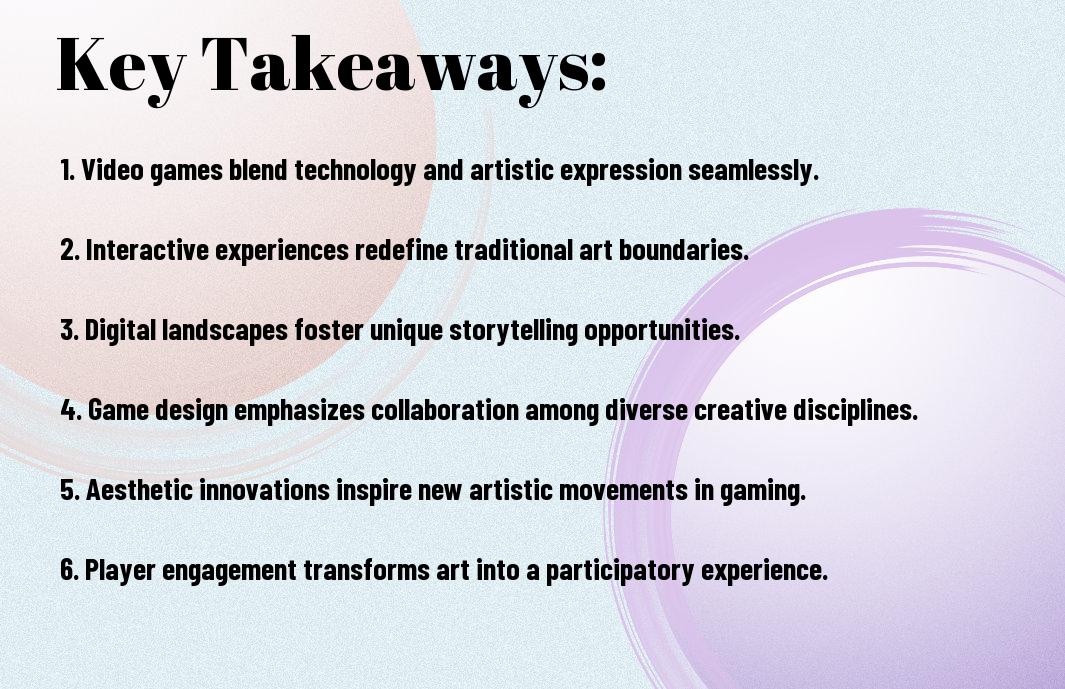
  • Video games have evolved into a sophisticated form of modern art, offering immersive and interactive experiences that rival traditional art forms in terms of creativity and emotional resonance.
  • The use of digital technology in video games enables artists to push boundaries and explore new modes of expression, resulting in innovative and dynamic works of art.
  • Video games often incorporate multiple art forms, such as music, visual arts, and literature, making them a unique and multidisciplinary medium for artistic expression.
  • The interactivity of video games allows players to engage with the artwork in a more personal and immersive way, creating a sense of agency and participation that is distinct from traditional art forms.
  • Video games can be used to tell complex and nuanced stories, exploring themes and ideas that are relevant to contemporary society and culture.
  • The art of video game design involves a deep understanding of human psychology, sociology, and philosophy, as game developers seek to create experiences that are both entertaining and thought-provoking.
  • As a modern art form, video games are challenging traditional notions of what constitutes “art” and expanding our understanding of the role of creativity and innovation in the digital age.

Digital Canvas

Before entering into the world of digital art, you’ll notice that video games offer a unique platform for creative expression. You can explore vibrant worlds, interact with characters, and experience stories in a highly immersive environment.

Visual Aesthetics in Gaming

Any gamer can appreciate the stunning visuals in modern games, with detailed textures, lighting, and animations. You’ll discover that your gaming experience is enhanced by the visual aesthetics, drawing you into the game’s world and refusing to let go.

Interactive Design Elements

Visually, interactive design elements play a significant role in shaping your gaming experience. You’ll find that these elements, such as menus, buttons, and controls, are carefully designed to guide you through the game, making it more engaging and intuitive.

Further, as you explore deeper into the world of interactive design, you’ll notice that these elements are not just functional, but also contribute to the overall artistic vision of the game. You’ll see how they enhance the narrative, atmosphere, and emotional impact, making your experience even more immersive and memorable.

Narrative Architecture

There’s a new wave of video games that are redefining the way you experience storytelling, with narrative architecture playing a key role in this evolution. You’ll find that these games are designed to immerse you in their worlds, making you an active participant in the story.

Storytelling Through Digital Spaces

The way video games use digital spaces to tell stories is a fascinating aspect of modern gaming, allowing you to explore and interact with the environment in a way that’s unique to this medium. You can uncover hidden secrets, piece together narratives, and influence the story through your actions.

Player Agency as Artistic Expression

Digital technologies have enabled game developers to create complex, dynamic worlds that you can shape and influence, giving you a sense of agency and ownership over the story. You can make choices that affect the narrative, creating a unique experience that’s tailored to your preferences.

Understanding the concept of player agency as artistic expression can help you appreciate the depth and complexity of modern video games. You’ll start to see that your actions, decisions, and interactions with the game world are not just about progressing through the story, but also about creating a personalized narrative that reflects your thoughts, feelings, and values. As you play, you’re not just consuming a story, you’re actively contributing to its creation, making the experience even more engaging and meaningful.

Technical Artistry

Now, as you explore into the world of video games, you’ll notice the intricate details that bring these digital experiences to life. Technical artistry plays a significant role in creating immersive environments, and you’ll appreciate the skill that goes into crafting each element.

Code as Creative Medium

On closer inspection, you’ll find that code is a fundamental aspect of video game development, allowing you to interact with the game world in complex ways. You’ll see how coders use their skills to create engaging gameplay mechanics and responsive systems.

Graphics and Sound Design

The visual and auditory elements of a game work together to draw you into the experience, with detailed graphics and realistic sound effects combining to create a believable atmosphere. You’ll notice how these elements enhance your emotional connection to the game.

Technical aspects of graphics and sound design allow you to become fully engaged in the game world, with your senses stimulated by the sights and sounds around you. As you explore the game, you’ll appreciate the attention to detail that has gone into creating an immersive experience, from the textures and lighting to the soundtrack and sound effects, all working together to enhance your journey.

Cultural Impact

Your exposure to video games as modern art is not limited to the gaming community, as they have become a significant part of the cultural landscape, with the World Intellectual Property Organization discussing Video Games: 21st century art and their impact on society.

Gaming in Contemporary Art Museums

Above the traditional boundaries of art, you can now find video games exhibited in contemporary art museums, showcasing their artistic and cultural value, and allowing you to experience them in a new and unique way.

Digital Preservation of Game Art

At the forefront of preserving digital art, you have the opportunity to explore the efforts being made to conserve video games as a form of modern art, ensuring their availability for future generations to enjoy and study.

Digital preservation of game art is a complex task, as you need to consider the technical and cultural aspects of the games, as well as the challenges of preserving interactive and dynamic digital content, and you can learn about the various initiatives and strategies being developed to address these challenges.

Artistic Innovation

For years, video games have been pushing the boundaries of what is possible in the digital realm, and as you explore this world, you’ll discover a plethora of innovative artistic expressions. You’ll find that games are not just about entertainment, but also about creative storytelling, immersive experiences, and emotional connections.

Experimental Game Design

On the forefront of this innovation, you’ll encounter experimental game designs that challenge your perceptions and blur the lines between art and gaming. You’ll experience unique mechanics, stunning visuals, and thought-provoking themes that will leave you questioning the very nature of interactive art.

Independent Games Movement

Game developers are now empowered to create and distribute their own content, allowing you to discover fresh perspectives and innovative ideas that might not have been possible in traditional gaming circles. You’ll find that independent games often prioritize creativity and originality over commercial appeal, resulting in truly unique experiences.

Movement towards independent game development has democratized the industry, enabling you to access a wide range of artistic expressions and creative visions. As you investigate into the world of independent games, you’ll encounter a diverse array of genres, styles, and themes, each one offering a distinct perspective on the medium and its potential as a form of modern art.

Creative Communities

Unlike traditional art forms, video games offer a unique platform for creative expression, as you can explore in Video Games, The Ultimate Artistic Entertainment. This has led to the emergence of vibrant communities that celebrate digital creativity.

Collaborative Digital Art

The rise of digital art has enabled you to collaborate with others, creating stunning works that showcase your collective talent and imagination, pushing the boundaries of what is possible in the virtual world.

Player-Generated Content

Against the backdrop of evolving technology, you are now able to generate your own content, from custom levels to entire games, demonstrating the democratization of game development and the power of community-driven creativity.

In addition, as you examine into player-generated content, you will discover a vast array of innovative and often surprising creations, reflecting the diversity and ingenuity of the gaming community, and inspiring you to explore your own creative potential.

Conclusion

Now, as you research into the world of video games, you’ll find that they are a vibrant form of modern art, offering a unique platform for digital creativity. You’ll discover that your perception of art expands, and you’ll appreciate the intricate details and storytelling that go into creating these immersive experiences. Your understanding of video games will evolve, and you’ll see them as a legitimate form of artistic expression, worthy of appreciation and exploration.

FAQ

Q: What makes video games a form of modern art?

A: Video games have evolved to incorporate complex narratives, stunning visuals, and immersive soundscapes, making them a unique form of modern art. The digital medium allows for interactive storytelling, player choice, and dynamic environments, which can evoke emotions and challenge players’ perspectives. The artistry in video games is evident in the detailed character designs, concept art, and the overall aesthetic of the game world, showcasing the creativity and skill of the developers.

Q: How do video games explore digital creativity?

A: Video games explore digital creativity through various means, such as innovative gameplay mechanics, experimental art styles, and the use of emerging technologies like virtual reality (VR) and augmented reality (AR). Game developers are constantly pushing the boundaries of what is possible in a digital environment, creating new and innovative ways to engage players and tell stories. The digital nature of video games also allows for rapid iteration and experimentation, enabling developers to try new things and take risks in their creative endeavors.

Q: What role do video games play in the contemporary art world?

A: Video games are increasingly being recognized as a legitimate form of contemporary art, with many museums, galleries, and art festivals featuring video games as part of their exhibitions and collections. The art world is beginning to acknowledge the cultural significance and artistic value of video games, with some games being showcased alongside traditional art forms like painting, sculpture, and film. This shift in perception highlights the growing importance of video games as a medium for artistic expression and their ability to contribute to the broader cultural conversation about art, technology, and society.

Marketing Magic – How Video Game Campaigns Capture Our Attention

As you research into the world of video games, you’re likely to notice the captivating campaigns that surround your favorite titles. You may wonder what makes these marketing strategies so effective, drawing you in with their engaging storylines and immersive visuals. Your attention is precisely the goal, and the marketing teams behind these games have mastered the art of capturing it, leveraging psychological insights and creative techniques to leave a lasting impression on you.

Key Takeaways:

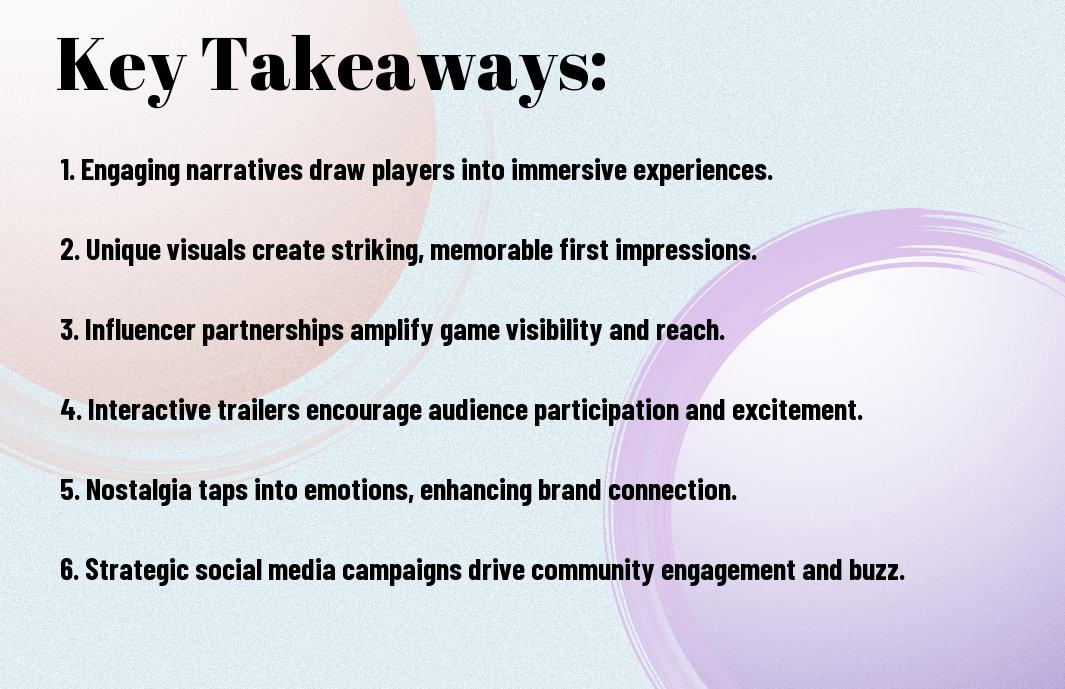
  • Effective video game marketing campaigns often use a combination of storytelling, visuals, and interactive elements to capture the audience’s attention and create a lasting impression.
  • Trailers and teasers are used to build anticipation and excitement for upcoming games, with many campaigns starting months or even years in advance of the game’s release.
  • Social media plays a significant role in video game marketing, with platforms like Twitter, YouTube, and Twitch used to share updates, behind-the-scenes content, and influencer partnerships.
  • Influencer marketing is a key strategy in the gaming industry, with popular streamers and YouTubers often partnering with game developers to promote new releases and create buzz around upcoming titles.
  • Immersive experiences, such as virtual reality (VR) and augmented reality (AR) experiences, are being used to create unique and engaging marketing campaigns that simulate the game environment.
  • Community engagement is a vital aspect of video game marketing, with developers encouraging fan interaction and feedback through forums, social media, and live events to build a loyal fan base.
  • Measuring the success of a marketing campaign is vital, with metrics such as engagement rates, conversion rates, and return on investment (ROI) used to evaluate the effectiveness of different marketing strategies and tactics.

The Psychology of Gaming Attention

Before entering into the world of video game marketing, you need to understand what drives your attention. The psychology behind gaming attention is complex, involving various factors that influence your behavior and decision-making process. As you engage with a game, your brain responds to certain stimuli, making you more likely to continue playing.

Dopamine-Driven Design

On the surface, game design appears to be solely about entertainment, but beneath lies a sophisticated system that triggers dopamine release in your brain, motivating you to continue playing. You experience a sense of pleasure and satisfaction, encouraging you to repeat certain actions, which in turn, strengthens your engagement with the game.

Social Proof Elements

With the rise of online gaming, social proof elements have become a key aspect of game design. You are more likely to engage with a game when you see others playing and enjoying it, as this validation reinforces your own behavior and motivates you to continue playing.

Gaming communities and social media platforms play a significant role in amplifying social proof elements, allowing you to share your experiences, compare progress, and compete with others. As you participate in these online interactions, you become more invested in the game, and your attention is captured, making you a loyal player and potentially, a loyal customer.

Visual Storytelling in Game Marketing

While exploring the world of game marketing, you’ll notice that visual storytelling plays a significant role in capturing your attention. Through a combination of stunning visuals and engaging narratives, game marketers create an immersive experience that draws you in and leaves a lasting impression.

Cinematic Trailers

Upon viewing a game’s cinematic trailer, you’re immediately transported into the game’s universe, where you’re introduced to the characters, storyline, and overall atmosphere. This teaser gives you a glimpse into the game’s world, piquing your interest and building anticipation for the game’s release.

Gameplay Reveals

Similarly, storytelling through gameplay reveals offers a unique perspective, allowing you to see the game in action and understand its mechanics. As you watch the gameplay, you can assess whether the game aligns with your interests and preferences, making you more likely to engage with the game.

A key aspect of gameplay reveals is the way they showcase the game’s interactive elements, giving you a sense of what it’s like to play the game. As you watch the gameplay, you can imagine yourself in the player’s shoes, navigating the game’s world and overcoming challenges, which helps you form a deeper connection with the game and its story, making you more invested in the game’s release and your overall gaming experience.

Digital Campaign Architecture

All successful video game campaigns rely on a well-structured digital architecture, allowing you to navigate and engage with the game’s universe seamlessly. You can explore the game’s world, characters, and storyline through various online platforms, making your experience more immersive and interactive.

Social Media Integration

Socially, you are likely to encounter video game campaigns on your favorite social media platforms, where you can share your thoughts, opinions, and experiences with others. You can join communities, participate in discussions, and stay updated on the latest news and updates, making your engagement with the game more enjoyable and dynamic.

Influencer Ecosystems

Against the backdrop of a highly competitive gaming industry, you will find that influencer ecosystems play a significant role in promoting video games. You can discover new games, watch walkthroughs, and learn tips and tricks from your favorite influencers, who have built a massive following and credibility in the gaming community.

For instance, when you follow influencers who align with your gaming interests, you can gain valuable insights into the game’s mechanics, storyline, and overall gameplay, helping you make informed decisions about which games to play and invest your time in. You can also engage with the influencer community, sharing your own experiences and opinions, and contributing to the ecosystem’s growth and diversity.

Pre-Launch Momentum

Keep in mind that generating excitement before a game’s release is key to its success. You’ll notice that successful games often have a well-planned pre-launch campaign that builds anticipation and hype among potential players.

Teaser Campaigns

Prelaunching a teaser campaign can spark your interest and get you talking about the upcoming game. You’ll start to see hints and clues about the game’s storyline, characters, and features, making you eager to learn more.

Community Building

Beneath the surface of a successful pre-launch campaign lies a strong community of fans. You’ll find that your enthusiasm is shared by others, creating a sense of belonging and shared excitement for the game’s release.

Plus, as you engage with the community, you’ll start to feel invested in the game’s success, eager to share your thoughts and opinions with others. You’ll begin to follow the game’s social media accounts, join online forums, and participate in discussions, further fueling your anticipation for the game’s launch.

Cross-Platform Strategies

Not surprisingly, effective cross-platform strategies are key to capturing your audience’s attention. You can learn more about this in The Ultimate Guide to Game Marketing: Everything You Need to Know, which provides valuable insights into the world of game marketing.

Mobile to Console Synergy

Against the backdrop of an increasingly connected gaming landscape, you’ll find that mobile and console gaming experiences are often intertwined, with your favorite games offering seamless transitions between platforms.

Multi-Channel Presence

Meanwhile, you’ll notice that a multi-channel presence is necessary for reaching your target audience, as your potential customers are likely to be active on various social media platforms, forums, and gaming communities.

Indeed, as you explore the concept of multi-channel presence, you’ll discover that it’s about more than just having a presence on multiple platforms – it’s about creating a cohesive brand identity that resonates with your audience across all channels, from social media to influencer partnerships, and from content marketing to paid advertising, allowing you to maximize your reach and engagement.

Emotional Marketing Triggers

For you, as a gamer, emotional connections play a significant role in capturing your attention. You are drawn to campaigns that evoke feelings and create a sense of belonging.

Nostalgia Factors

About the time you spent playing your favorite childhood games, you likely feel a strong emotional bond. You may experience this through:

  • Classic game remakes
  • Retro-style graphics
  • Familiar soundtracks
  • Recognizing these elements can instantly grab your attention and make you more invested in a campaign.

    FOMO Mechanics

    The fear of missing out is a powerful motivator, and you’re not immune to its effects. You feel pressure to stay up-to-date with the latest releases and trends.

    Due to the limited-time nature of many gaming events and promotions, you feel compelled to participate and engage with the campaign to avoid feeling left behind. This can lead to a sense of urgency, driving you to make purchases or take action, and ultimately, increasing your overall engagement with the game and its community.

    Summing up

    As a reminder, you now understand how video game campaigns capture your attention through marketing magic. You’ve seen how your emotions are triggered, and your interests are piqued. By leveraging psychology and creativity, marketers tap into your desires, making you invested in their games. You can appreciate the effort that goes into crafting these campaigns, and how they influence your gaming choices, making your experience more engaging and immersive.

    FAQ

    Q: What makes video game campaigns so effective at capturing our attention, and what can marketers learn from them?

    A: Video game campaigns are effective at capturing our attention because they often use a combination of engaging storytelling, immersive visuals, and interactive elements to draw players in and keep them invested. Marketers can learn from this by incorporating similar techniques into their own campaigns, such as using narrative-driven advertising, creating immersive brand experiences, and encouraging audience participation through social media and other channels. By doing so, marketers can create a deeper connection with their target audience and increase the likelihood of driving conversions and loyalty.

    Q: How do video game marketers use psychological manipulation to influence player behavior and drive sales?

    A: Video game marketers use a range of psychological techniques to influence player behavior and drive sales, including the use of scarcity, social proof, and variable rewards. For example, limited-time offers and exclusive content can create a sense of urgency and encourage players to make a purchase. Similarly, showcasing player achievements and leaderboards can foster a sense of competition and community, driving players to engage more deeply with the game. Marketers can apply these same principles to their own campaigns, using tactics like limited-time promotions and user-generated content to create a sense of excitement and engagement around their brand.

    Q: What role does nostalgia play in the success of video game marketing campaigns, and how can marketers tap into this powerful emotional driver?

    A: Nostalgia plays a significant role in the success of video game marketing campaigns, as it allows marketers to tap into players’ fond memories and emotional connections to classic games and franchises. By incorporating retro elements, such as classic characters, music, and gameplay mechanics, into their campaigns, marketers can create a sense of nostalgia and familiarity that resonates with players. Marketers can also use nostalgia to create a sense of continuity and tradition, highlighting the evolution of a franchise or series over time and emphasizing the latest installment as the next chapter in a beloved story. By leveraging nostalgia in this way, marketers can create a powerful emotional connection with their audience and drive engagement, loyalty, and sales.

Real-World Problem Solving – What Video Games Can Teach Us

As you navigate the complexities of everyday life, you’re constantly faced with problems that require creative solutions. Your ability to think critically and approach challenges from unique angles is vital. Interestingly, video games can be a valuable resource in developing these skills, offering immersive environments where you can experiment, take risks, and learn from your mistakes, ultimately enhancing your real-world problem-solving abilities.

Key Takeaways:

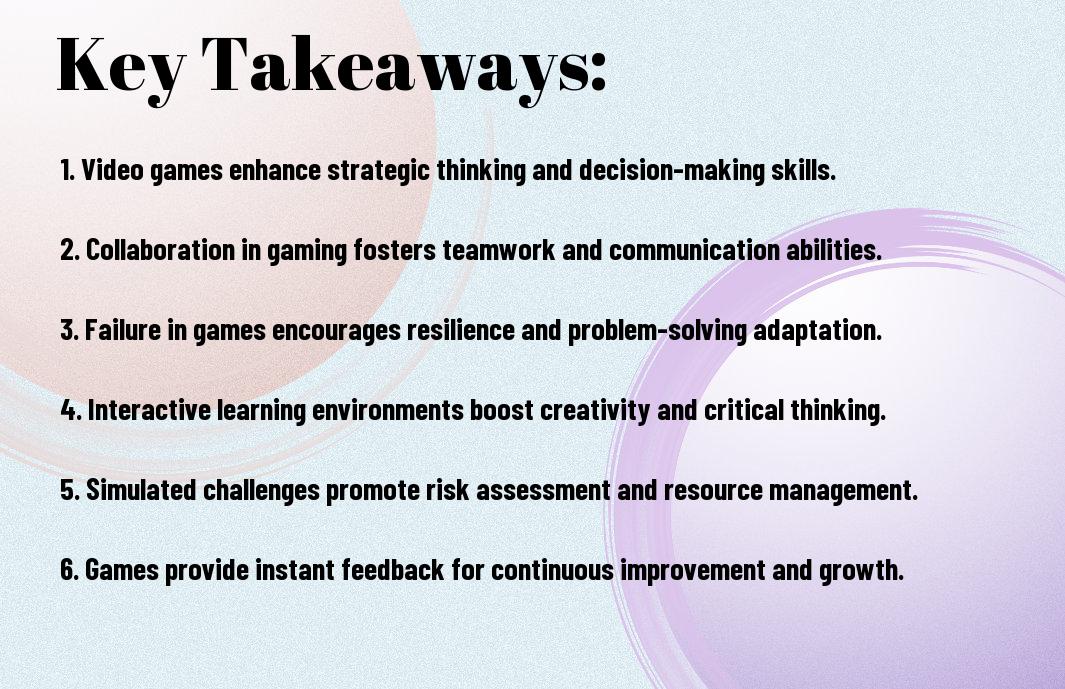
  • Video games offer a unique platform for developing problem-solving skills, as players are often presented with complex challenges that require creative and critical thinking to overcome.
  • Games can teach us to approach problems from different angles, experimenting with various solutions and learning from failure, which is an necessary aspect of real-world problem solving.
  • The interactive nature of video games allows players to receive immediate feedback on their actions, helping to refine their decision-making skills and adapt to new situations.
  • Many video games encourage collaboration and teamwork, promoting communication, cooperation, and mutual support, all of which are valuable skills in real-world problem solving.
  • Video games can also foster a growth mindset, as players are often encouraged to take risks, try new approaches, and view failures as opportunities for growth and learning.
  • The immersive and engaging nature of video games can help to build motivation and persistence, as players become invested in solving problems and achieving goals within the game world.
  • By analyzing the problem-solving strategies and techniques used in video games, we can gain insights into how to apply these skills to real-world problems, leading to more effective and innovative solutions.

Game Design Principles in Problem-Solving

A key aspect of video games is their ability to teach you valuable skills that can be applied to real-world problem-solving. By analyzing game design principles, you can gain a deeper understanding of how to approach complex problems in a logical and methodical way.

Strategic Thinking and Resource Management

With the right mindset, you can develop strategic thinking and resource management skills, allowing you to prioritize tasks and allocate resources effectively. This enables you to tackle problems in a more efficient and organized manner, much like you would in a game.

Risk Assessment and Decision Making

Risking it all can be a valuable learning experience, as you weigh the potential outcomes of your decisions and adjust your strategy accordingly. In games, you learn to assess risks and make informed decisions, a skill that translates well to real-life problem-solving.

Another important aspect of risk assessment and decision making is considering the potential consequences of your actions. As you play games, you develop the ability to think critically about the potential outcomes of your decisions, allowing you to make more informed choices in your personal and professional life, and helping you to develop a more nuanced understanding of your own decision-making process, which you can apply to your own problem-solving strategies.

Learning Through Failure

It is in video games that you experience failure as a natural part of the learning process, allowing you to learn and improve from your mistakes without significant consequences.

Safe Environment for Experimentation

Any attempt to solve a problem in a video game provides you with a safe space to try out different approaches, helping you to develop your critical thinking skills and build confidence in your ability to tackle challenges.

Iterative Problem-Solving Approaches

ProblemSolving in video games often involves trying different solutions, analyzing what works and what doesn’t, and adjusting your approach accordingly, teaching you to be patient and persistent in the face of obstacles.

But as you apply these iterative problem-solving approaches to real-world challenges, you will find that your ability to analyze problems, identify patterns, and adapt to new information will significantly improve, enabling you to tackle complex issues with a logical and methodical mindset, and ultimately, achieve your goals more effectively.

Collaborative Problem-Solving

Despite the common perception that video games are a solo activity, many games require collaboration to solve complex problems, teaching you valuable skills that can be applied to real-world situations.

Team Dynamics in Gaming

Problematically, you may struggle to work with others, but video games can help you develop vital team dynamics, such as trust, leadership, and mutual support, allowing you to tackle challenges more effectively.

Communication and Coordination Skills

Against the odds, you can develop strong communication and coordination skills by playing video games, learning to work together with your teammates to achieve a common goal, and adapting to different roles and responsibilities.

Communication is key to successful collaborative problem-solving, and video games can help you develop your ability to convey your thoughts and ideas effectively, as you learn to articulate your plans and strategies to your teammates, and adjust your approach based on their feedback, allowing you to work together seamlessly and achieve your objectives.

Adaptability and Pattern Recognition

Not all problems can be solved with a fixed approach, and video games teach you to adapt to new situations and recognize patterns to overcome challenges.

Dynamic Problem Environments

Following your progress through a game, you encounter diverse environments that test your ability to adjust strategies and think critically, preparing you for real-world complexities.

Skill Transfer to Real Situations

Along with the skills you develop, you can apply them to your everyday life, as your enhanced adaptability and pattern recognition abilities enable you to tackle problems from unique angles.

Problem solving in video games helps you develop a mindset that allows you to analyze situations, identify patterns, and apply your knowledge to your real-life challenges, enabling you to make informed decisions and find innovative solutions to the problems you face, and as you continue to play, you refine your skills, becoming more adept at transferring your gaming experience to your everyday life, making you a more effective problem solver.

Motivation and Engagement

For many of you, video games offer a unique blend of motivation and engagement, driving you to invest hours in solving problems and overcoming challenges. You find yourself drawn into the game’s world, eager to progress and achieve your goals.

Goal-Setting and Achievement Systems

After setting clear objectives, you’re more likely to stay motivated and focused, as seen in video games with well-designed achievement systems, guiding you toward specific targets and tracking your progress.

Progress Tracking and Feedback Loops

Loops of feedback and assessment help you adjust your strategy, as you encounter obstacles and learn from your mistakes, refining your approach to ultimately succeed.

And as you track your progress, you begin to see patterns and areas for improvement, allowing you to make data-driven decisions to optimize your performance, much like how video games provide you with detailed statistics and analysis to enhance your gameplay experience, enabling you to refine your skills and achieve your objectives more efficiently.

Real-World Applications

Your problem-solving skills can be applied to various aspects of life, and video games can teach you valuable lessons, as discussed in The Power of Play: How Video Games Enhance Problem Solving Skills, making you a more effective problem solver.

Educational Integration

With the rise of gamification, you can expect to see more video games being used in educational settings to teach complex concepts and promote interactive learning, making your learning experience more engaging and fun.

Professional Training Methods

For instance, you can use video games to develop your skills in a simulated environment, allowing you to practice and learn from your mistakes without real-world consequences, which can be beneficial for your professional growth.

Also, you can explore various professional training methods that incorporate video games, such as simulation-based training, which can help you develop your decision-making and problem-solving skills in a realistic and immersive environment, preparing you for real-world challenges.

Summing up

From above, you can see that video games offer valuable lessons in real-world problem solving. As you apply these skills, you’ll improve your ability to analyze situations, think critically, and make informed decisions. By embracing the problem-solving strategies you’ve learned from video games, you can enhance your approach to tackling complex challenges in your own life, leading to greater success and personal growth, and enabling you to overcome obstacles more effectively.

FAQ

Q: What can video games teach us about real-world problem solving?

A: Video games can teach us a variety of skills that are applicable to real-world problem solving, such as critical thinking, decision making, and analytical skills. Many video games present players with complex problems that require creative solutions, which can help improve cognitive flexibility and adaptability. Additionally, video games often involve working with others to achieve a common goal, promoting teamwork and communication skills.

Q: How do video games encourage players to think creatively and develop innovative solutions?

A: Video games often provide players with open-ended challenges and sandbox environments that encourage experimentation and exploration. This freedom to try new approaches and learn from failure can foster a mindset of creativity and innovation. Furthermore, many games incorporate mechanics that reward players for thinking outside the box and finding novel solutions to problems, such as puzzle games that require unconventional thinking to progress. By embracing this type of gameplay, players can develop their ability to generate and evaluate new ideas.

Q: Can the skills learned from video games be applied to real-world problems, such as those in education, business, or healthcare?

A: Yes, the skills learned from video games can be applied to a wide range of real-world problems. For example, the problem-solving skills developed through playing video games can be used to tackle complex challenges in fields like education, where teachers can use game-based learning to engage students and promote deeper understanding of subject matter. In business, the teamwork and communication skills developed through multiplayer games can be applied to collaborative projects and team management. In healthcare, the analytical skills developed through playing games can be used to analyze data and develop more effective treatment plans. By leveraging the skills learned from video games, individuals can become more effective problem solvers in their personal and professional lives.

HT-fff Skip to content