Storytelling

Interactive Narratives – The Future of Game Storytelling

As you probe into the world of gaming, you’re likely to notice a significant shift towards immersive experiences. Your engagement with interactive narratives is becoming more dynamic, allowing you to influence the story’s trajectory. To understand this evolution, you can explore The Future of Storytelling: Virtual Reality, Interactive Narratives, and Beyond, which sheds light on the innovative ways storytelling is being redefined in the gaming industry, and how you can expect your gaming experiences to change.

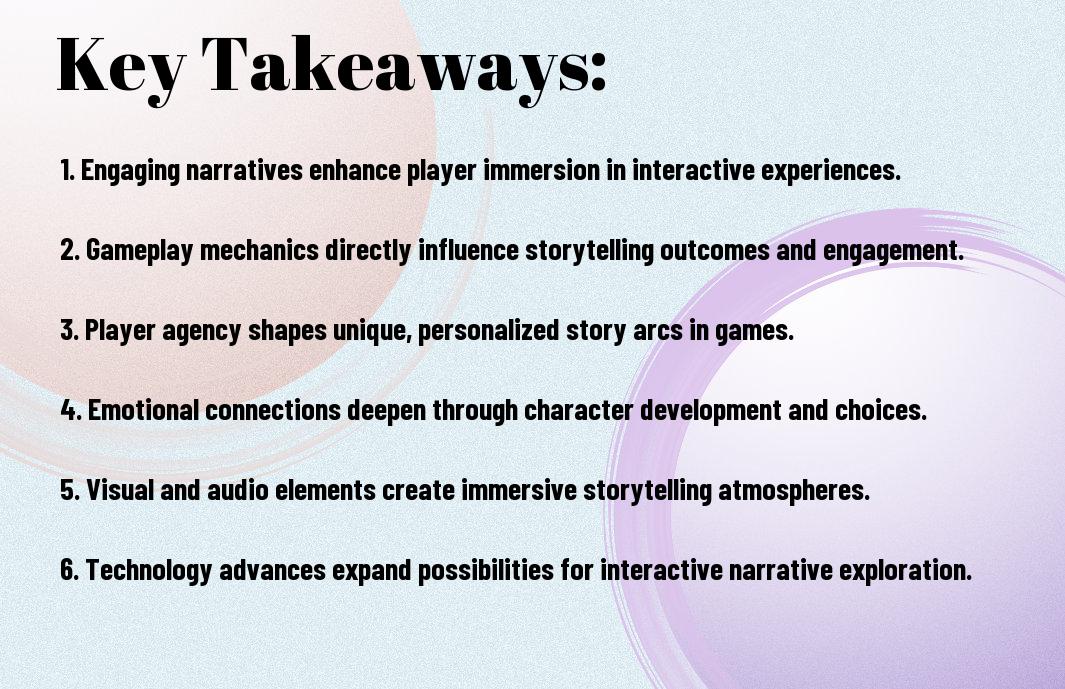
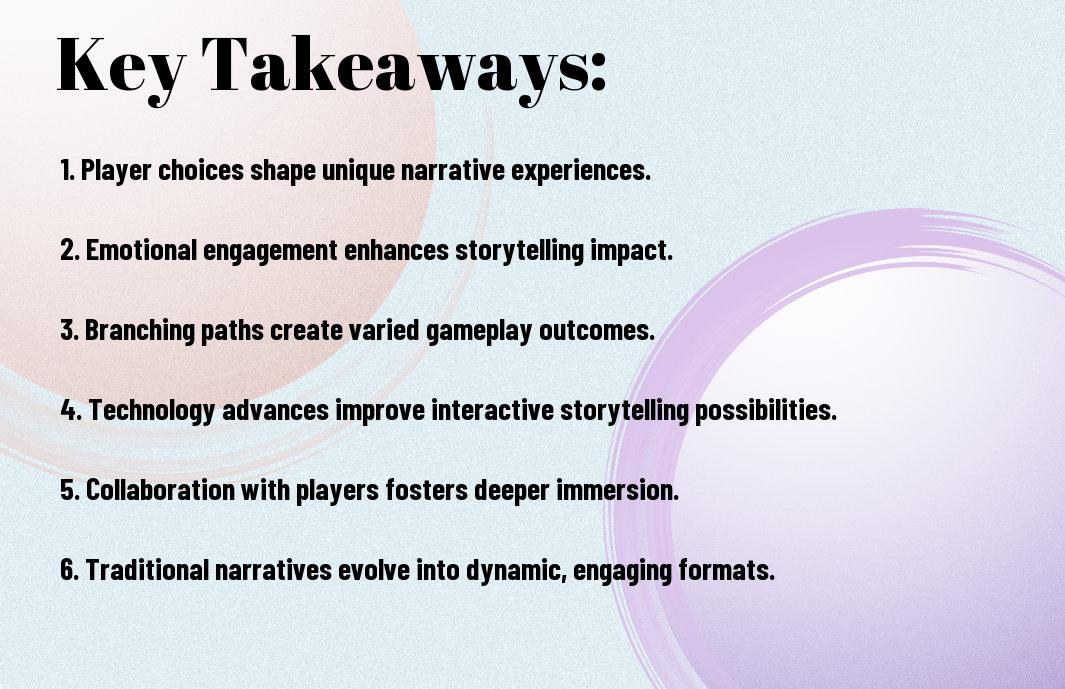
Key Takeaways:

  • Interactive narratives are revolutionizing the way stories are told in games, allowing players to influence the plot and shape the outcome through their choices and actions.
  • Player agency is a key element of interactive narratives, enabling gamers to feel more invested in the story and its characters, and to experience a sense of ownership and control.
  • The use of branching narratives and multiple endings can add replay value to games, as players are encouraged to experiment with different choices and see how the story unfolds.
  • Interactive narratives can also facilitate emotional connections between players and characters, as the player’s interactions and decisions can impact the characters’ lives and relationships.
  • The future of game storytelling will likely involve more sophisticated and dynamic narrative systems, incorporating technologies such as AI and machine learning to create even more immersive and responsive stories.
  • Game developers will need to balance player agency with narrative coherence, ensuring that the story remains engaging and meaningful while still allowing players to make significant choices and contributions.
  • The evolution of interactive narratives will continue to push the boundaries of what is possible in game storytelling, enabling the creation of innovative and captivating experiences that draw players in and keep them engaged.

The Evolution of Interactive Storytelling

While exploring the world of interactive narratives, you’ll notice that the concept has undergone significant transformations over the years, shaping the way you engage with stories in games.

From Text Adventures to Modern Narratives

Following the introduction of text-based games, you began to experience a new form of storytelling that allowed you to influence the narrative, paving the way for modern interactive stories that you enjoy today.

Player Agency and Story Branches

Towards a more immersive experience, you are given the power to make choices that affect the story, creating a unique experience with each playthrough, as your decisions shape the narrative in meaningful ways.

Branches of storylines emerge as you make decisions, allowing you to explore different paths and outcomes, making your experience personalized and engaging, as you witness the consequences of your actions unfold in the game’s world, drawing you deeper into the story.
Narrative Design Elements

Even the most engaging stories rely on well-designed narrative elements to draw you in and keep you invested in the game world. As you explore the possibilities of interactive narratives, consider how different elements can be combined to create a unique experience.

Choice Architecture

Along with the rise of interactive narratives, you’ll encounter various choice architectures that shape your journey, influencing the story’s progression and your connection to the characters and their motivations.

Consequence Systems

Architecting a consequence system that responds to your decisions is key to creating an immersive experience, as it allows you to see the impact of your choices and feel a sense of agency in the game world.

Systems like these enable you to experiment with different outcomes, and as you navigate the story, you’ll begin to understand how your decisions have far-reaching effects, making the experience feel more dynamic and personalized to your playstyle, allowing you to reflect on the consequences of your actions and adapt your approach accordingly.

Emotional Engagement Techniques

Not surprisingly, emotional engagement is a key aspect of interactive narratives, allowing you to form a deeper connection with the story and its characters. You become invested in the outcome, and your emotions are tied to the actions you take.

Character Development Through Interaction

One of the most effective ways to create emotional engagement is through character development, where you interact with characters and influence their personalities and traits, making them more relatable and realistic to you.

Player-Driven Relationships

Above all, player-driven relationships are a powerful tool for emotional engagement, enabling you to build and shape connections with non-playable characters, which can lead to a more immersive and personalized experience for you.

At the heart of player-driven relationships is the ability to make choices that impact the story and its characters, allowing you to shape the narrative and form meaningful bonds with the characters, which can evoke strong emotions and a sense of ownership and investment in the story, making your experience even more engaging and memorable.

Technology and Storytelling

Despite the advancements in technology, you may wonder how it enhances game storytelling. You’ll find that technology plays a significant role in creating immersive narratives, allowing you to engage with the story on a deeper level.

AI-Driven Narrative Systems

For instance, you can leverage AI-driven narrative systems to generate dynamic storylines, enabling you to experience a unique story each time you play the game, tailored to your actions and decisions.

Real-Time Story Adaptation

Against the backdrop of traditional storytelling, you’ll discover that real-time story adaptation allows the narrative to change and evolve based on your choices, creating a more personalized experience.

Also, as you explore real-time story adaptation, you’ll notice that it enables the game to respond to your actions, adapting the narrative to fit your playstyle, and providing a more engaging and interactive experience, allowing you to feel like your decisions truly matter in the story.

Writing for Interactive Mediums

For writers, interactive narratives offer a unique challenge and opportunity. You must consider how your story will unfold in response to player choices, creating a dynamic and immersive experience. Your goal is to craft a narrative that adapts to the player’s actions, making them feel invested in the story.

Branching Dialogue Structures

Branching out into interactive storytelling, you’ll need to design dialogue systems that respond to player input. You can create complex, branching conversations that change based on the player’s decisions, allowing them to shape the story and its outcomes.

Multiple Ending Frameworks

Between the various paths and player choices, you’ll need to create a framework that supports multiple endings. You can design your story to have different conclusions based on the player’s actions, giving them a sense of agency and replay value.

To implement multiple ending frameworks effectively, you’ll need to consider the player’s journey and how their choices impact the story. You can use techniques like flagging and variable tracking to keep track of the player’s decisions and determine the ultimate outcome. By doing so, you can create a narrative that feels dynamic and responsive to the player’s input, making the experience more engaging and memorable for them.

Future Trends

All signs point to a future where interactive narratives continue to evolve and improve, offering you more immersive and engaging experiences. As technology advances, you can expect to see more sophisticated storytelling methods and innovative ways to interact with your favorite games.

Emergent Narratives

Among the most exciting developments in interactive narratives are emergent narratives, which allow you to shape the story through your actions and decisions, creating a unique experience each time you play. This approach enables you to feel more invested in the story and its outcome.

Social Integration in Storytelling

One of the key aspects of future interactive narratives is social integration, where you can share your experiences and interact with other players in meaningful ways, enhancing your overall gaming experience. You can collaborate, compete, or simply share your progress with others, adding a new layer of depth to the story.

In addition, as social integration in storytelling continues to grow, you will have more opportunities to influence the narrative and connect with other players, creating a sense of community and shared ownership of the story, allowing you to feel more connected to the game and its world.

To wrap up

The future of game storytelling is in your hands with interactive narratives. As you explore this medium, you’ll discover new ways to engage your audience. You can learn more about the latest developments in Interactive Storytelling: 5 Innovations Unlocking the Future of Games, and unlock your full potential as a game developer, creating immersive experiences that draw your players in and keep them invested in your story.

FAQ

Q: What are Interactive Narratives and how do they enhance game storytelling?

A: Interactive Narratives refer to a style of storytelling in video games where the player’s choices and actions significantly impact the story’s progression and outcome. This approach enhances game storytelling by providing a more immersive and engaging experience, as players feel their decisions have consequences and influence the narrative. It allows for a deeper connection between the player and the game’s world, characters, and plot, making the story more personal and dynamic.

Q: How do Interactive Narratives differ from traditional storytelling methods in games?

A: Interactive Narratives differ from traditional storytelling methods in games by shifting the focus from a linear, predetermined story to a dynamic, player-driven narrative. Unlike traditional methods where the story unfolds in a set sequence regardless of player actions, Interactive Narratives incorporate branching storylines, multiple endings, and character development that can change based on the player’s choices. This creates a unique experience with each playthrough, offering replay value and encouraging players to explore different story paths.

Q: What are the potential future developments and implications of Interactive Narratives in the gaming industry?

A: The future of Interactive Narratives in the gaming industry holds significant potential for innovation and growth. Advances in artificial intelligence, machine learning, and natural language processing could lead to even more sophisticated and responsive narrative systems, allowing for more realistic character interactions and story adaptations. Additionally, the integration of virtual reality (VR) and augmented reality (AR) technologies could further enhance the immersive qualities of Interactive Narratives, blurring the lines between the physical and virtual worlds. As the technology continues to evolve, we can expect to see more complex, engaging, and personalized storytelling experiences in games.

Procedural Storytelling – When Algorithms Write the Narrative

As you explore into the world of dynamic narratives, you’ll discover that procedural storytelling is revolutionizing the way stories are told. You’re likely familiar with the concept, but may not know its full potential. Procedural storytelling is exploding the possibilities of game development and interactive media, allowing your experiences to be unique and immersive. Your understanding of this concept will help you appreciate the innovative ways algorithms are shaping your entertainment.

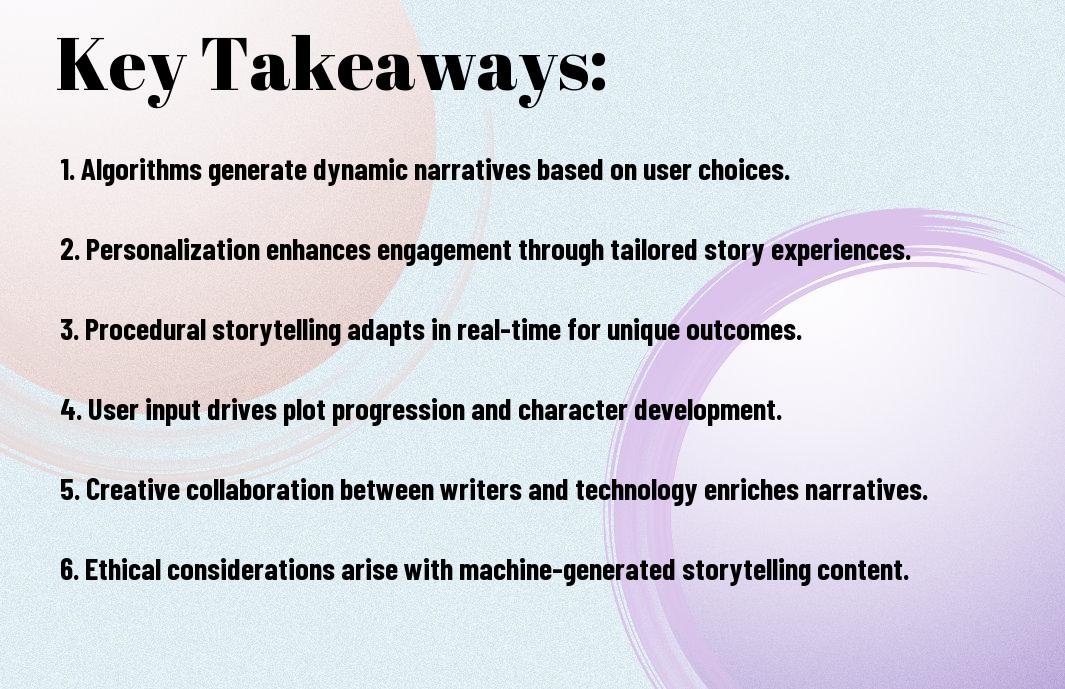
Key Takeaways:

  • Procedural storytelling allows for the creation of dynamic, adaptive narratives that can change based on player input or other variables, offering a unique experience each time the story is engaged with.
  • Algorithms can generate story elements such as characters, plot twists, and environments, enabling the production of vast, detailed worlds without the need for manual writing of every detail.
  • This approach enables game developers and storytellers to create immersive, interactive stories that respond to the actions and decisions of the audience, enhancing engagement and replay value.
  • Procedural storytelling can also facilitate the creation of stories that are tailored to individual players, incorporating their preferences, playstyle, and previous experiences into the narrative.
  • The use of algorithms in storytelling can lead to unexpected and innovative narrative developments, as the machine learning process can combine elements in ways that human writers might not consider.
  • However, procedural storytelling also poses challenges, such as ensuring coherence and consistency in the generated narrative, and balancing algorithmic creativity with the need for a compelling, meaningful story.
  • The integration of procedural storytelling techniques into various forms of media, including video games, films, and literature, has the potential to revolutionize the way stories are created and experienced, offering new possibilities for interactive and dynamic narrative design.

Foundations of Procedural Storytelling

A key aspect of procedural storytelling is its ability to generate unique narratives based on algorithms and user input, allowing you to experience a different story each time you engage with the system.

Algorithm-Based Narrative Systems

Behind the scenes of procedural storytelling lies a complex system of algorithms that work together to create a cohesive narrative, enabling you to explore a wide range of possibilities and storylines.

Core Components of Digital Storytelling

Digitally-driven narratives rely on several core components, including character development, plot progression, and user interaction, which you can manipulate to create a personalized story that suits your interests and preferences.

Indeed, as you probe deeper into the world of procedural storytelling, you will discover that the core components of digital storytelling are highly interconnected, allowing you to influence the narrative through your choices and actions, and creating a unique experience that is tailored to your individual perspective.

Narrative Generation Mechanics

Even as you examine into the world of procedural storytelling, you’ll notice that algorithms play a significant role in generating narratives. These mechanics enable the creation of unique stories, tailored to your preferences, and can be used in various forms of media, from video games to interactive books.

Pattern Recognition in Story Elements

Across various narrative structures, you’ll find that pattern recognition is key to creating engaging stories. You’ll see how algorithms identify and replicate patterns in story elements, such as character arcs and plot twists, to craft compelling narratives that draw you in.

Dynamic Plot Construction

Behind the scenes, dynamic plot construction enables the creation of adaptive stories that change based on your interactions. You’ll experience a unique narrative that evolves as you make choices, influencing the story’s direction and outcome.

And as you explore dynamic plot construction further, you’ll discover that it involves complex algorithms that analyze your decisions and adjust the narrative accordingly. This allows you to become an active participant in the storytelling process, shaping the story into a unique experience that reflects your preferences and actions.

Character Development Through Code

After implementing procedural storytelling, you can create complex characters using code, allowing for dynamic and immersive experiences. You can define character traits, backstories, and motivations, and then use algorithms to generate unique personalities and behaviors.

AI-Driven Personality Matrices

Prior to creating your characters, you’ll need to establish a framework for their personalities, which can be achieved through AI-driven personality matrices. You’ll use these matrices to define the characteristics and traits that shape your characters’ interactions and decisions.

Behavioral Response Systems

By designing behavioral response systems, you can create characters that react and adapt to your actions, making the story feel more responsive and engaging. You’ll use these systems to determine how characters respond to different situations, creating a more immersive experience.

Behavioral response systems allow you to craft characters that learn and grow based on your interactions, enabling a deeper connection between you and the story. As you progress through the narrative, you’ll notice characters adapting to your choices, creating a unique experience tailored to your decisions, and allowing you to feel more invested in the story and its outcomes.

World Building Parameters

All procedural storytelling systems rely on a set of predefined parameters that define the world in which your narrative takes place. You will need to establish these parameters to create a cohesive and engaging story. This includes defining the physical world, its rules, and the characters that inhabit it.

Environmental Variable Management

Besides the physical aspects, you must also consider the environmental variables that will affect your story, such as climate, time of day, and weather. You will need to manage these variables to create a believable and immersive world.

Dynamic Setting Adaptation

Setting the stage for your story is necessary, and dynamic setting adaptation allows you to create a world that changes and evolves over time. You can use algorithms to generate new environments, characters, and events, keeping your story fresh and exciting.

World builders like yourself can use dynamic setting adaptation to create a unique experience for your audience. You can generate new content on the fly, allowing your story to unfold in unexpected ways. This approach enables you to create a highly engaging and interactive narrative, where your audience is an active participant in the storytelling process.

Player Interaction Integration

To create a seamless procedural storytelling experience, you need to integrate player interaction into the narrative. This involves designing a system that responds to your actions, creating a dynamic and immersive story.

Choice Architecture

Against the backdrop of a procedurally generated world, you are presented with choices that shape the narrative. You must consider how your decisions will impact the story, making each choice a deliberate and meaningful one.

Consequence Mapping

With every decision you make, the story unfolds in a unique way, influenced by the consequences of your actions. You begin to see the effects of your choices, and the narrative adapts to your playstyle.

Consequence mapping allows you to visualize the potential outcomes of your decisions, enabling you to make informed choices that drive the story forward. As you navigate the procedural narrative, you will encounter multiple branching paths, each leading to a distinct conclusion, and you must use your wits to navigate the complex web of consequences that arise from your actions.

Technical Implementation

Many procedural storytelling systems rely on complex algorithms and data structures to generate narratives. As you probe into the technical aspects, you’ll find that the implementation can vary greatly depending on your goals and requirements.

Story Engine Architecture

Around the core of procedural storytelling lies the story engine, which you will design to manage and generate your narrative. As you build your engine, you’ll need to consider factors such as character development, plot progression, and player interaction.

Data Structure for Narratives

At the heart of your story engine is the data structure that stores and organizes your narrative elements. As you design this structure, you’ll want to consider how you can efficiently store and retrieve the vast amounts of data that will drive your story.

The data structure you choose will have a significant impact on the performance and scalability of your procedural storytelling system. You’ll need to consider factors such as data compression, indexing, and querying to ensure that your system can handle the complex narratives you’ll be generating. As you work on your data structure, you’ll find that a well-designed system will allow you to create rich, immersive stories that draw your players in and keep them engaged.

Final Words

Drawing together the concepts of procedural storytelling, you now have a deeper understanding of how algorithms shape your narrative experiences. As you explore the world of procedural narrative, you can learn more about its applications at Procedural Narrative: The Future of Video Games, and discover how your favorite games use these techniques to create unique stories, enhancing your engagement and immersion in the gaming world, and influencing your perception of your role in the narrative.

FAQ

Q: What is Procedural Storytelling and how does it differ from traditional storytelling methods?

A: Procedural Storytelling refers to the use of algorithms and computational methods to generate narrative content, such as stories, dialogue, or even entire games. This approach differs significantly from traditional storytelling, where a human author manually crafts every detail. In procedural storytelling, the algorithm creates the narrative on the fly, using a set of predefined rules and parameters. This allows for a high degree of variability and replayability, as the story can change each time it is generated. Procedural storytelling has applications in various fields, including video games, interactive fiction, and even film and television production.

Q: How do algorithms actually generate narrative content in Procedural Storytelling, and what are the limitations of this approach?

A: Algorithms in procedural storytelling use a combination of natural language processing, machine learning, and data analysis to generate narrative content. They can analyze existing stories, identify patterns, and then use this information to create new narratives based on a set of rules or constraints. However, the limitations of this approach include the potential lack of depth and emotional resonance in the generated stories, as well as the risk of repetition or inconsistency. Additionally, the quality of the output is highly dependent on the quality of the input data and the sophistication of the algorithm itself. Despite these limitations, procedural storytelling has the potential to create unique and engaging narrative experiences that can adapt to individual players or viewers.

Q: What are the potential applications and future developments of Procedural Storytelling, and how might it change the way we consume and interact with narrative content?

A: The potential applications of procedural storytelling are vast and varied, ranging from the creation of personalized interactive stories and games to the generation of dynamic dialogue and characters in film and television. Future developments in this field may include the integration of procedural storytelling with virtual and augmented reality technologies, allowing for even more immersive and interactive narrative experiences. As procedural storytelling continues to evolve, it may change the way we consume and interact with narrative content, enabling new forms of dynamic and adaptive storytelling that can respond to individual preferences and behaviors. This could potentially democratize the storytelling process, allowing new voices and perspectives to emerge, and creating new opportunities for innovative and engaging narrative experiences.

Interactive Entertainment – Merging Games with Immersive Storytelling

As you explore into the world of interactive entertainment, you’ll discover a unique fusion of gaming and immersive storytelling. You’ll experience narratives that unfold based on your decisions, allowing you to influence the plot and characters. Your journey will be filled with engaging challenges and emotional connections, blurring the lines between player and protagonist. You’ll explore new dimensions of storytelling, where your actions drive the story forward, creating a personalized experience like no other.

Key Takeaways:

  • Interactive entertainment is revolutionizing the way we experience stories, by combining immersive storytelling with engaging gameplay to create a unique and captivating experience.
  • The use of virtual and augmented reality technologies is enhancing the interactive entertainment experience, allowing players to step into the story and become an active participant.
  • Immersive storytelling in interactive entertainment is driven by player choice and agency, enabling players to shape the narrative and influence the outcome of the story.
  • The intersection of games and storytelling is giving rise to new forms of interactive entertainment, such as interactive movies and immersive theater experiences.
  • Interactive entertainment is becoming increasingly sophisticated, with the use of artificial intelligence, motion capture, and data analytics to create more realistic and responsive characters and environments.
  • The future of interactive entertainment holds significant potential for innovation and growth, with new technologies and platforms emerging to support the development of more immersive and engaging experiences.
  • As interactive entertainment continues to evolve, it is likely to have a profound impact on the way we consume and interact with stories, and will likely influence the development of new forms of entertainment and storytelling.

Evolution of Interactive Storytelling

While exploring interactive entertainment, you’ll notice that storytelling has undergone significant transformations over the years, adapting to technological advancements and shifting audience preferences, allowing you to engage with narratives in innovative ways.

From Text Adventures to Virtual Worlds

By delving into the history of interactive storytelling, you’ll discover that early text-based adventures paved the way for immersive virtual worlds, enabling you to interact with digital environments and influence the narrative, thus redefining your role as an active participant.

Technological Milestones in Gaming Narratives

Against the backdrop of rapid technological progress, you’ve witnessed significant advancements in gaming narratives, with improved graphics, AI-driven characters, and dynamic storytelling, all of which have enhanced your overall gaming experience and allowed for more sophisticated interactive storytelling.

From the introduction of 3D graphics to the incorporation of virtual and augmented reality, technological milestones have continually expanded the possibilities for interactive storytelling, enabling you to step into richly detailed worlds and engage with complex characters, further blurring the lines between player and narrative, and allowing you to become an integral part of the story itself.

Narrative Design Elements

If you’re looking to create an immersive experience, narrative design elements are necessary. You’ll want to consider how your story unfolds and how your audience engages with it. This involves crafting a compelling narrative that draws your audience in and keeps them invested.

Player Agency and Story Branches

Against the backdrop of a rich narrative, you can introduce player agency, allowing your audience to make choices that impact the story. You’ll create a unique experience as your audience’s decisions shape the direction of the narrative, with multiple story branches emerging from their interactions.

Dynamic Character Development

Beneath the surface of your narrative, dynamic character development is taking place. You’ll see your characters evolve and grow as your audience interacts with them, their personalities and traits emerging through subtle cues and dialogue.

For instance, as you examine deeper into dynamic character development, you’ll discover that it’s not just about creating characters that change, but also about crafting a narrative that responds to your audience’s actions. You’ll need to consider how your characters’ backstories, motivations, and relationships with other characters influence their development, and how your audience’s choices impact these dynamics, creating a rich and immersive experience that draws them in and keeps them engaged.

Technical Framework

Despite the complexity of merging games with immersive storytelling, you can achieve this by exploring resources like Integrating Game Mechanics with Immersive Narratives, which provides valuable insights into this process.

Engine Capabilities

Around the time you start building your interactive entertainment, you will need to consider the capabilities of your game engine, as it will play a significant role in bringing your vision to life, and you should choose one that supports your creative goals.

Narrative AI Systems

Along with a robust game engine, you will also need to incorporate narrative AI systems that can adapt to your players’ actions, creating a more immersive experience, and you should look into systems that can handle complex storytelling.

At the heart of narrative AI systems lies the ability to create dynamic, interactive stories that evolve based on your players’ decisions, and you can use techniques like branching narratives and character development to make your story more engaging, allowing you to craft a unique experience for each player.

Immersive Mechanics

After exploring the world of interactive entertainment, you’ll notice that immersive mechanics play a significant role in enhancing your experience. These mechanics allow you to engage with the story on a deeper level, making you feel like an integral part of the narrative.

Environmental Storytelling

One of the key aspects of immersive mechanics is the environment itself, which tells a story that complements the overall narrative, drawing you into the world and making you feel like you’re an active participant.

Sensory Integration

Along with environmental storytelling, sensory integration is another vital component, as it engages your senses, making the experience feel more realistic and immersive, allowing you to connect with the story on a more personal level.

In addition, as you examine deeper into sensory integration, you’ll find that it’s not just about visual and audio cues, but also about tactile feedback, making you feel like you’re truly interacting with the virtual world, further blurring the lines between reality and fantasy, and enhancing your overall experience.

Social Aspects

To enhance your interactive entertainment experience, you can explore the social aspects of gaming by learning more about Mastering Game Storytelling: Crafting Compelling Narratives, which can help you create engaging stories.

Multiplayer Narrative Experiences

About the time you engage in multiplayer games, you notice how your interactions with other players can shape the narrative, creating a unique experience for you and your fellow players.

Community-Driven Stories

Stories that emerge from community interactions can be particularly captivating, as you see your contributions shape the narrative and influence the game world.

Even as you investigate deeper into community-driven stories, you’ll find that your participation can lead to unexpected twists and turns, making the experience even more immersive and engaging for you.

Future Trajectories

For the future of interactive entertainment, you can expect a convergence of technologies that will revolutionize your experience, as emerging trends continue to shape the industry.

Extended Reality Integration

Around the concept of extended reality, you will see more seamless integrations of physical and digital worlds, enhancing your engagement with immersive stories.

Neural Interface Possibilities

With the advancement of neural interfaces, you will witness a new era of interactive storytelling, where your thoughts and emotions directly influence the narrative, creating a highly personalized experience.

Future developments in neural interface technologies will enable you to control game characters with your mind, blurring the lines between you and the virtual world, and allowing for unprecedented levels of immersion in your favorite stories.

Summing up

Presently, you are witnessing a revolutionary shift in interactive entertainment, where games seamlessly merge with immersive storytelling. As you engage with these experiences, your emotional connection deepens, and the boundaries between player and narrative blur. You become an integral part of the story, influencing its trajectory and outcome. Your journey through these interactive worlds is unique, shaped by your choices and actions, making each experience unforgettable and highly personal.

FAQ

Q: What is Interactive Entertainment and how does it differ from traditional forms of entertainment?

A: Interactive Entertainment refers to the fusion of gaming and immersive storytelling, creating a unique experience that engages the audience in a dynamic and participatory way. Unlike traditional forms of entertainment, such as movies or books, Interactive Entertainment allows the user to influence the narrative, make choices, and shape the outcome of the story. This innovative approach combines the best elements of gaming, film, and literature to create a captivating and personalized experience that draws the user into the world of the story.

Q: How does Interactive Entertainment enhance the storytelling experience, and what are the benefits for the audience?

A: Interactive Entertainment enhances the storytelling experience by providing an immersive and interactive environment that simulates real-world experiences, evokes emotions, and fosters empathy. The audience can explore virtual worlds, interact with characters, and make decisions that impact the narrative, resulting in a more engaging and memorable experience. The benefits for the audience include increased emotional investment, improved retention, and a deeper understanding of the story and its themes. Furthermore, Interactive Entertainment can also provide a social experience, allowing users to share and discuss their experiences with others, creating a sense of community and shared enthusiasm.

Q: What are the key technologies and trends driving the development of Interactive Entertainment, and how will they shape the future of the industry?

A: The key technologies driving the development of Interactive Entertainment include Virtual Reality (VR), Augmented Reality (AR), Artificial Intelligence (AI), and cloud gaming. These technologies enable the creation of immersive, interactive, and dynamic experiences that can be accessed across various platforms. Trends such as cross-platform play, social interaction, and user-generated content are also shaping the industry. As the technology continues to evolve, we can expect to see even more sophisticated and engaging experiences, such as interactive movies, immersive theater, and virtual theme parks. The future of Interactive Entertainment holds tremendous promise, with the potential to revolutionize the way we experience and interact with stories, and to create new forms of entertainment that were previously unimaginable.

HT-fff Skip to content