Storytelling

The Art of Storytelling in Video Games – A Deep Dive

As you immerse yourself in the world of video games, you’ll notice that the most engaging experiences often have one thing in common: a compelling narrative. You’ll discover that a well-crafted story can elevate your gaming experience, drawing you in and refusing to let go. Your journey through the game becomes a personal one, driven by characters, plot twists, and emotional connections that resonate with you on a deeper level, making the experience even more enjoyable and memorable.

Key Takeaways:

  • Effective storytelling in video games involves a deep understanding of player psychology and emotional manipulation, allowing developers to craft narratives that resonate with players on a personal level and drive engagement.
  • Immersive storytelling in video games can be achieved through a combination of interactive elements, such as player choice and consequence, environmental details, and nuanced character development, which work together to create a believable and captivating game world.
  • Successful video game stories often balance gameplay and narrative, using techniques like pacing, tone, and thematic resonance to create a cohesive and impactful experience that enhances the overall enjoyment of the game and leaves a lasting impression on players.

Narrative Architecture in Games

To create an immersive gaming experience, you need to consider the narrative architecture of your game, which encompasses the overall structure and design of the story. This includes the pacing, tone, and player engagement, all of which work together to draw you into the game’s world.

Story Structure and Player Agency

Bridging the gap between gameplay and narrative, you find that a well-designed story structure allows you to make choices that impact the game’s outcome, giving you a sense of agency and investment in the story.

Environmental Storytelling

Towards the goal of creating a believable game world, you use environmental storytelling to convey information about the game’s lore, characters, and backstory through the environment and level design, rather than through explicit dialogue or exposition.

Also, as you explore the game’s world, you notice that environmental storytelling can be used to create a sense of atmosphere and tension, drawing you deeper into the game’s narrative and making you feel like an active participant in the story, rather than just a passive observer.

Character Development

Now, as you examine into the world of video games, you’ll notice that character development is a key aspect of storytelling, and you can learn more about it from The power of storytelling in video games – The Carroll News. This is where your journey as a player becomes immersive and engaging.

Player Character Evolution

Players experience a transformation as they progress through the game, with their characters evolving based on the choices you make, influencing the storyline and your overall gaming experience.

Non-Player Character Dynamics

To understand the game’s narrative, you need to interact with non-player characters, each with their own backstory and motivations, which adds depth to the story and makes your decisions more impactful.

Considering the complexity of non-player character dynamics, you’ll find that their interactions with you can be influenced by your actions, creating a more realistic and engaging experience, allowing you to develop a deeper connection with the game’s world and its inhabitants, making your decisions more meaningful and your experience more enjoyable.

Interactive Storytelling Elements

Keep in mind that interactive storytelling elements are what set video games apart from other forms of media. You experience a unique narrative that evolves based on your actions, making your journey feel personalized and engaging.

Choice and Consequence Systems

After making a decision, you witness the consequences of your actions, which can significantly impact the story. This mechanic allows you to feel invested in the narrative, as your choices have a direct influence on the outcome.

Branching Narratives

To create a more immersive experience, games often employ branching narratives, where the story splits into multiple paths based on your decisions. You can explore different storylines, adding replay value to the game.

Interactive storytelling reaches new heights with branching narratives, as you can experiment with various choices, leading to a unique story each time you play. Your decisions can lead to multiple endings, making you wonder what would have happened if you had chosen differently, encouraging you to play the game again and explore other narrative paths.

Emotional Engagement

All great stories aim to evoke emotions in their audience, and video games are no exception. You become invested in the characters and their journeys, feeling a sense of connection and empathy. This emotional engagement is what sets apart a good game from a great one, making your experience more immersive and memorable.

Player Investment Techniques

Among the various methods used to engage you emotionally, player choice and consequence are particularly effective. You feel more invested in the story when your decisions have a direct impact on the outcome, making the experience feel more personal and dynamic.

Emotional Pacing

An effective narrative balances action, suspense, and quiet moments to create a natural flow of emotions. You experience a range of feelings, from excitement and fear to sadness and joy, as the story unfolds at a well-balanced pace.

Hence, as you progress through a game, the emotional pacing helps to create a sense of tension and release, keeping you engaged and interested in the story. You begin to anticipate what’s coming next, and the emotional payoff is more satisfying when it finally arrives, making the experience even more enjoyable and memorable.

Narrative Design Tools

Your approach to narrative design tools can make or break the storytelling experience in your video game. You can learn more about storytelling in video games by checking out Storytelling in Video Games: A Cinematic Art | Iman Irajdoost to improve your skills.

Dialogue Systems

Across various games, you’ll notice that dialogue systems play a significant role in shaping the narrative, allowing you to engage with characters and influence the story’s direction, making your experience more immersive.

Cutscene Integration

For a seamless storytelling experience, you need to integrate cutscenes effectively, making sure they complement the gameplay and narrative, enhancing the overall flow of your game.

For instance, when integrating cutscenes, you should consider the pacing and timing, ensuring that they don’t disrupt the player’s engagement, but rather, enhance the emotional impact of the story, drawing you deeper into the game’s world.

World Building

Despite the complexity of world-building in video games, you can create an immersive experience by crafting a rich and detailed environment. Your goal is to transport players to a new world, making them feel like they are part of the story.

Lore Development

Across the vast expanse of your game’s world, you can develop a deep and engaging lore that draws players in and refuses to let go. You will find that a well-developed lore enhances the overall gaming experience, making it more enjoyable and interactive.

Atmospheric Storytelling

Any well-designed game will use atmospheric storytelling to set the tone and mood, allowing you to become fully immersed in the world. You will notice that the atmosphere is created through a combination of sound, visuals, and gameplay mechanics.

Plus, as you explore deeper into the world, you will discover that atmospheric storytelling can be used to convey emotions, themes, and ideas, adding depth and complexity to the narrative, and allowing you to connect with the story on a deeper level, making your experience even more engaging and memorable.

To wrap up

With these considerations, you now have a deeper understanding of the art of storytelling in video games. You can appreciate the complexity of crafting engaging narratives and the impact they have on your gaming experience. As you play, you will notice the ways in which stories are woven into the fabric of the game, drawing you into the world and investing you in the characters and their journeys, making your experience even more immersive and enjoyable.

FAQ

Q: What is the significance of storytelling in video games, and how does it impact the player’s experience?

A: The art of storytelling in video games is a vital aspect of the medium, as it enables developers to craft immersive and engaging narratives that draw players into the game world. A well-told story can evoke emotions, create empathy, and make the player feel invested in the characters and their journeys. Effective storytelling can also enhance the overall gameplay experience, making it more enjoyable and memorable. By incorporating compelling narratives, game developers can create a deeper connection with their audience, fostering a sense of loyalty and attachment to the game.

Q: How do game developers use storytelling techniques to create immersive game worlds and characters?

A: Game developers employ a range of storytelling techniques to create immersive game worlds and characters, including character development, dialogue, environmental storytelling, and cinematic cutscenes. They also use narrative devices such as branching storylines, player choice, and consequence systems to create a sense of agency and interactivity. Additionally, developers may use sound design, music, and visual effects to create a rich and atmospheric game world that draws the player in. By combining these techniques, developers can craft a narrative that is both engaging and interactive, allowing players to become an integral part of the story.

Q: What role does player choice and agency play in the storytelling process, and how does it affect the game’s narrative?

A: Player choice and agency play a significant role in the storytelling process, as they allow players to influence the narrative and shape the game world. By providing players with choices and consequences, developers can create a sense of ownership and investment in the story, making the experience feel more personal and dynamic. The player’s decisions can also affect the game’s narrative, leading to multiple endings, branching storylines, or changes in character relationships. This interactivity enables players to explore different story paths and experiment with different outcomes, adding replay value and depth to the game.

Q: How do game developers balance storytelling with gameplay, and what are the challenges of integrating narrative and interactivity?

A: Balancing storytelling with gameplay is a delicate process, as developers need to ensure that the narrative complements the gameplay without overwhelming or interrupting it. One of the key challenges is pacing, as the story needs to unfold at a rate that is consistent with the player’s progress and actions. Developers must also consider the player’s attention span, ensuring that the narrative is engaging and concise, without feeling forced or intrusive. Additionally, integrating narrative and interactivity can be technically challenging, requiring careful planning and implementation to ensure a seamless and cohesive experience.

Q: What are some of the future trends and innovations in storytelling for video games, and how will they impact the medium?

A: Future trends and innovations in storytelling for video games include the use of artificial intelligence, virtual reality, and augmented reality to create more immersive and interactive narratives. The rise of cloud gaming and game streaming services is also expected to enable more dynamic and flexible storytelling, with the potential for real-time updates and community-driven narratives. Furthermore, the increasing focus on player choice and agency is likely to lead to more complex and branching storylines, as well as a greater emphasis on player-created content and user-generated stories. As the medium continues to evolve, we can expect to see new and innovative approaches to storytelling, pushing the boundaries of what is possible in interactive narrative design.


How Games Influence Modern Storytelling in Other Media

As you explore the world of modern storytelling, you’ll notice the significant impact of games on other media forms. Your favorite TV shows and movies may have been inspired by game narratives, character development, or even interactive elements. You can see how games have raised the bar for immersive storytelling, and now you’re likely to find similar techniques used in various forms of media, influencing the way stories are told and engaging audiences in new ways.

Key Takeaways:

  • Games have introduced new ways of interactive storytelling, which are now being adopted in other media forms such as film and television, allowing audiences to engage with stories in a more immersive and dynamic way.
  • The use of branching narratives and player choice, commonly found in games, is influencing the development of non-linear storytelling in other media, enabling creators to experiment with complex characters and plotlines.
  • The incorporation of game-like elements, such as rewards and challenges, into other forms of media is changing the way stories are structured and presented, with a focus on audience participation and engagement driving the evolution of modern storytelling.

The Evolution of Interactive Narratives

The development of interactive narratives has transformed the way you experience stories, allowing you to engage with characters and plotlines in a more immersive way. As you navigate through different media, you’ll notice how games have influenced the evolution of storytelling.

From Linear to Branching Storylines

Among the key changes in modern storytelling is the shift from linear to branching storylines, where you can influence the narrative through your choices, creating a unique experience with each playthrough.

Player Agency as a Narrative Tool

Lineally, the concept of player agency has become a powerful tool in storytelling, enabling you to make decisions that impact the story, making you an active participant in the narrative.

Another aspect of player agency is the ability to shape the story through your actions, allowing you to explore different themes and emotions, and creating a more personal connection to the narrative, as you see the consequences of your decisions unfold, drawing you deeper into the story.

Gaming Mechanics in Modern Literature

While exploring the influence of games on literature, you’ll notice that gaming mechanics have become a significant aspect of modern storytelling. You can see this in the way authors incorporate interactive elements and player-like choices into their narratives.

Choice-Driven Plot Structures

Besides the traditional linear storytelling, you’ll find that many modern novels now feature choice-driven plot structures, allowing you to imagine alternative story paths and endings, much like in a game.

Multiple Perspective Storytelling

Gaming-like, you’re presented with multiple perspectives in modern literature, enabling you to experience the story from different characters’ viewpoints, adding depth and complexity to the narrative.

Mechanics such as multiple perspective storytelling allow you to engage with the story on a deeper level, as you piece together the different narrative threads and form your own understanding of the plot, making your reading experience more immersive and interactive.

Visual Media Adaptation

Not surprisingly, your favorite games are being adapted into visual media, such as movies and TV shows, at an unprecedented rate. You see this trend continuing, with more games being optioned for film and television every year.

Non-Linear Television Shows

With the rise of streaming services, you are experiencing a new era of non-linear storytelling in television shows, similar to the branching narratives found in games. You can now engage with complex, interactive stories that blur the line between games and TV.

Interactive Film Experiences

Experiencing interactive film is becoming increasingly popular, allowing you to influence the story and its outcome. You can make choices that affect the narrative, creating a unique experience each time you watch.

To fully appreciate interactive film experiences, you need to understand how they differ from traditional films. You will find that interactive films often feature multiple endings, and the story can change based on your decisions, making each viewing a new and exciting experience. You can explore different story paths, and the film adapts to your choices, creating a personalized narrative that draws you in and keeps you engaged.

Digital Storytelling Elements

Now, as you explore the world of digital storytelling, you’ll find that video games have a significant influence on other media forms. You can learn more about The Unique Storytelling Power of Video Games and how it shapes your experience.

Environmental Narratives

Against the backdrop of immersive gaming environments, you’ll discover that environmental narratives play a significant role in storytelling, drawing you into the game’s world and atmosphere.

Emergent Storytelling

Any time you engage with a game, you’re creating your own story through emergent storytelling, where your actions and decisions shape the narrative, making each experience unique.

Due to the dynamic nature of emergent storytelling, you’ll find that your interactions with the game world create a personalized story, influenced by your choices and actions, allowing you to feel more invested in the narrative and its outcome.

Social Media and Gaming Narratives

Despite the rise of social media, gaming narratives have become increasingly influential in shaping your understanding of storytelling in other media. You can see this impact in the way stories are structured and presented across various platforms.

Transmedia Storytelling

Meanwhile, media convergence has led to the development of transmedia storytelling, where you can experience a single narrative across multiple media forms, including games, TV shows, and films, allowing you to engage with your favorite stories in new and innovative ways.

Audience Participation

Towards a more interactive approach, you can participate in shaping the narrative through social media, forums, and online communities, enabling you to influence the direction of your favorite stories and characters, making your experience more personal and engaging.

Understanding the power of audience participation, you can see how games have paved the way for more immersive and interactive storytelling in other media, allowing you to become an active contributor to the narrative, rather than just a passive consumer, and this shift has significant implications for the future of storytelling in your favorite media forms.

The Future of Cross-Media Narratives

For the sake of innovation, you will see that games have paved the way for new forms of storytelling in other media, and this trend will continue to evolve.

Virtual Reality Integration

The advent of virtual reality technology is changing the way you experience stories, allowing for more immersive and interactive narratives.

Artificial Intelligence in Storytelling

Narratives are becoming more sophisticated with the integration of artificial intelligence, enabling more dynamic and personalized storytelling experiences for you.

In fact, as you explore deeper into the world of AI-driven storytelling, you will discover that it can analyze your preferences and adapt the narrative to your interests, creating a unique experience tailored to your tastes.

Final Words

Drawing together the various threads of influence, you can see how games have shaped your understanding of storytelling in other media. As you explore the impact of games on film, television, and literature, consider The evolution of video games as a storytelling medium, and their role in modern narrative design, to appreciate the significant role games play in your entertainment experiences.

FAQ

Q: How have video games impacted the way stories are told in film and television?

A: Video games have significantly influenced the way stories are told in film and television by introducing new methods of interactive storytelling, immersive world-building, and complex character development. Many films and TV shows now incorporate elements such as branching narratives, player choice, and immersive environments, which were first popularized in video games. This has led to a more dynamic and engaging form of storytelling that draws audiences in and encourages participation.

Q: What role do video games play in shaping the narrative structure of modern stories?

A: Video games have played a significant role in shaping the narrative structure of modern stories by introducing non-linear storytelling, multiple endings, and character customization. These elements allow for a more personalized and immersive experience, which has been adopted by other forms of media such as film and television. The use of cutscenes, dialogue trees, and player choice has also become more prevalent, enabling storytellers to create complex and engaging narratives that cater to individual audience preferences.

Q: How have video games influenced the development of characters in modern storytelling?

A: Video games have had a profound influence on the development of characters in modern storytelling by introducing more complex and relatable characters. Games such as The Last of Us and Bioshock feature characters with rich backstories, motivations, and emotional depth, which has raised the bar for character development in other forms of media. The use of character customization and player choice has also enabled audiences to form a deeper connection with characters, making them more invested in the story and its outcome.

Q: What impact have video games had on the way themes and emotions are explored in modern storytelling?

A: Video games have had a significant impact on the way themes and emotions are explored in modern storytelling by providing a unique platform for experimentation and expression. Games such as What Remains of Edith Finch and Firewatch have tackled complex themes such as grief, loss, and mental health in a way that is both poignant and thought-provoking. The use of interactive elements and immersive environments has enabled storytellers to create a more intimate and emotional connection with audiences, making the exploration of themes and emotions more impactful and memorable.

Q: How will the influence of video games on modern storytelling continue to evolve in the future?

A: The influence of video games on modern storytelling will continue to evolve as technology advances and new forms of interactive media emerge. The rise of virtual reality (VR) and augmented reality (AR) will enable storytellers to create even more immersive and engaging experiences, while the growth of streaming services will provide new platforms for interactive content. As the boundaries between video games and other forms of media continue to blur, we can expect to see even more innovative and dynamic forms of storytelling that push the limits of what is possible and engage audiences in new and exciting ways.

Interactive Storytelling – The Future of Game Narratives

As you examine into the world of gaming, you’re likely to notice a significant shift in the way stories are being told. You’re no longer just a passive observer, but an active participant in shaping the narrative. Your choices and actions have a direct impact on the story, making the experience more immersive and engaging. With interactive storytelling, you can expect a more dynamic and personalized experience, drawing you deeper into the game’s world and characters, and changing the way you interact with your favorite games forever.

Key Takeaways:

  • Interactive storytelling is revolutionizing the gaming industry by allowing players to influence the narrative, creating a more immersive and engaging experience. This shift towards dynamic storytelling enables developers to craft unique stories that adapt to individual players’ choices and actions.
  • The future of game narratives will likely involve advanced technologies such as artificial intelligence, virtual reality, and machine learning, which will further enhance the interactive storytelling experience. These technologies will enable developers to create more realistic and responsive game worlds that simulate real-life consequences and emotions.
  • As interactive storytelling continues to evolve, it will become increasingly important for game developers to balance player agency with narrative coherence, ensuring that the story remains engaging and meaningful while still allowing players to make significant choices and contributions to the narrative.

The Evolution of Game Narratives

The development of game narratives has come a long way, and you can explore more about it in The Future of Storytelling: Virtual Reality, Interactive Narratives and Beyond, which sheds light on the advancements in this field.

From Linear to Branching Stories

Stories have transformed from linear to branching narratives, allowing you to experience a more dynamic and immersive gameplay, as your choices influence the storyline, creating a unique experience each time you play.

Player Agency and Choice Impact

On the other hand, the impact of your decisions on the game’s narrative is becoming more pronounced, enabling you to shape the story and its outcome, making your gameplay experience even more engaging and personalized.

For instance, when you make a choice in a game, it can lead to multiple outcomes, and you get to see the consequences of your actions, which can be a powerful tool for storytelling, as it makes you invested in the narrative and its characters, and you start to think about the potential consequences of your decisions, adding a layer of depth to your gameplay experience.

Core Elements of Interactive Storytelling

Any interactive storytelling experience relies on several key components that work together to create an immersive narrative. You will notice that these elements are crucial to drawing you into the story and keeping you engaged.

Dynamic Character Development

Character growth and evolution are vital aspects of interactive storytelling, as you witness your characters change and adapt in response to your decisions and actions, making the story feel more personal and dynamic.

Responsive World Building

Any world you interact with should be richly detailed and responsive to your actions, allowing you to feel like your decisions have a tangible impact on the environment and narrative, making your experience feel unique and tailored to your choices.

Hence, as you explore the world, you will start to uncover its secrets and shape its destiny, with the world’s responsiveness creating a sense of agency and investment in the story, making you feel like your actions have real consequences, and encouraging you to continue exploring and interacting with the world around you.

Narrative Design Technologies

Now, as you explore the world of interactive storytelling, you’ll discover the significance of narrative design technologies in shaping your gaming experience. These technologies enable developers to craft immersive stories that adapt to your actions, creating a unique journey each time you play.

AI-Driven Story Engines

Technologically advanced tools are being used to create AI-driven story engines that can generate narratives based on your decisions, allowing for a high level of replayability and depth in your gaming experience.

Procedural Content Generation

Behind the scenes, procedural content generation enables developers to create vast, detailed worlds that are tailored to your preferences, ensuring that your experience is always fresh and engaging.

Hence, as you examine deeper into procedural content generation, you’ll find that it allows developers to create games with virtually endless content, where the story and environment are generated on the fly, based on your actions and decisions, providing you with a unique experience each time you play.

Player Psychology in Interactive Stories

After delving into the world of interactive storytelling, you’ll find that understanding player psychology is key to creating an immersive experience. You’ll need to consider how your players think, feel, and behave in order to craft a narrative that resonates with them.

Emotional Investment

Prior to creating an engaging story, you must consider what motivates your players emotionally. You need to understand what drives their investment in the narrative and how to keep them engaged throughout the story.

Decision-Making Patterns

Akin to making choices in real life, your decision-making patterns in interactive stories can significantly impact the outcome. You make choices based on your preferences, values, and goals, which in turn, influence the story’s progression.

Interactive stories allow you to analyze your decision-making patterns, helping you understand what drives your choices. As you navigate through the narrative, you’ll encounter various dilemmas that test your moral compass, forcing you to weigh the pros and cons of each option, and ultimately, shaping the story’s outcome based on your decisions.

Writing Techniques for Games

Keep in mind that writing for games requires a unique approach, as you need to balance storytelling with player interaction and agency, allowing your narrative to unfold in a way that’s both engaging and immersive for your audience.

Multipath Narrative Structure

Following the development of your game’s story, you’ll want to consider a multipath narrative structure, which enables you to create a dynamic experience, with your players’ choices influencing the direction of the narrative, and you can use this technique to add depth and replayability to your game.

Environmental Storytelling

Around every corner, your game’s environment can be used to tell a story, with subtle details and clues that hint at the game’s lore and backstory, and you can use this technique to create a rich and immersive world that draws your players in and refuses to let go.

Consequently, as you explore deeper into environmental storytelling, you’ll find that it’s not just about creating a visually stunning world, but also about using your environment to convey themes, emotions, and ideas, and you can achieve this by paying attention to the small details, such as the architecture, lighting, and sound design, which all contribute to a cohesive and engaging narrative experience that enhances your game and leaves a lasting impression on your players.

The Role of Player Choice

For a more immersive experience, you need to consider the impact of player choice on your game’s narrative. As you design your story, think about how your players’ decisions will shape the plot and its outcome.

Meaningful Consequences

Besides the obvious effects, you should also consider the subtle implications of your players’ choices. As you weigh the pros and cons, you’ll create a more realistic and engaging experience for your players.

Narrative Loops and Branches

Beside the main storyline, you can create secondary paths that add depth to your narrative. By doing so, you’ll give your players a sense of agency and control over the story, making it more enjoyable and interactive.

Further exploration of narrative loops and branches allows you to create a complex web of storylines that cater to your players’ individual choices. As you design these loops and branches, you’ll be able to craft a unique experience for each player, making your game more replayable and engaging, and allowing you to see your story unfold in different ways based on the decisions you make.

To wrap up

Following this exploration of interactive storytelling, you now understand its potential to revolutionize game narratives. As you investigate into this world, you’ll discover how your choices shape the story, making each experience unique. Your engagement with interactive storytelling will redefine your expectations from games, and you’ll find yourself immersed in more personal and dynamic narratives, shaping the future of gaming with your every decision.

FAQ

Q: What is Interactive Storytelling and how does it impact the future of game narratives?

A: Interactive Storytelling refers to the integration of player choice and agency into the narrative of a game, allowing players to influence the story and its outcome. This approach has the potential to revolutionize the way game narratives are designed and experienced, providing a more immersive and engaging experience for players. By giving players the ability to shape the story, Interactive Storytelling enables a deeper level of emotional investment and connection to the game world and its characters.

Q: How does Interactive Storytelling enhance player engagement and immersion in games?

A: Interactive Storytelling enhances player engagement and immersion by providing a sense of agency and ownership over the narrative. When players are able to make choices that impact the story, they become more invested in the outcome and are more likely to be emotionally resonant with the game’s characters and world. This can lead to a more captivating and memorable gaming experience, as players are able to explore different story paths and outcomes, and experience a sense of discovery and surprise.

Q: What are the key challenges in implementing Interactive Storytelling in game development?

A: One of the key challenges in implementing Interactive Storytelling is the complexity of creating a narrative that can adapt to player choice and agency. This requires significant planning, design, and testing to ensure that the story remains coherent and engaging, regardless of the player’s decisions. Additionally, the use of branching narratives and multiple story paths can increase the scope and scale of the game’s development, requiring more resources and time to produce. However, the potential benefits of Interactive Storytelling make it a worthwhile investment for game developers.

Q: How does Interactive Storytelling impact the role of the game developer and writer in the game development process?

A: Interactive Storytelling requires game developers and writers to work closely together to create a cohesive and engaging narrative that is responsive to player choice and agency. This collaboration enables the creation of a more dynamic and immersive story, but also demands a high degree of flexibility and adaptability from the development team. Writers must be able to craft a narrative that can evolve and change in response to player input, while developers must be able to implement the technical systems that support this type of storytelling.

Q: What does the future hold for Interactive Storytelling in the game industry, and how will it continue to evolve and improve?

A: The future of Interactive Storytelling in the game industry is exciting and full of possibilities. As technology continues to advance, we can expect to see even more sophisticated and immersive forms of Interactive Storytelling, such as the use of artificial intelligence and machine learning to create dynamic, responsive narratives. Additionally, the growth of virtual and augmented reality technologies will provide new opportunities for Interactive Storytelling, enabling players to engage with game worlds and characters in entirely new and innovative ways. As the medium continues to evolve, we can expect to see Interactive Storytelling become an increasingly important part of the game development process, enabling the creation of more engaging, immersive, and memorable gaming experiences.

How Video Games Address Social Issues Through Storytelling

As you explore the world of video games, you’ll notice that many titles tackle complex social issues, such as inequality and injustice, through engaging storytelling. You’ll discover that your favorite games often weave in thought-provoking narratives that encourage you to think critically about the world around you. By examining these stories, you’ll gain insight into how video games address social issues, sparking meaningful conversations and inspiring positive change, making your gaming experience more impactful and thought-provoking.

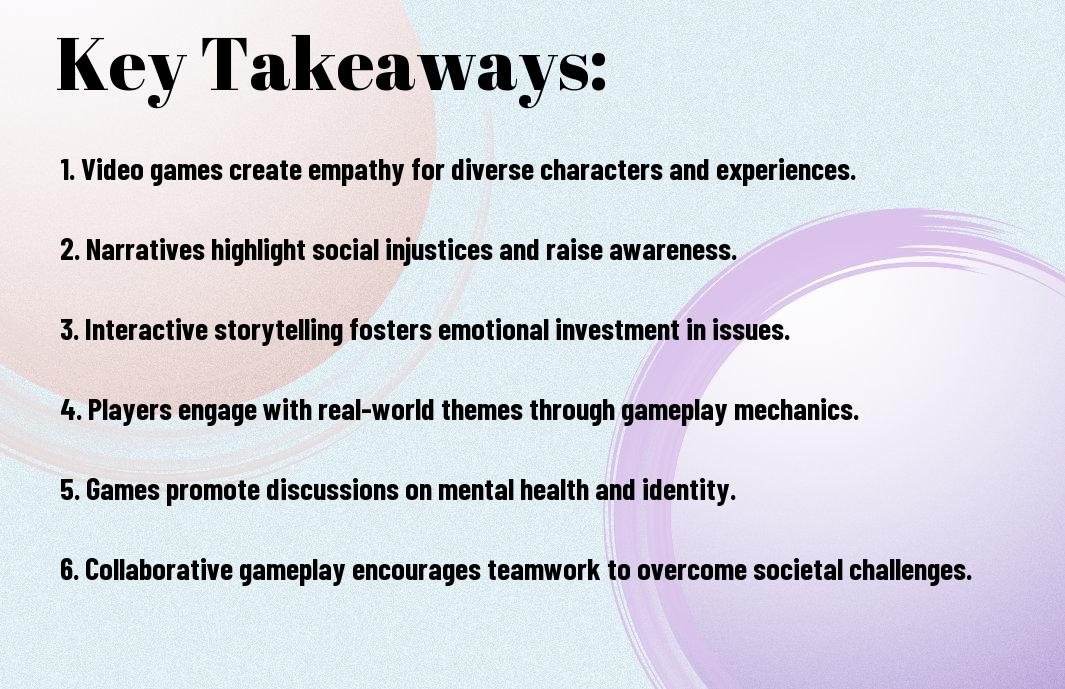
Key Takeaways:

  • Video games have the ability to tackle complex social issues, such as racism, sexism, and inequality, through engaging storytelling and immersive gameplay, allowing players to experience and understand different perspectives.
  • Games like “This War of Mine” and “Papers, Please” use narrative to highlight the human cost of war and the consequences of bureaucratic oppression, promoting empathy and self-reflection in players.
  • Story-driven games can raise awareness about social issues, such as mental health, disability, and LGBTQ+ rights, by incorporating realistic and relatable characters, plotlines, and dialogue.
  • The interactive nature of video games enables players to make choices that impact the story, allowing them to explore the consequences of their actions and develop a deeper understanding of the social issues presented.
  • Games can also serve as a platform for social commentary, using satire, allegory, and other literary devices to critique societal norms and spark meaningful conversations among players.
  • By incorporating diverse characters, settings, and storylines, video games can promote inclusivity and representation, helping to break down stereotypes and challenge players’ assumptions about different social groups.
  • Ultimately, the storytelling in video games has the power to inspire positive change, encouraging players to think critically about social issues and take action to make a difference in their own communities and the world at large.

The Evolution of Social Commentary in Games

Your exploration of video games as a medium for social commentary will lead you to consider whether they should address such issues, as discussed in Should video games address social issues?, and how they have evolved over time.

From Simple Narratives to Complex Social Issues

After delving into the history of video games, you’ll notice that they have transitioned from simple narratives to tackling complex social issues, reflecting your changing world and societal concerns.

The Rise of Choice-Based Storytelling

By examining modern games, you’ll find that choice-based storytelling has become a key aspect of the medium, allowing you to engage with social issues in a more personal way.

Consequently, this shift towards choice-based storytelling enables you to experience different perspectives and outcomes, making you more invested in the game’s social commentary and encouraging you to think critically about the issues presented.

Representation and Identity

Some of the most impactful stories in video games come from their ability to tackle complex social issues, allowing you to experience different perspectives and identities. As you play through these games, you’ll notice how they address representation and identity in a way that’s both thought-provoking and engaging.

Gender and Sexuality in Gaming Narratives

Across various gaming platforms, you’ll find narratives that explore gender and sexuality in a way that’s both authentic and relatable, allowing you to connect with characters on a deeper level and understand their struggles and triumphs.

Cultural Diversity and Perspective

By exploring different cultures and perspectives, you’ll gain a broader understanding of the world and its complexities, as video games provide a unique lens through which to experience and learn about various cultural identities and backgrounds.

Hence, as you investigate into games that focus on cultural diversity and perspective, you’ll discover how they can enrich your understanding of the world, allowing you to appreciate the nuances of different cultures and fostering empathy and tolerance, which is crucial in today’s global community, and enabling you to become a more informed and open-minded individual.

Political and Economic Themes

Unlike other forms of media, video games can tackle complex political and economic issues in a unique and engaging way, allowing you to experience different perspectives and scenarios firsthand.

Power Structures and Authority

For instance, you can explore the impact of authoritarian regimes and corrupt governments on individuals and societies, and consider how your own actions can influence the balance of power in a virtual world.

Resource Distribution and Class Struggle

Between the haves and have-nots, video games often highlight the disparities in resource distribution, enabling you to witness the consequences of economic inequality and ponder your own role in perpetuating or challenging these systems.

It is through these virtual experiences that you can gain a deeper understanding of the complexities surrounding resource distribution and class struggle, and develop a more nuanced perspective on the social and economic issues that affect your own community, allowing you to think critically about your own place within the larger economic landscape and how your choices can impact others.

Environmental Messaging

Now, as you explore the world of video games, you’ll notice that many titles incorporate environmental messaging into their storytelling, prompting you to think about the impact of human actions on the planet. You can find discussions on How can video games tell more nuanced stories like TV and film, which often tackle complex issues like climate change.

Climate Change and Conservation

At the forefront of environmental messaging in video games is the issue of climate change and conservation, where you, as a player, are tasked with navigating the consequences of environmental degradation and finding ways to mitigate its effects.

Human Impact on Virtual Worlds

Changing the way you think about your actions in virtual worlds, many games now highlight the human impact on the environment, encouraging you to consider the consequences of your in-game decisions.

Even as you play games that allow you to build and manage your own virtual worlds, you’re forced to confront the consequences of your actions, such as pollution, deforestation, and resource depletion, making you think about your real-world impact and how you can make a positive change.

Mental Health and Personal Struggles

Many video games tackle mental health and personal struggles, offering you a unique perspective on these complex issues. You’ll find that these games often use storytelling to convey the emotional depth of their characters, making you invested in their journeys.

Character Development Through Trauma

Traumatizing events shape characters, allowing you to understand their motivations and backstories. You see how trauma affects their behavior, making their development more believable and relatable.

Healing and Recovery Narratives

Across various games, you’ll encounter stories of healing and recovery, which provide you with a sense of hope and resilience. You’ll witness characters overcoming their struggles, and this can be a powerful experience.

Through the portrayal of healing and recovery narratives, you can gain a deeper understanding of the complexities of mental health. You’ll see that recovery is a journey, with ups and downs, and that it’s okay to not be okay. As you play these games, you’ll be reminded that you’re not alone in your struggles, and that seeking help is a sign of strength, not weakness.

Social Justice and Activism

For many players, video games offer a unique perspective on social justice and activism, allowing you to experience different worlds and scenarios that raise awareness about important issues. You can engage with stories that highlight social injustices, encouraging you to think critically about your own beliefs and values.

Player Agency in Social Change

Behind the engaging narratives, you’ll find that many games provide you with the opportunity to make choices that impact the story, allowing you to feel invested in the social change you’re witnessing. You can influence the outcome of events, making your experience feel more personal and immersive.

Consequences and Moral Choices

Changing the way you think about social issues, video games often present you with difficult moral choices, forcing you to consider the consequences of your actions. You must weigh the pros and cons of each decision, thinking carefully about how it will affect the game’s world and characters.

To further explore the concept of consequences and moral choices, you can analyze how games use branching storylines and multiple endings to illustrate the impact of your decisions. You’ll notice that your choices can lead to vastly different outcomes, teaching you about the complexity of social issues and the importance of considering multiple perspectives. As you play, you’ll develop a deeper understanding of the social issues presented, and you’ll be encouraged to think critically about your own role in creating positive change.

Final Words

From above, you can see how video games tackle social issues through storytelling, offering your a unique perspective on complex problems. As you engage with these games, you gain a deeper understanding of the world and its challenges. Your experience is enriched by the immersive narratives, allowing you to empathize with characters and their struggles, ultimately broadening your understanding of social issues and their impact on individuals and society.

FAQ

Q: How do video games use storytelling to address social issues like racism and discrimination?

A: Video games often use narrative techniques such as character development, dialogue, and plot twists to tackle complex social issues like racism and discrimination. For example, games like “This War of Mine” and “Life is Strange” feature characters from diverse backgrounds and experiences, allowing players to engage with and understand different perspectives on these issues. By presenting these issues in a virtual environment, games can provide a safe space for players to explore and learn about sensitive topics, fostering empathy and encouraging players to think critically about the world around them.

Q: Can video games effectively raise awareness about mental health issues, such as anxiety and depression, through their storytelling?

A: Yes, many video games use storytelling to address mental health issues, aiming to reduce stigma and promote understanding. Games like “Night in the Woods” and “Hellblade: Senua’s Sacrifice” feature characters struggling with mental health issues, portraying their experiences in a realistic and relatable way. By sharing these stories, games can help players recognize the signs and symptoms of mental health conditions, encouraging them to seek help and support. Additionally, games can provide resources and information about mental health, further promoting awareness and education.

Q: How do video games incorporate real-world social issues, such as climate change and economic inequality, into their narratives and gameplay mechanics?

A: Video games often incorporate real-world social issues into their narratives and gameplay mechanics to raise awareness, promote discussion, and encourage players to think critically about these issues. For example, games like “Eco” and “This War of Mine” feature gameplay mechanics that simulate the consequences of environmental degradation and economic inequality, respectively. By presenting these issues in a virtual environment, games can help players understand the complexities and challenges of addressing these problems, as well as the importance of individual and collective action in creating positive change. This can inspire players to take action in the real world, promoting a sense of social responsibility and civic engagement.

Environmental Storytelling – How Game Worlds Convey Rich Narratives

As you research into the world of gaming, you’ll notice that your surroundings often tell a story of their own. You can learn more about Environmental Storytelling in Gaming: A Journey Through Immersive Worlds, where game designers use environmental details to convey rich narratives, drawing you into the game’s universe. You’ll discover how your journey is shaped by the thoughtful design of the game world, making your experience even more engaging and immersive.

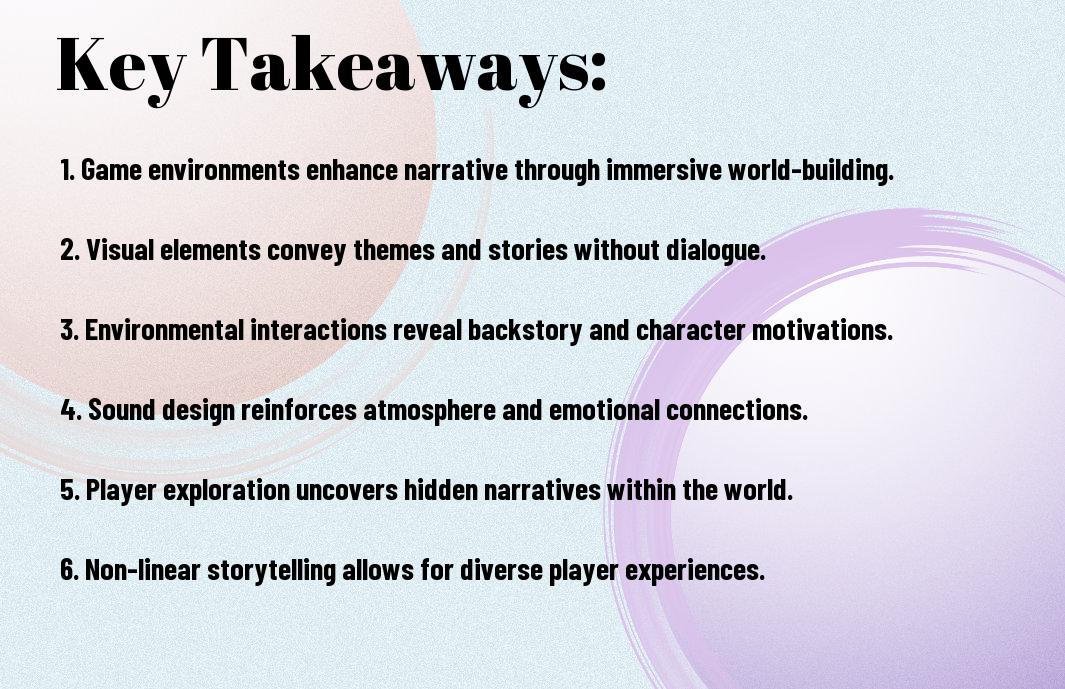
Key Takeaways:

  • Environmental storytelling in games allows players to piece together narratives through subtle details and clues, creating a more immersive experience.
  • Game worlds can convey rich narratives through the use of architecture, level design, and visual elements, drawing players into the story.
  • The placement and design of environmental objects, such as props and set dressing, can provide insight into the game’s world and its inhabitants.
  • Lighting and sound design play a significant role in setting the tone and atmosphere of a game, influencing how players perceive the narrative.
  • Environmental storytelling can be used to convey themes and ideas that may not be explicitly stated in the game’s dialogue or cutscenes.
  • Players’ exploration and discovery of the game world can be a key aspect of environmental storytelling, allowing them to uncover hidden secrets and piece together the narrative.
  • The effective use of environmental storytelling can enhance player engagement and investment in the game’s world and story, leading to a more satisfying and memorable experience.

    Environmental Design Elements

    Before submerging into the world of environmental storytelling, you’ll notice that game worlds convey rich narratives through various design elements, drawing you into their immersive environments.

    Architecture and Space Composition

    Surrounding yourself with the spatial arrangement of game worlds, you’ll see how architecture and space composition play a significant role in shaping your experience, influencing your perception of the game’s narrative.

    Visual Storytelling Through Decay and Damage

    Taking a closer look at the details, you’ll find that visual storytelling through decay and damage effectively conveys the history and atmosphere of a game world, allowing you to piece together its story.

    A key aspect of visual storytelling through decay and damage is the way it evokes emotions and curiosity in you, encouraging exploration and engagement with the game world, as you uncover the secrets behind the worn, damaged, or abandoned environments that surround you.

    Narrative Integration

    Some games masterfully integrate narrative into their environments, drawing you into their worlds. You can learn more about this technique in Crafting Immersive Narratives: The Art of Environmental Storytelling in Ready or Not, which explores how environmental details convey rich stories.

    Object Placement and Meaning

    Positioning of objects in a game world helps you understand the narrative, as you notice the careful placement of items that hint at the story behind the scene.

    Character Traces and Environmental Memory

    Across the game world, you find traces of characters’ presence, which evoke a sense of history and storytelling, inviting you to piece together the events that unfolded.

    In addition, as you explore the environment, you start to notice the subtle details that suggest the characters’ personalities, habits, and motivations, further enriching your understanding of the narrative and your connection to the game world.

    Player Discovery Mechanics

    Not all stories are told through dialogue or text, as you can experience rich narratives through your interactions with the game world. You discover the story by exploring and engaging with the environment, which conveys a sense of immersion and presence.

    Exploration-Driven Storytelling

    Discovering new locations and secrets, you uncover the narrative threads that weave the story together, allowing you to piece together the game’s world and its history, and understand the context of your actions.

    Interactive Environment Response

    Storytelling in games can be enhanced by the environment’s response to your actions, as you manipulate objects, trigger events, and influence the world around you, creating a sense of agency and connection to the narrative.

    To further enhance your experience, the interactive environment response can be designed to provide subtle hints, clues, and feedback, guiding you through the story and encouraging you to explore and experiment with the game world, as you uncover the secrets and mysteries that lie within, and shape your understanding of the narrative and its themes, allowing you to become an active participant in the storytelling process.

    Atmospheric Storytelling

    Many game worlds use atmospheric storytelling to convey rich narratives, drawing you into their immersive environments. You’ll notice that the atmosphere of a game can greatly impact your experience, making you feel like you’re part of the story.

    Sound Design and Ambient Narratives

    Narrative elements are woven into the sound design of a game, creating an immersive experience that surrounds you with ambient noises, voices, and music, all working together to tell a story that you become a part of.

    Lighting as Narrative Device

    By utilizing lighting, game developers can create a mood and atmosphere that influences your perception of the game world, guiding your emotions and actions as you navigate through the environment, and you start to understand the story being told.

    In fact, lighting can be used to convey important information, create tension, or even symbolize themes, and as you play, you’ll find that your interpretation of the story is shaped by the lighting, making you an active participant in the narrative process.

    World Building Through Details

    To create an immersive game world, you need to focus on the small details that bring your environment to life. You can achieve this by incorporating subtle elements that convey a rich narrative, making your world feel lived-in and authentic.

    Cultural Artifacts and Social Context

    After delving into the world’s history, you’ll notice how cultural artifacts and social context shape the narrative. You’ll see how these elements influence the story, making it more engaging and believable, as you explore the world and its many wonders.

    Historical Layer Implementation

    Layer by layer, you’ll uncover the depth of the game world’s history, as you notice the historical layers that have been implemented. You’ll appreciate the attention to detail, as you explore the world and discover its many secrets, making your experience even more enjoyable.

    This implementation of historical layers allows you to understand the world’s evolution, as you notice how different events have shaped the environment. You’ll be able to see how the world has changed over time, and how these changes have impacted the story, making your experience more immersive and engaging, as you become a part of the world’s narrative.

    Environmental Progression

    Now, as you explore game worlds, you notice how environments evolve, revealing rich narratives through subtle details and deliberate design choices, drawing you deeper into the story.

    Dynamic World Changes

    Across various games, you’ll observe how dynamic world changes influence your experience, as shifting environments and altering landscapes reflect the game’s progression, keeping you engaged and invested in the narrative.

    Player Impact on Surroundings

    The way you interact with the environment has a significant impact on the game world, as your actions cause changes that affect the story, making you feel like an integral part of the narrative, with your decisions shaping the world around you.

    At this point, you start to appreciate how your actions have consequences, and the game world responds to your presence, creating a sense of agency and immersion, as you witness the direct impact of your decisions on the environment, further enhancing your connection to the story and its characters.

    Final Words

    To wrap up, you now understand how game worlds convey rich narratives through environmental storytelling. You have seen how your immersion in a game’s world can be enhanced by the subtle details and clever design choices. As you explore your favorite games, you will appreciate the effort that goes into crafting these stories, and your experience will be all the more enjoyable for it, allowing you to connect with the game on a deeper level.

    FAQ

    Q: What is environmental storytelling and how does it enhance the gaming experience?

    A: Environmental storytelling refers to the use of a game’s environment, architecture, and design to convey a narrative or tell a story. This technique allows players to piece together the game’s lore and history through subtle clues, such as abandoned buildings, scattered documents, and cryptic messages. By exploring the game world, players can gain a deeper understanding of the story, its characters, and the world’s history, making the gaming experience more immersive and engaging. Effective environmental storytelling can create a sense of presence and atmosphere, drawing players into the game world and making them feel like they are an integral part of the narrative.

    Q: How do game developers use environmental details to convey rich narratives in game worlds?

    A: Game developers use a variety of techniques to convey rich narratives through environmental details. For example, they may use visual elements such as murals, graffiti, or statues to tell the story of a game world’s history and culture. They may also use sound design, such as ambient noises or voice recordings, to create an immersive atmosphere and provide clues about the game’s narrative. Additionally, developers may use interactive elements, such as journals, letters, or other documents, to provide players with more detailed information about the game’s story and characters. By combining these techniques, developers can create a rich and detailed narrative that players can discover and interpret as they explore the game world.

    Q: What are some examples of successful environmental storytelling in games, and what makes them effective?

    A: There are many examples of successful environmental storytelling in games, including the Bioshock series, which uses a combination of visual and audio elements to tell the story of a dystopian underwater city. Another example is the Dark Souls series, which uses subtle clues and environmental details to convey a sense of history and lore. The game world of Horizon Zero Dawn is also a great example, where the environment and machines are used to tell the story of a post-apocalyptic world. These examples are effective because they provide players with a sense of discovery and exploration, allowing them to piece together the narrative themselves. They also create a sense of immersion and presence, drawing players into the game world and making them feel like they are an integral part of the story. By using environmental storytelling effectively, these games create a rich and engaging narrative that enhances the overall gaming experience.

HT-fff Skip to content