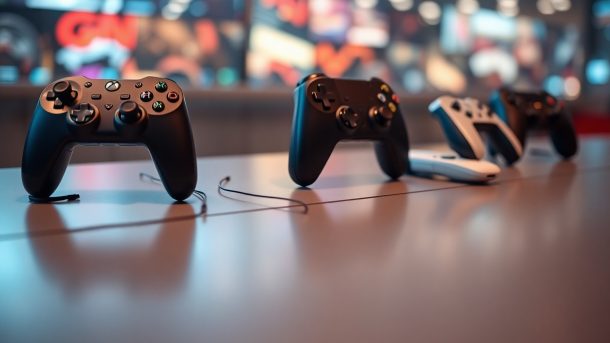
As you investigate into the world of gaming, you’ll notice the significant transformation of game controllers over the years. You’ve likely used various controllers, from classic joysticks to modern motion sensors. Your gaming experience has been shaped by these advancements, offering enhanced precision and immersion. You’re about to explore the fascinating history behind these developments, discovering how game controllers have evolved to meet your changing needs and preferences, revolutionizing the way you interact with your favorite games.
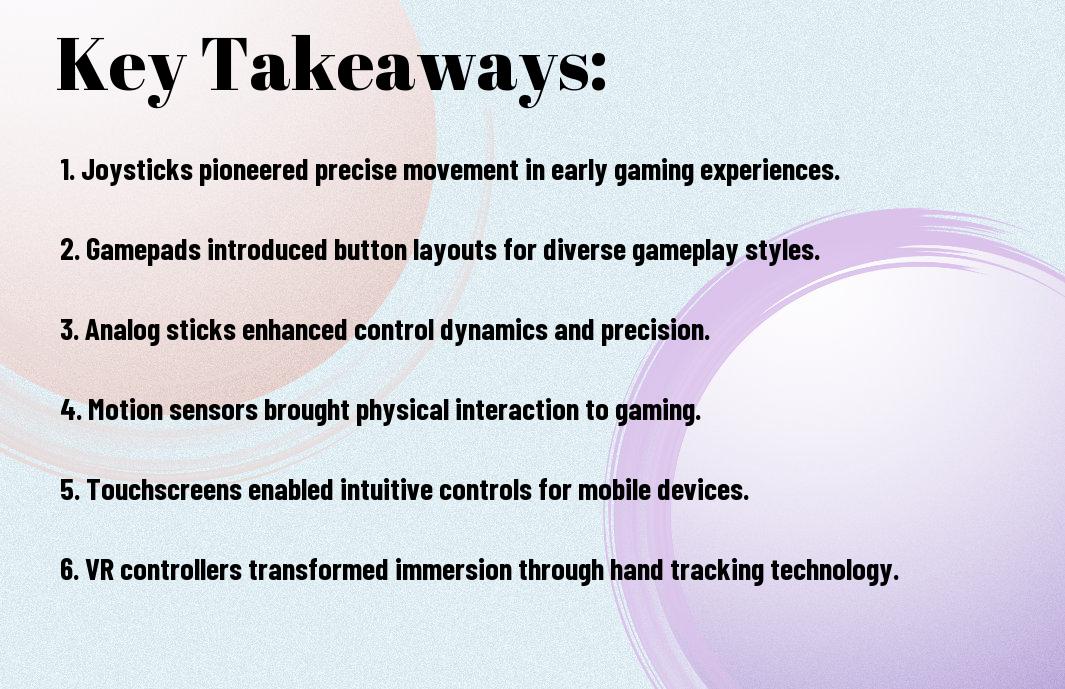
Key Takeaways:
- The evolution of game controllers has transformed the gaming experience, from simple joysticks to complex motion sensors, enhancing player engagement and immersion.
- Early game controllers, such as the Magnavox Odyssey, introduced basic button and joystick configurations, laying the groundwork for future innovations.
- The introduction of the D-pad and analog sticks in the 1980s and 1990s revolutionized controller design, allowing for more precise character movement and control.
- The incorporation of vibration feedback, triggers, and bumper buttons further expanded the sensory experience, drawing players deeper into the game world.
- Motion sensors and gesture recognition technology, popularized by the Nintendo Wii and Microsoft Kinect, enabled new types of gameplay and attracted a broader audience to gaming.
- Modern game controllers, such as those for the PlayStation and Xbox, feature advanced ergonomics, wireless connectivity, and share buttons, reflecting a focus on comfort, convenience, and social sharing.
- The ongoing evolution of game controllers is driven by advancements in technology, changing player preferences, and the rise of new gaming platforms, such as virtual and augmented reality systems.
The Early Days of Control
The first game controllers were simple devices that allowed you to interact with your games in basic ways, laying the foundation for the complex controllers you use today, as you explore the history of gaming, you’ll notice how these early controllers paved the way for future innovations.
Arcade Joysticks and Their Legacy
Against the backdrop of emerging arcade culture, you’ll find that arcade joysticks were the primary means of control, offering you a direct and immersive way to engage with your favorite games, and their influence can still be seen in modern controllers, as you consider the evolution of gaming technology.
Home Console Controllers: First Generation
An integral part of your gaming experience, the first home console controllers introduced you to a new way of playing games in the comfort of your own home, with simple designs and limited buttons, these early controllers marked the beginning of a new era in gaming, and as you look back, you can appreciate the significance of these pioneering devices.
Home console controllers, such as those for the Magnavox Odyssey, were often basic and consisted of a simple keypad or joystick, as you examine deeper into the history of gaming, you’ll notice how these early controllers influenced the development of later, more complex designs, and how they allowed you to enjoy your favorite games in a whole new way, shaping your gaming experience and setting the stage for the innovative controllers you use today.
Nintendo’s Revolution
Assuming you’re familiar with the gaming industry, you know that Nintendo has been a pioneer in innovation, and their contribution to game controllers is no exception, introducing new features that transformed the gaming experience.
D-Pad Innovation
With the introduction of the D-Pad, you were able to control your characters with greater precision, and this innovation paved the way for more complex gameplay mechanics, allowing you to explore new worlds and interact with your environment in a more immersive way.
The Birth of Ergonomic Design
Before the Nintendo 64 controller, you may have struggled with uncomfortable gaming sessions, but this controller’s design changed the game, literally, by introducing an ergonomic shape that fit comfortably in your hands, reducing fatigue and allowing you to play for hours on end.
And as you explore deeper into the world of ergonomic design, you’ll find that it’s not just about comfort, but also about accessibility, as Nintendo’s designs have made gaming more inclusive, allowing you to play with ease, regardless of your skill level or physical abilities, and this focus on ergonomics has become a standard in the industry, influencing the design of controllers for years to come, and shaping your gaming experience in profound ways.
The Analog Era
Keep in mind that the analog era marked a significant shift in game controller design, introducing more precise controls and immersive gaming experiences. You can notice the impact of this era on your gaming sessions, as it enabled more fluid character movements and camera controls.
From Digital to Analog Sticks
Digitally, you were limited to basic directional inputs, but with the introduction of analog sticks, you can now enjoy a wider range of motion and control in your games, making your gaming experience more engaging and interactive.
Rumble Technology Integration
The introduction of rumble technology allowed you to feel more connected to your games, as your controller vibrated in response to in-game actions, enhancing your overall gaming experience and drawing you deeper into the virtual world.
Also, as you explore the world of rumble technology, you’ll find that it has become a standard feature in modern game controllers, providing you with a more immersive experience, and you can expect to feel every bump, crash, and explosion in your games, making your gaming sessions more thrilling and realistic.
Multi-Button Evolution
Now, as you explore the history of game controllers, you’ll notice a significant shift towards multi-button layouts. This change enabled more complex gameplay and paved the way for various genres to emerge.
Fighting Games’ Influence
Emerging from the arcade scene, fighting games drove the demand for more buttons, allowing you to perform intricate combos and special moves, thus influencing the design of modern controllers.
Complex Gaming Demands
Beneath the surface of simple gameplay, you’ll find that complex gaming demands led to the development of more sophisticated controllers, with additional buttons and features that cater to your gaming needs.
In fact, as you examine deeper into the world of gaming, you’ll discover that the complexity of games has been a driving force behind the evolution of controllers, with manufacturers continually adapting to your demands for more immersive and engaging experiences, resulting in the advanced controllers you use today.
Wireless Freedom
Many gamers will appreciate the shift towards wireless game controllers, allowing you to play from the comfort of your couch without being tethered to your console. As you explore the history of game controllers, you can learn more about the advancements in technology by checking out The Evolution of Game Controllers and Control Schemes research, which provides valuable insights into the development of game controllers.
Infrared Beginnings
The introduction of infrared technology marked the beginning of wireless gaming, allowing you to play games without being physically connected to your console, and as you examine into the history of game controllers, you’ll find that this innovation paved the way for future advancements.
Bluetooth and Modern Connectivity
On the heels of infrared technology, Bluetooth emerged as a more reliable and efficient means of wireless connectivity, enabling you to enjoy seamless gaming experiences with your wireless controllers, and as you explore the capabilities of modern game controllers, you’ll appreciate the convenience and flexibility they offer.
Further exploration of Bluetooth and modern connectivity reveals that you can now enjoy high-quality, low-latency gaming experiences with your wireless controllers, thanks to advancements in technology that have enabled faster data transfer rates and more reliable connections, allowing you to fully immerse yourself in your favorite games without the hassle of cables.
Motion Control Revolution
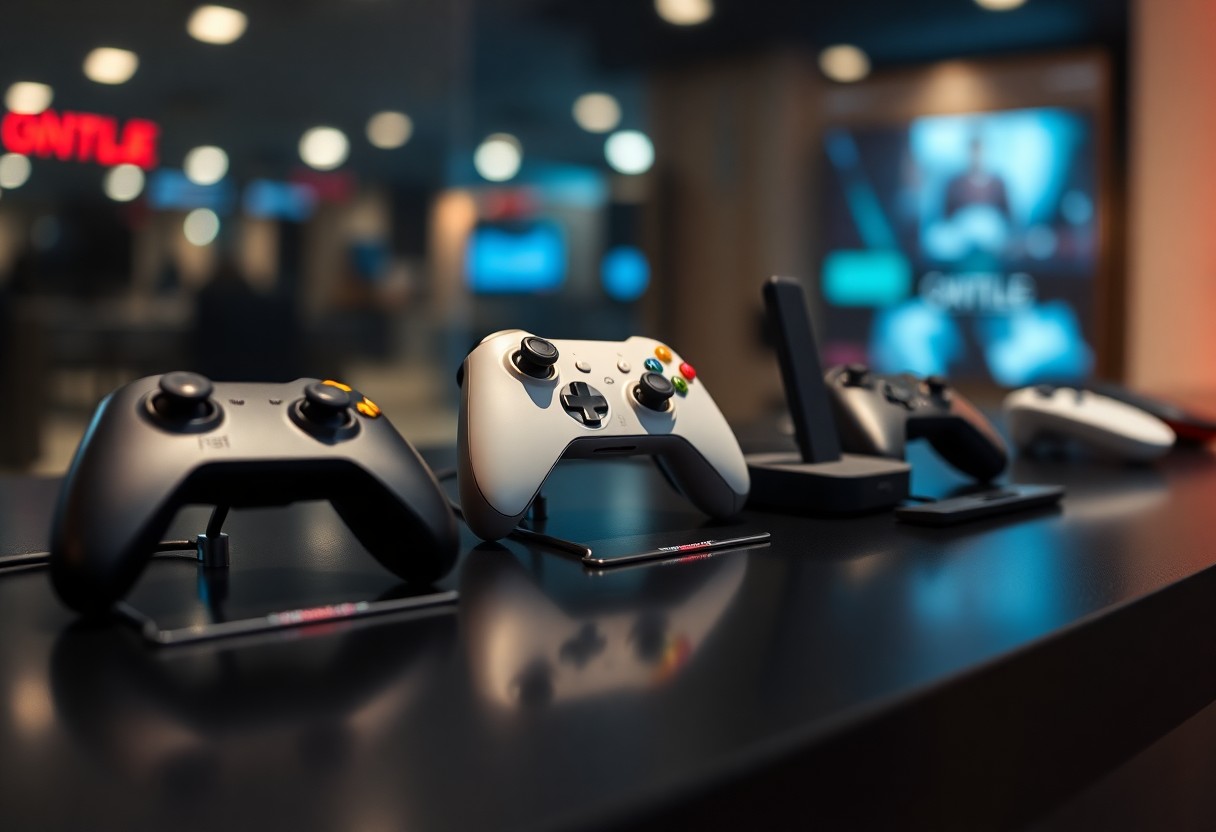
Once again, the gaming industry witnessed a significant shift with the introduction of motion control technology, allowing you to interact with games in a more immersive way, using your body movements to control the gameplay, and this innovation has had a lasting impact on your gaming experience.
Nintendo Wii’s Impact
By introducing the Wii, Nintendo brought motion control to the mainstream, and you were able to enjoy a new level of interactivity, with games that utilized gestures and movements, making your gaming experience more engaging and fun, and paving the way for future innovations in motion control technology.
Modern Motion Tracking Systems
The latest advancements in motion tracking have enabled more precise and sophisticated control, allowing you to experience games with unprecedented levels of realism, and with the use of advanced sensors and cameras, your movements are tracked with greater accuracy, enabling a more immersive gaming experience.
Tracking your movements with high precision, modern motion tracking systems use advanced algorithms and machine learning to interpret your actions, enabling you to control games with subtle gestures and movements, and as you explore these new technologies, you will discover new ways to interact with games, and your gaming experience will be forever changed, with more realistic and engaging gameplay, and a deeper sense of immersion in the virtual world.
The Future of Control
Not surprisingly, the future of game controllers is expected to be shaped by advancements in technology. You can learn more about the history of game controllers by visiting The Evolution of the Video Game Controller to get a deeper understanding of how they have evolved over time.
Haptic Feedback Advances
Alongside this, advancements in haptic feedback are being developed to provide a more immersive experience, allowing you to feel tactile sensations while playing games, which will further enhance your gaming experience.
Neural Interface Possibilities
Above all, after considering the current trends, neural interfaces may soon enable you to control games with your thoughts, revolutionizing the way you interact with your games.
Considering the rapid progress being made in neural interface technology, you may soon be able to control your games with mere thoughts, taking your gaming experience to a whole new level, and enabling you to engage with your games in ways you never thought possible, making the future of gaming even more exciting for you.
Summing up
Hence, as you reflect on the evolution of game controllers, you see a transformation from simple joysticks to advanced motion sensors. You can appreciate how your gaming experience has been enhanced by these innovations, offering more immersive and interactive play. Your understanding of this progression allows you to anticipate future developments, shaping your expectations for the next generation of game controllers.
FAQ
Q: What were the first game controllers like and how did they evolve over time?
A: The first game controllers were simple joysticks and buttons, used in the early days of arcade games and home consoles. These early controllers were basic and limited in their functionality, but they paved the way for the development of more complex and sophisticated controllers. Over time, game controllers evolved to include additional features such as directional pads, analog sticks, and shoulder buttons, allowing for more precise and immersive gameplay. The introduction of motion sensors and gesture recognition technology in modern controllers has further enhanced the gaming experience, enabling players to interact with games in new and innovative ways.
Q: How have advancements in technology impacted the design and functionality of game controllers?
A: Advancements in technology have had a significant impact on the design and functionality of game controllers. The development of wireless technology, for example, has enabled the creation of wireless controllers that offer greater freedom and convenience for players. The use of advanced materials and ergonomic design has also improved the comfort and durability of controllers. Additionally, the integration of features such as vibration feedback, voice commands, and touchscreens has expanded the possibilities for gameplay and player interaction. The evolution of game controllers has been shaped by advances in fields such as computer science, engineering, and human-computer interaction, and will likely continue to be influenced by emerging technologies such as artificial intelligence and virtual reality.
Q: What role do game controllers play in enhancing the overall gaming experience, and what can we expect from future developments in controller technology?
A: Game controllers play a vital role in enhancing the overall gaming experience, as they provide the primary means of interaction between the player and the game. A well-designed controller can elevate the level of immersion and engagement, while a poorly designed one can detract from the experience. As technology continues to advance, we can expect future game controllers to become even more sophisticated and intuitive, with features such as advanced haptic feedback, biometric sensors, and augmented reality integration. The development of new controller technologies will likely be driven by the needs of emerging gaming platforms, such as cloud gaming and virtual reality, and will aim to provide players with more realistic, interactive, and socially connected experiences.