Brain

Brain Boosters – The Cognitive Benefits of Puzzle Games

As you navigate your daily life, you’re constantly looking for ways to improve your mental agility and stay sharp. Your brain is a powerful tool, and engaging in puzzle games can have a significant impact on your cognitive abilities. By incorporating puzzle games into your routine, you can enhance your problem-solving skills, boost your memory, and even improve your focus, leading to a stronger, more resilient mind.

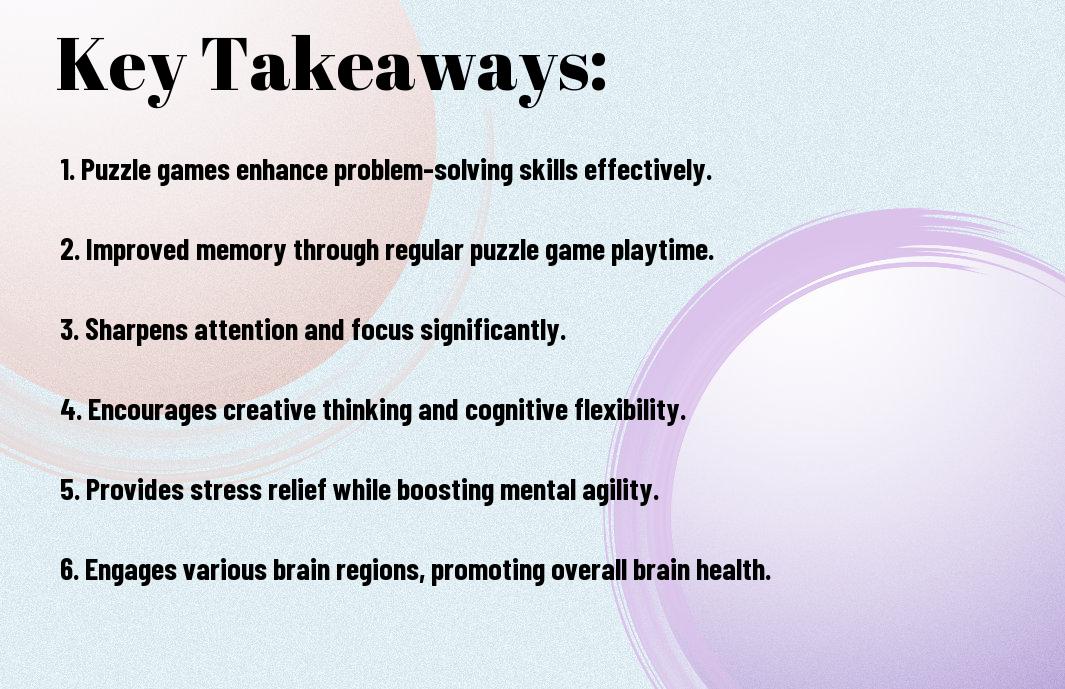
Key Takeaways:

  • Engaging in puzzle games can improve cognitive flexibility, which is the ability to switch between different mental tasks and adapt to new information.
  • Puzzle games have been shown to enhance problem-solving skills, as they require players to think critically and come up with creative solutions.
  • Regularly playing puzzle games can lead to improved memory and spatial awareness, as players must often recall and manipulate objects or patterns.
  • Puzzle games can help to build attention and concentration, as players must focus on the game and filter out distractions to succeed.
  • Playing puzzle games has been linked to a lower risk of age-related cognitive decline and may even help to delay the onset of dementia.
  • Puzzle games can be a fun and effective way to improve processing speed, which is the ability to quickly and accurately process visual information.
  • Participating in puzzle games can also have a positive impact on mental health, reducing stress and anxiety by providing a healthy distraction and sense of accomplishment.

The Science Behind Puzzle Games

A closer look at the effects of puzzle games on your brain reveals a complex process. As you explore the benefits, you can learn more about What Can Puzzles And Brain Training Games Do For Your Memory Skills and how they impact your cognitive abilities.

Neural Pathway Development

Neurally, you will experience significant changes as you engage in puzzle games, developing new pathways and strengthening existing ones, leading to improved cognitive function.

Memory Enhancement Mechanisms

One of the key benefits of puzzle games is their ability to enhance your memory, as they challenge you to recall patterns, shapes, and sequences, thereby improving your cognitive abilities.

Due to the complex nature of puzzle games, you will experience significant improvements in your memory and cognitive function as you continue to challenge yourself with new and increasingly difficult puzzles, leading to a stronger, more resilient brain.
Types of Cognitive Benefits

You can experience various cognitive benefits from puzzle games, including:

  • Improved memory
  • Enhanced focus

Perceiving these benefits, you can enhance your cognitive abilities through puzzle games, as shown in the table below:

Benefit Description
Memory Improved retention
Focus Enhanced concentration
Problem-Solving Developed critical thinking
Pattern Recognition Improved cognitive flexibility
Speed Faster processing

Problem-Solving Skills

With regular practice, you can develop your problem-solving skills, enabling you to approach challenges with a logical and methodical mindset, leading to improved cognitive function.

Pattern Recognition Abilities

Types of puzzle games can help you develop your pattern recognition abilities, allowing you to identify and connect patterns, shapes, and sequences, enhancing your cognitive abilities.

But as you research deeper into puzzle games, you’ll discover that pattern recognition abilities have a significant impact on your daily life, influencing your ability to learn new skills, make connections, and adapt to new situations, ultimately enhancing your overall cognitive function and improving your ability to navigate complex problems.

Popular Puzzle Games and Their Impact

To enhance your cognitive abilities, you can explore various puzzle games that challenge your brain and provide entertainment. These games have been shown to improve memory, problem-solving skills, and concentration.

Classic Puzzles (Chess, Sudoku, Crosswords)

By engaging in classic puzzles like chess, Sudoku, and crosswords, you can improve your logical reasoning and spatial awareness, helping you develop a sharper mind and better analytical skills.

Digital Brain Training Games

Puzzling over digital brain training games can be an effective way to boost your cognitive function, as you can access a wide range of games tailored to your needs and interests, allowing you to track your progress and stay motivated.

But as you examine deeper into digital brain training games, you will find that they offer more than just entertainment – they provide personalized feedback, helping you identify areas where you need improvement, and allowing you to focus on specific skills, such as attention, memory, or processing speed, to achieve a more balanced cognitive development.

Age-Related Benefits

Many people find that puzzle games have a positive impact on their cognitive abilities, regardless of age. You can learn more about the benefits of puzzles by visiting Are Puzzles Good for Your Brain? 7 Top Cognitive Benefits to discover how they can improve your brain function.

Child Development

Around the age of 5, you start to notice significant improvements in your child’s problem-solving skills when they engage in puzzle games, enhancing their cognitive development.

Adult Cognitive Maintenance

Like children, you can benefit from puzzle games as an adult, as they help maintain your cognitive abilities and even slow down age-related decline.

Maintenance of your cognitive health is necessary as you age, and engaging in puzzle games can be an enjoyable way to do so, helping you stay mentally sharp and focused, while also potentially reducing the risk of age-related cognitive decline, allowing you to continue challenging yourself and staying engaged.

Social and Emotional Effects

Once again, puzzle games prove to be beneficial, extending their advantages to your social and emotional well-being, enhancing your mental health and relationships.

Stress Reduction

Above all, engaging in puzzle games can help you relax, as the focus on solving problems distracts you from daily worries, promoting a sense of calm and lowering your stress levels.

Community Building

Among the many benefits, puzzle games offer you opportunities to connect with like-minded individuals, fostering a sense of belonging and community, as you collaborate or compete with others who share your interests.

But as you investigate deeper into the world of puzzle games, you’ll find that community building goes beyond just socializing, allowing you to develop meaningful relationships, learn from others, and even join teams to tackle complex challenges, further enriching your overall gaming experience and personal growth.

Implementation in Daily Life

Despite the numerous benefits of puzzle games, incorporating them into your daily routine can be challenging. You can start by allocating a specific time slot for puzzle games, such as during your daily commute or before bed. This will help you establish a consistent routine and make the most out of your puzzle gaming experience.

Recommended Gaming Schedules

Among the various options, you can choose a schedule that suits your lifestyle, such as playing puzzle games during your breaks at work or dedicating a specific day of the week to gaming. You can experiment with different schedules to find what works best for you.

Progress Tracking Methods

About the methods you use to track your progress, you can utilize features such as leaderboards, achievement systems, or progress charts to monitor your improvement. You can also set personal goals and challenges to stay motivated and engaged.

Hence, as you track your progress, you will be able to identify areas where you need improvement and adjust your strategy accordingly. You can also celebrate your achievements and reflect on your progress, which will help you stay motivated and encouraged to continue playing puzzle games and improving your cognitive skills.

Summing up

To wrap up, you now know that puzzle games offer numerous cognitive benefits. You can improve your problem-solving skills, enhance your memory, and boost your concentration. By incorporating puzzle games into your daily routine, you can challenge your brain and improve your overall cognitive function, leading to a sharper and more focused you.

FAQ

Q: What are brain boosters and how do puzzle games contribute to cognitive benefits?

A: Brain boosters refer to activities that enhance cognitive function, improving mental agility, focus, and overall brain health. Puzzle games, such as crosswords, Sudoku, and chess, are excellent brain boosters as they challenge the brain, promoting cognitive development and strengthening neural connections. Engaging in puzzle games regularly can lead to improved problem-solving skills, enhanced memory, and a lower risk of age-related cognitive decline.

Q: How do puzzle games improve cognitive flexibility and processing speed?

A: Puzzle games require players to adapt to new information, rules, and patterns, which enhances cognitive flexibility. As players navigate through different levels and challenges, their brains become more efficient at processing information, leading to improved processing speed. This, in turn, enables individuals to switch between tasks more efficiently, make decisions faster, and react quicker to new situations. Regular engagement in puzzle games can also delay cognitive aging, keeping the mind sharp and agile.

Q: Can puzzle games be beneficial for individuals with cognitive impairments or neurodegenerative diseases, such as Alzheimer’s or dementia?

A: Yes, puzzle games can be highly beneficial for individuals with cognitive impairments or neurodegenerative diseases. These games offer a stimulating and engaging way to exercise the brain, potentially slowing down cognitive decline. Puzzle games can help improve attention, concentration, and memory, while also promoting a sense of accomplishment and confidence. Additionally, many puzzle games are designed specifically for individuals with cognitive impairments, providing a fun and accessible way to challenge the brain and stay mentally active, which can have a positive impact on overall well-being and quality of life.

How often should brain training sessions be conducted for optimal results

You may be wondering how frequently you should schedule your brain training sessions to see the best outcomes. According to Dr. Renee Clauselle, a clinical psychologist specializing in neuropsychology, in her blog post on FAQs About Brain Training, the key to optimal results lies in consistency and regularity. Stay tuned to discover the science-backed approach to the frequency of brain training sessions for your cognitive enhancement.

Key Takeaways:

  • Consistency is key: Regular brain training sessions are important to see optimal results.
  • Frequency: Aim for 3-5 brain training sessions per week for best outcomes.
  • Listen to your body: Pay attention to how your brain feels and adjust training frequency accordingly.

The Science Behind Brain Training

Neuroplasticity and Cognitive Development

A common misconception is that our brains are static and unchanging. However, cognitive research has shown that our brains possess neuroplasticity, the ability to reorganize and adapt in response to experiences. This means that by engaging in brain training activities, you can stimulate your brain to form new neural connections, leading to improved cognitive functions such as memory, attention, and problem-solving skills.

The Role of Repetition in Learning and Memory

Any effective brain training program incorporates the principle of repetition. When you repeat a specific task or activity, you strengthen the neural pathways associated with that skill. This process, known as long-term potentiation, is crucial for encoding information into your long-term memory. By regularly repeating brain training exercises, you not only enhance your cognitive abilities but also ensure that these improvements are retained over time.

Behind every successful brain training session lies a combination of neuroplasticity and the strategic use of repetition. By understanding the science behind these principles, you can tailor your brain training routine to optimize your results. Note, consistency is key when it comes to improving your cognitive skills through brain training.

The Frequency of Brain Training Sessions

The Myth of Daily Brain Training

To achieve optimal results from brain training, you don’t need to do it every single day. In fact, the myth of daily brain training may not be the most effective approach. Your brain needs time to rest and consolidate the information it has learned. Overloading it with daily training sessions can lead to burnout and diminishing returns. Instead of cramming sessions into your daily routine, consider spacing them out strategically to allow your brain to absorb and retain the information better.

The Benefits of Spaced Repetition

Any expert on brain training will emphasize the benefits of spaced repetition. This technique involves spacing out your training sessions over time, allowing your brain to review and reinforce the information at optimal intervals. By spacing out your sessions, you are importantly telling your brain that this information is important and worth remembering. This approach has been proven to enhance retention and improve long-term learning outcomes.

Frequency is key when it comes to brain training. By strategically spacing out your sessions, you not only enhance the effectiveness of your training but also make the most of your time and effort. Note, quality over quantity is the mantra here. So, instead of daily sessions, opt for regular, spaced-out training to unlock your brain’s full potential.

Optimal Session Duration and Intensity

The Importance of Focus and Concentration

With brain training, the quality of your sessions is just as crucial as the quantity. It’s imperative to maintain a high level of focus and concentration during each session to maximize its effectiveness. Distractions can significantly impact the outcomes of your training, so finding a quiet and comfortable environment where you can fully immerse yourself in the exercises is key. By dedicating your full attention to the tasks at hand, you ensure that your brain is truly challenged and pushed to its limits.

Balancing Challenge and Enjoyment

One of the keys to optimizing your brain training sessions is finding the right balance between challenge and enjoyment. The tasks should be challenging enough to stimulate your brain and promote growth but not so difficult that they become frustrating. Engaging in activities that you find enjoyable can help maintain your motivation and keep you coming back for more. Keep in mind, the goal is to stretch your cognitive abilities while still having fun in the process.

Session duration and intensity can vary depending on your personal preferences and schedule. Some people find that shorter, more frequent sessions work best for them, while others prefer longer, more intense sessions less frequently. Experiment with different schedules to see what works best for you and allows you to stay engaged and motivated throughout your brain training journey.

Individual Differences in Brain Training Needs

Keep in mind that each individual is unique, and their brain training needs may vary. To determine the optimal frequency for your brain training sessions, it’s imperative to consider various factors that influence how often you should train your brain. For more information on this topic, you can check out How Often Should You Train Your Brain to Focus?.

Age and Cognitive Ability

Training frequency can be influenced by factors such as age and cognitive ability. Younger individuals may benefit from more frequent sessions to harness the brain’s neuroplasticity, while older adults might require a different approach to accommodate cognitive changes. Tailoring the frequency of brain training to your age and cognitive ability can enhance the effectiveness of your sessions.

Learning Style and Personality Traits

To optimize your brain training routine, consider your learning style and personality traits. Some people may thrive with shorter, more frequent sessions, while others might prefer longer, less frequent ones. Understanding how your learning style and personality traits impact your brain training can help you design a schedule that maximizes your cognitive gains.

Additionally, individuals with extraverted personalities may benefit from group brain training sessions, where social interaction enhances motivation and engagement. On the other hand, introverted individuals might excel in solitary brain training activities that allow for deep focus and introspection. Adapting your brain training approach to align with your unique learning style and personality can lead to more fulfilling and effective results.

Scheduling Brain Training Sessions

Creating a Realistic and Sustainable Routine

Unlike physical exercise, where you can see immediate results from working out multiple times a week, brain training requires a different approach. To see optimal results, it’s crucial to create a realistic and sustainable routine for your brain training sessions. Consistency is key, so it’s better to train your brain for shorter periods more frequently rather than in long, sporadic sessions.

Creating a schedule that fits into your daily life is crucial for maintaining a brain training routine. Consider setting aside specific times during the week dedicated to training your brain and stick to them. By integrating these sessions into your schedule, you are more likely to make brain training a habit that becomes a natural part of your routine.

Avoiding Burnout and Mental Fatigue

On the journey to improving your cognitive abilities, it’s important to be mindful of avoiding burnout and mental fatigue. Overtraining your brain can have adverse effects, leading to decreased performance and motivation. To prevent burnout, it’s vital to balance your brain training sessions with adequate rest and relaxation.

Fatigue

Understanding the signs of mental fatigue is crucial in managing your brain training schedule effectively. If you notice a decline in focus, irritability, or difficulty retaining information, these may be indicators that you need to give your brain a break. It’s important to listen to your body and mind, allowing them to recharge before diving back into your brain training activities.

Measuring Progress and Adjusting Frequency

Once again, it is important to measure your progress when engaging in brain training sessions. Tracking your cognitive improvement over time can provide valuable insights into how effective your current training regimen is.

Tracking Cognitive Improvement

Cognitive improvement can be tracked through various means, such as cognitive assessments, memory tests, and problem-solving exercises. By regularly evaluating your cognitive abilities, you can better understand which areas are improving and where you may need to focus more attention.

Adapting to Changing Needs and Goals

On your brain training journey, it is crucial to adapt to your changing needs and goals. As you progress and improve in certain areas, you may find that your initial training frequency needs adjustment to continue challenging yourself and seeing results.

Plus, as your cognitive abilities strengthen, you may want to set new goals to push your limits and continue enhancing your brain’s performance. Being flexible and open to adjusting your training frequency based on your evolving needs will help you achieve optimal results in the long run.

Conclusion

Presently, it is evident that the frequency of brain training sessions can significantly impact the results you achieve. To optimize the benefits of brain training, it is recommended that you conduct sessions regularly, ideally 3 to 5 times a week. Consistency is key when it comes to improving cognitive function and enhancing brain health. By committing to regular brain training sessions, you can see noticeable improvements in memory, attention, and overall cognitive abilities over time.

Do not forget, just like physical exercise, the more you engage in brain training activities, the more you can strengthen and improve your mental faculties. So, make it a habit to incorporate brain training into your weekly routine and watch as your cognitive abilities flourish. By investing time and effort into your brain health, you can ultimately enhance your quality of life and cognitive well-being in the long run.

FAQ

Q: How often should brain training sessions be conducted for optimal results?

A: The frequency of brain training sessions depends on individual preferences and schedules. However, for optimal results, it is recommended to engage in brain training exercises at least 3-5 times a week.

Q: Are there specific times of the day that are better for brain training sessions?

A: There is no specific time of the day that is universally better for brain training sessions. It ultimately depends on your personal preferences and when you feel most alert and focused. Some individuals prefer mornings for brain training, while others find evenings more conducive.

Q: How long should each brain training session be for maximum effectiveness?

A: The duration of each brain training session can vary, but it is generally recommended to aim for sessions that last between 20 to 30 minutes. This allows for focused concentration and cognitive engagement without causing mental fatigue.

Can brain training help with obedience training and if so, how

Over the years, you may have heard about the benefits of brain training for improving cognitive skills, but did you know it can also aid in obedience training for your furry friend? In this informative post, we will explore how incorporating brain training exercises can enhance your dog’s ability to follow commands and strengthen your bond through engaging mental stimulation. Discover the science behind this innovative approach and learn practical tips to integrate brain training into your obedience training routine.

Key Takeaways:

  • Brain training can complement obedience training: Engaging a dog’s brain through puzzles and interactive games can help improve their focus, impulse control, and problem-solving skills, which can translate into better obedience during training sessions.
  • Positive reinforcement is key: Using brain training activities as a way to reward and motivate your dog can strengthen the bond between you and reinforce good behavior, making obedience training more effective.
  • Consistency and patience are important: Incorporating brain training exercises into your dog’s routine alongside consistent obedience training practices can help reinforce desired behaviors over time, leading to long-term obedience and well-rounded mental stimulation for your dog.

The Connection Between Brain Training and Obedience Training

While obedience training for your furry companion primarily focuses on teaching them how to respond to commands and behave appropriately, brain training plays a crucial role in enhancing their cognitive abilities and overall mental agility. By incorporating brain training exercises into your pet’s routine, you can effectively improve their problem-solving skills, memory retention, and focus.

The Science Behind Brain Training

On a neurological level, engaging your pet in brain training activities stimulates their brain cells and encourages the formation of new neural connections. Just like how physical exercise strengthens your muscles, mental exercises like puzzles, interactive games, and training drills help to boost your pet’s cognitive functions. These activities can enhance their learning capabilities and promote mental sharpness, leading to improved obedience training outcomes.

How Brain Training Relates to Obedience Training

Science has shown that a well-trained brain is more receptive to learning and retaining new information. When you incorporate brain training exercises into your pet’s routine, you are imperatively preparing them for successful obedience training sessions. By challenging your pet’s mental faculties and offering them opportunities to problem-solve, you are shaping their behavior and increasing their responsiveness to commands. This, in turn, makes obedience training more effective and enjoyable for both you and your pet.

This seamless integration between brain training and obedience training creates a holistic approach to pet education, ensuring that your furry friend is not only well-behaved but also mentally engaged and fulfilled. By prioritizing their cognitive well-being alongside their obedience skills, you are setting them up for a lifetime of learning and positive behavior.

Improving Focus and Attention

One crucial aspect of brain training for dogs is the improvement of their focus and attention. By engaging your dog in various mental exercises and tasks, you can help them enhance their cognitive abilities and strengthen their attention span. According to How Does Brain Training Improve Your Dog’s Mental Health?, mental stimulation is vital for keeping your dog’s brain active and healthy. Through brain training, you can challenge your dog’s mind, boost their problem-solving skills, and increase their ability to concentrate on tasks.

Enhancing Cognitive Function Through Brain Training

Training your dog’s brain can go a long way in enhancing their cognitive function. By incorporating activities that require them to think, analyze, and remember, you are crucially giving their brain a workout. This mental stimulation not only keeps them entertained and engaged but also helps in overall mental development, leading to a sharper and more focused dog.

The Role of Attention in Obedience Training

Attention plays a crucial role in obedience training for your dog. When your dog is attentive, they are more likely to understand and execute your commands effectively. Training your dog to focus and pay attention to you can lead to better communication and a stronger bond between you and your furry companion. It is important to work on exercises that improve your dog’s attention span, as this will ultimately make obedience training more successful and enjoyable for both of you.

Enhancing Learning and Memory

Brain Training Exercises for Improved Learning

Now, when it comes to enhancing learning and memory for obedience training, brain training exercises can be incredibly beneficial. These exercises help improve cognitive functions like attention, processing speed, and memory retention, which are imperative for effective obedience training. By engaging in brain training activities, you can strengthen neural connections and enhance your ability to learn and remember commands, behaviors, and cues more effectively.

On top of traditional obedience training techniques, incorporating brain training exercises such as puzzles, memory games, and interactive activities can stimulate your brain and improve your overall cognitive function. These exercises can make your dog training sessions more engaging and productive, ultimately leading to better obedience outcomes.

The Impact of Memory on Obedience Training

Training your memory is crucial for successful obedience training. Memory plays a significant role in your ability to remember commands, cues, and corrections, creating consistency in your training sessions. By improving your memory capacity, you can recall information faster, leading to more efficient and productive obedience training sessions.

Training your memory through repetition, association techniques, and mnemonic devices can help you retain information better and recall it when needed during training sessions. It strengthens the connection between learning new commands and remembering them, ultimately leading to improved obedience and better communication with your canine companion.

Building Impulse Control

Unlike traditional obedience training that focuses solely on commands and behaviors, brain training for dogs targets their cognitive functions to improve overall obedience. If you’re unfamiliar with this concept, you may want to check out Brain Training for Dogs Reviews -, Is it Effective? to get a better understanding of how brain training can benefit your canine companion.

The Importance of Self-Control in Obedience Training

One crucial element in obedience training is teaching your dog self-control. Dogs, like humans, can struggle with impulsivity, which can hinder their ability to follow commands and behave appropriately. By helping your dog develop self-control, you are setting them up for success in obedience training and daily interactions.

Brain Training Techniques for Impulse Control

To improve your dog’s impulse control, brain training techniques can be highly effective. These techniques involve exercises and activities that challenge your dog’s cognitive abilities, such as memory games, problem-solving tasks, and reward-based training. By engaging your dog’s brain in these activities, you can help them learn to regulate their impulses and make better decisions in various situations.

Building impulse control through brain training not only enhances your dog’s obedience but also strengthens your bond with them. As you work together on these exercises, you’ll see improvements in your dog’s focus, patience, and overall behavior, making training sessions more enjoyable and rewarding for both of you.

Developing Problem-Solving Skills

The Connection Between Brain Training and Problem-Solving

Connection: Not only does brain training help improve memory and cognitive functions, but it also plays a significant role in enhancing problem-solving skills. When you engage in brain training exercises, you are crucially challenging your mind to think in different ways, analyze information, and come up with solutions to various tasks. This type of mental workout can sharpen your ability to assess situations, think critically, and figure out the best course of action in different scenarios.

Applying Problem-Solving Skills to Obedience Training

The: By honing your problem-solving skills through brain training, you can directly apply these abilities to obedience training with your furry companion. When faced with challenges during obedience training sessions, your enhanced problem-solving skills will enable you to approach issues strategically and effectively. For example, if your dog is having trouble learning a new command, your improved problem-solving capabilities can help you analyze the situation, identify potential reasons for the difficulty, and adjust your training methods accordingly.

Another benefit of applying problem-solving skills to obedience training is that it fosters a deeper level of communication and understanding between you and your dog. As you become more adept at problem-solving, you can better interpret your pet’s behavior, anticipate their needs, and tailor your training approach to suit their individual learning style. This can lead to more successful training outcomes and a stronger bond between you and your furry friend.

Real-World Applications of Brain Training in Obedience Training

Many dog owners have found that incorporating brain training exercises into their obedience training routines has yielded impressive results. By engaging your dog’s mind in addition to their body, you can see improvements in their overall behavior and responsiveness to commands.

Success Stories of Brain Training in Obedience Training

Applications of brain training, such as puzzle toys or scent games, can keep your dog mentally stimulated and satisfied, leading to increased focus during obedience training sessions. This mental enrichment can result in better impulse control, reduced hyperactivity, and strengthened bonding between you and your furry friend.

Overcoming Common Challenges in Obedience Training with Brain Training

Challenges that many dog owners face during obedience training, like distractions or stubbornness, can be tackled through brain training techniques. Engaging your dog’s cognitive abilities not only sharpens their mental acuity but also enhances their problem-solving skills. This can translate into quicker learning of obedience commands and a more adaptable response to various situations.

Training your dog’s brain alongside traditional obedience exercises can address behavioral issues at their root by addressing the underlying mental stimulation needs of your pet. This holistic approach to obedience training can lead to long-lasting results and a happier, more well-adjusted companion.

To wrap up

Considering all points, you may find that incorporating brain training into your dog’s obedience training can be a valuable tool. By stimulating your dog’s mental abilities, you not only improve their cognitive functions but also enhance their overall behavior and obedience. While brain training may not be a magic solution to all training issues, it can complement traditional training methods and provide a fun and engaging way to strengthen the bond between you and your furry companion. To further explore the benefits of brain training for dogs, you can check out Is brain training for dogs worth it? on Quora.

Q: Can brain training help with obedience training?

A: Yes, brain training can help with obedience training. By engaging your dog’s brain in challenging activities, you can improve their focus, impulse control, and overall cognitive abilities. This can make them more receptive to obedience training and help them learn commands more quickly.

Q: How can brain training benefit obedience training?

A: Brain training exercises, such as puzzle toys, scent games, and obedience drills, stimulate your dog’s mind and prevent boredom. This mental stimulation can reduce undesirable behaviors caused by boredom or lack of mental exercise, making your dog more attentive and responsive during obedience training sessions.

What are some brain training activities that can complement obedience training?

A: Some brain training activities that can complement obedience training include teaching your dog new tricks, practicing obedience commands in different environments, playing interactive games like hide-and-seek or fetch, and using food puzzles or treat-dispensing toys to encourage problem-solving skills. These activities not only provide mental stimulation but also strengthen the bond between you and your dog, making obedience training more enjoyable for both of you.

Can brain training help reduce anxiety and stress in dogs If so, how

Anxiety can be a common issue in dogs, leading to stress and behavioral problems. One way to help alleviate these issues is through brain training exercises. By engaging your dog in mental stimulation activities, you can help reduce their anxiety levels and promote a sense of calm. In this blog post, we will explore the effectiveness of brain training in reducing anxiety and stress in dogs, as well as provide tips on how to incorporate these exercises into your furry friend’s routine.

Key Takeaways:

  • Brain training can help reduce anxiety and stress in dogs: Engaging a dog’s mind in challenging and stimulating activities can distract them from anxious thoughts and promote mental well-being.
  • Interactive games and puzzles are beneficial: Using interactive toys and games that require problem-solving skills can help alleviate stress and anxiety in dogs by keeping them mentally engaged and focused.
  • Consistent training and positive reinforcement are key: Regular training sessions with positive reinforcement can help build a dog’s confidence and reduce anxiety over time. Patience and consistency are important for successful brain training in dogs.

The Anxiety Epidemic in Dogs

Prevalence of anxiety and stress in dogs

For many dogs, anxiety and stress have become an epidemic in recent years. The modern world can be overwhelming for our furry friends, with various triggers causing them to experience feelings of unease and fear.

Common signs and symptoms of anxiety in dogs

Any dog owner knows that our canine companions can display a wide range of signs and symptoms when they are feeling anxious. These can include excessive barking, destructive behavior, panting, pacing, trembling, and even aggression.

With a better understanding of these common signs and symptoms, you can be more attuned to your dog’s emotional well-being and take proactive steps to help alleviate their anxiety.

The Science Behind Brain Training

While it may seem like magic how brain training can help reduce anxiety and stress in dogs, there is actually solid science behind it. Understanding the mechanisms at play can help you see the potential benefits for your furry friend.

How brain training affects canine cognition

One way brain training can be effective in reducing anxiety and stress in dogs is by stimulating their cognitive functions. Just like with humans, engaging your dog’s brain with puzzles, games, and new challenges can help keep their mind sharp and focused. This mental stimulation can help distract them from anxious thoughts and promote a sense of accomplishment and confidence.

The role of neuroplasticity in anxiety reduction

The concept of neuroplasticity refers to the brain’s ability to reorganize itself by forming new neural connections throughout life. With respect to reducing anxiety in dogs, neuroplasticity plays a crucial role. By engaging in brain training activities, you are vitally helping your dog’s brain rewire itself to cope better with stressors and triggers. This can lead to a more resilient and adaptable mindset, making your dog less prone to anxiety and more capable of handling challenging situations.

Plus, by consistently practicing brain training exercises with your dog, you are not only boosting their cognitive abilities but also promoting a sense of routine and structure in their life. This predictability can help reduce feelings of uncertainty and anxiety, leading to a calmer and more relaxed pup overall.

Can Brain Training Reduce Anxiety in Dogs?

Unlike regular physical exercise, mental stimulation through brain training can provide significant benefits for reducing anxiety and stress in dogs. The Importance of Mental Stimulation for Your Dog’s Well-being is well documented, showing that mental exercises can help improve cognitive function, enhance problem-solving skills, and reduce behavioral issues such as anxiety and stress.

The current state of research on brain training and anxiety

Training that involves mental stimulation has been increasingly studied for its effects on reducing anxiety in dogs. While more research is needed to fully understand the mechanisms behind this relationship, preliminary studies suggest that engaging the brain with puzzles, interactive toys, and training activities can help lower stress levels and promote a sense of calmness in dogs.

Success stories: Real-life examples of brain training reducing anxiety in dogs

Success stories abound when it comes to using brain training to alleviate anxiety in dogs. Many dog owners have reported significant improvements in their pets’ anxiety levels after incorporating mental stimulation activities into their daily routines. By challenging your dog’s mind and providing opportunities for mental engagement, you can help decrease anxiety and promote overall well-being in your furry companion.

Types of Brain Training for Anxiety Reduction

Not all brain training activities are created equal when it comes to reducing anxiety and stress in dogs. Some specific types of brain training can be particularly effective in helping your furry friend relax and feel more at ease. After all, a relaxed dog is a happy dog!

Scent work and olfactory training Problem-solving games and puzzles
For dogs, their sense of smell is incredibly powerful and engaging in scent work activities can be very calming. By engaging your dog’s olfactory senses, you can redirect their focus from anxious thoughts to the task at hand. Training your dog with problem-solving games and puzzles not only challenges their cognitive abilities but also distracts them from feelings of anxiety. These activities can help build your dog’s confidence and mental agility.

Scent work and olfactory training

For dogs, their sense of smell is incredibly powerful and engaging in scent work activities can be very calming. By engaging your dog’s olfactory senses, you can redirect their focus from anxious thoughts to the task at hand. You can start by hiding treats around the house or yard for your dog to find using their nose. You can also try using scented toys or puzzle feeders to engage their sense of smell and provide mental stimulation.

Problem-solving games and puzzles

Training your dog with problem-solving games and puzzles not only challenges their cognitive abilities but also distracts them from feelings of anxiety. These activities can help build your dog’s confidence and mental agility. Introducing new puzzles or toys regularly can keep your dog engaged and focused, providing a healthy outlet for their mental energy. Games like hide-and-seek with treats or interactive toys can be both fun and mentally stimulating for your furry friend.

Desensitization and counterconditioning techniques

An crucial aspect of reducing anxiety in dogs is through desensitization and counterconditioning techniques. These methods involve gradually exposing your dog to the source of their anxiety in a controlled and positive way, paired with rewards and reinforcement. By repeatedly pairing the trigger of anxiety with something positive, you can help change your dog’s emotional response over time.

With desensitization, you start at a level where your dog is comfortable and slowly increase exposure as they become more relaxed and tolerant. This approach helps your dog build a positive association with the previously anxiety-inducing stimulus, ultimately reducing their stress levels.

How to Implement Brain Training for Your Dog

Despite the potential benefits of brain training for reducing anxiety and stress in dogs, it’s important to approach the process thoughtfully and tailor it to your dog’s individual needs and preferences.

Creating a brain training plan tailored to your dog’s needs

On the journey to reducing your dog’s anxiety and stress through brain training, it’s crucial to create a customized plan that suits your pet’s specific requirements. Consider factors such as your dog’s breed, age, personality, and current level of cognitive stimulation. For example, high-energy breeds may benefit from more physically demanding brain games, while older dogs may prefer mentally stimulating activities that are gentler on their joints.

Tips for incorporating brain training into daily life

With brain training, consistency is key. Integrate short training sessions into your daily routine to keep your dog mentally engaged and prevent boredom. Start with simple tasks and gradually increase the difficulty as your dog becomes more skilled. This incremental progress not only builds your dog’s confidence but also strengthens the bond between you and your furry friend.

  • Rotate different brain games to keep your dog challenged and motivated.
  • Use your dog’s favorite treats or toys as rewards to make training sessions more enjoyable.
  • Monitor your dog’s progress and adjust the training plan as needed to ensure continued growth and development.

Training your dog’s brain can be an enjoyable and rewarding experience for both of you. By incorporating brain training into your daily routine, you can help reduce your dog’s anxiety and stress levels while enhancing their overall mental well-being.

Overcoming Common Challenges

Addressing owner anxiety and its impact on dog anxiety

Common challenges that may arise when using brain training to reduce anxiety and stress in dogs involve addressing owner anxiety and how it can impact their furry companions. As a pet owner, it’s important to recognize that dogs are highly intuitive and can pick up on your emotions. If you are anxious or stressed, your dog may mirror these feelings, exacerbating their own anxiety.

Managing expectations and progress

Challenges can also arise when managing your expectations and understanding the progress that your dog is making through brain training. It’s crucial to remember that every dog is unique and will respond differently to training. Some dogs may show significant improvements quickly, while others may take more time. Patience, consistency, and a positive attitude are key in helping your dog overcome anxiety and stress.

Managing expectations and progress is crucial in the process of reducing anxiety and stress in your dog through brain training. It’s crucial to celebrate small victories and progress, even if it may seem insignificant at first. Note, building your dog’s confidence and trust takes time, so stay committed to the training process and trust that you are making a positive impact on your dog’s well-being.

With dedication, patience, and a holistic approach to your dog’s well-being, you can effectively reduce anxiety and stress through brain training. By addressing your own anxiety, managing expectations, and celebrating progress, you will create a harmonious and calm environment for your furry friend to thrive in.

Final Words

With these considerations in mind, it is imperative to remember that brain training can indeed help reduce anxiety and stress in dogs. By engaging their minds with puzzles, problem-solving tasks, and interactive games, you are providing mental stimulation that can divert their focus away from stressors and ultimately promote a sense of calmness. Moreover, the cognitive challenges presented in brain training exercises can boost their confidence and sense of accomplishment, which are vital factors in building resilience against anxiety.

If you are interested in exploring other methods to help your furry friend cope with anxiety, you may also consider the surprising benefits of group exercise for anxious dogs. Check out The surprising benefits of group exercise for anxious dogs and discover how social interaction and physical activity can contribute to improving your dog’s overall well-being and reducing anxiety levels.

Q: Can brain training help reduce anxiety and stress in dogs?

A: Yes, brain training can be a helpful tool in reducing anxiety and stress in dogs. Mental stimulation through brain training activities can help redirect a dog’s focus away from stressors and promote relaxation.

Q: How can brain training help reduce anxiety and stress in dogs?

A: Brain training exercises engage a dog’s cognitive abilities, keeping their mind occupied and challenged. This mental stimulation can prevent boredom, decrease anxiety, and improve overall well-being by providing a constructive outlet for their energy.

Q: What are some examples of brain training activities for dogs?

A: Some examples of brain training activities for dogs include puzzle toys, scent work games, obedience training, interactive feeding toys, and trick training. These activities can be tailored to suit your dog’s individual preferences and abilities.

HT-fff Skip to content