
As you research into the world of video games, you’re likely to notice the captivating campaigns that surround your favorite titles. You may wonder what makes these marketing strategies so effective, drawing you in with their engaging storylines and immersive visuals. Your attention is precisely the goal, and the marketing teams behind these games have mastered the art of capturing it, leveraging psychological insights and creative techniques to leave a lasting impression on you.
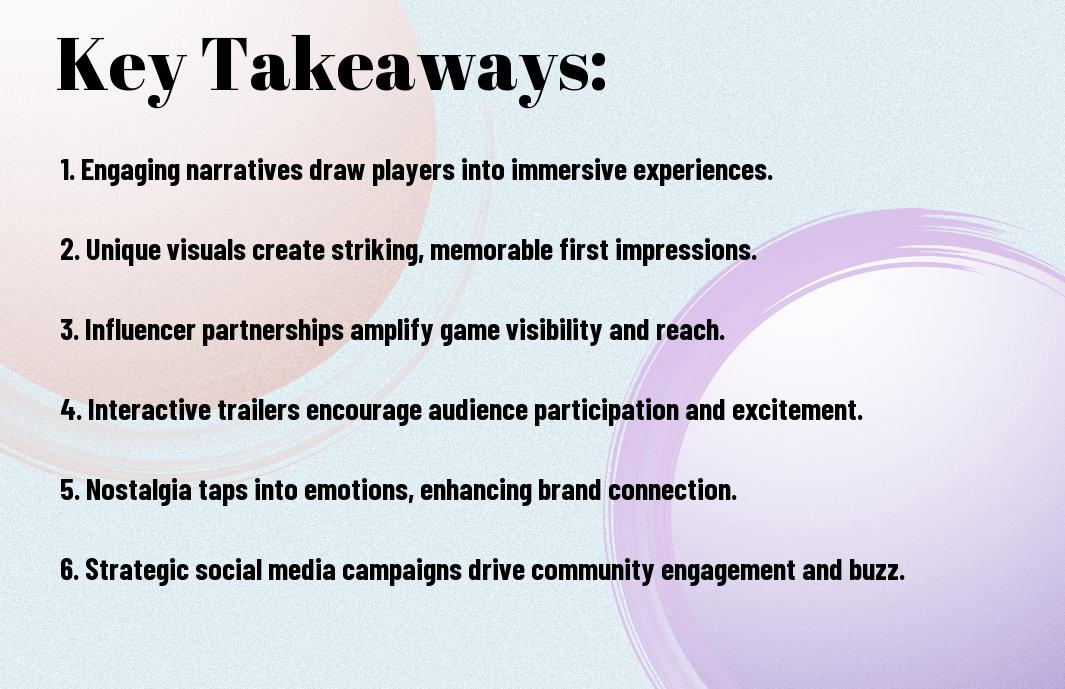
Key Takeaways:
- Effective video game marketing campaigns often use a combination of storytelling, visuals, and interactive elements to capture the audience’s attention and create a lasting impression.
- Trailers and teasers are used to build anticipation and excitement for upcoming games, with many campaigns starting months or even years in advance of the game’s release.
- Social media plays a significant role in video game marketing, with platforms like Twitter, YouTube, and Twitch used to share updates, behind-the-scenes content, and influencer partnerships.
- Influencer marketing is a key strategy in the gaming industry, with popular streamers and YouTubers often partnering with game developers to promote new releases and create buzz around upcoming titles.
- Immersive experiences, such as virtual reality (VR) and augmented reality (AR) experiences, are being used to create unique and engaging marketing campaigns that simulate the game environment.
- Community engagement is a vital aspect of video game marketing, with developers encouraging fan interaction and feedback through forums, social media, and live events to build a loyal fan base.
- Measuring the success of a marketing campaign is vital, with metrics such as engagement rates, conversion rates, and return on investment (ROI) used to evaluate the effectiveness of different marketing strategies and tactics.
The Psychology of Gaming Attention
Before entering into the world of video game marketing, you need to understand what drives your attention. The psychology behind gaming attention is complex, involving various factors that influence your behavior and decision-making process. As you engage with a game, your brain responds to certain stimuli, making you more likely to continue playing.
Dopamine-Driven Design
On the surface, game design appears to be solely about entertainment, but beneath lies a sophisticated system that triggers dopamine release in your brain, motivating you to continue playing. You experience a sense of pleasure and satisfaction, encouraging you to repeat certain actions, which in turn, strengthens your engagement with the game.
Social Proof Elements
With the rise of online gaming, social proof elements have become a key aspect of game design. You are more likely to engage with a game when you see others playing and enjoying it, as this validation reinforces your own behavior and motivates you to continue playing.
Gaming communities and social media platforms play a significant role in amplifying social proof elements, allowing you to share your experiences, compare progress, and compete with others. As you participate in these online interactions, you become more invested in the game, and your attention is captured, making you a loyal player and potentially, a loyal customer.
Visual Storytelling in Game Marketing
While exploring the world of game marketing, you’ll notice that visual storytelling plays a significant role in capturing your attention. Through a combination of stunning visuals and engaging narratives, game marketers create an immersive experience that draws you in and leaves a lasting impression.
Cinematic Trailers
Upon viewing a game’s cinematic trailer, you’re immediately transported into the game’s universe, where you’re introduced to the characters, storyline, and overall atmosphere. This teaser gives you a glimpse into the game’s world, piquing your interest and building anticipation for the game’s release.
Gameplay Reveals
Similarly, storytelling through gameplay reveals offers a unique perspective, allowing you to see the game in action and understand its mechanics. As you watch the gameplay, you can assess whether the game aligns with your interests and preferences, making you more likely to engage with the game.
A key aspect of gameplay reveals is the way they showcase the game’s interactive elements, giving you a sense of what it’s like to play the game. As you watch the gameplay, you can imagine yourself in the player’s shoes, navigating the game’s world and overcoming challenges, which helps you form a deeper connection with the game and its story, making you more invested in the game’s release and your overall gaming experience.

Digital Campaign Architecture
All successful video game campaigns rely on a well-structured digital architecture, allowing you to navigate and engage with the game’s universe seamlessly. You can explore the game’s world, characters, and storyline through various online platforms, making your experience more immersive and interactive.
Social Media Integration
Socially, you are likely to encounter video game campaigns on your favorite social media platforms, where you can share your thoughts, opinions, and experiences with others. You can join communities, participate in discussions, and stay updated on the latest news and updates, making your engagement with the game more enjoyable and dynamic.
Influencer Ecosystems
Against the backdrop of a highly competitive gaming industry, you will find that influencer ecosystems play a significant role in promoting video games. You can discover new games, watch walkthroughs, and learn tips and tricks from your favorite influencers, who have built a massive following and credibility in the gaming community.
For instance, when you follow influencers who align with your gaming interests, you can gain valuable insights into the game’s mechanics, storyline, and overall gameplay, helping you make informed decisions about which games to play and invest your time in. You can also engage with the influencer community, sharing your own experiences and opinions, and contributing to the ecosystem’s growth and diversity.
Pre-Launch Momentum
Keep in mind that generating excitement before a game’s release is key to its success. You’ll notice that successful games often have a well-planned pre-launch campaign that builds anticipation and hype among potential players.
Teaser Campaigns
Prelaunching a teaser campaign can spark your interest and get you talking about the upcoming game. You’ll start to see hints and clues about the game’s storyline, characters, and features, making you eager to learn more.
Community Building
Beneath the surface of a successful pre-launch campaign lies a strong community of fans. You’ll find that your enthusiasm is shared by others, creating a sense of belonging and shared excitement for the game’s release.
Plus, as you engage with the community, you’ll start to feel invested in the game’s success, eager to share your thoughts and opinions with others. You’ll begin to follow the game’s social media accounts, join online forums, and participate in discussions, further fueling your anticipation for the game’s launch.
Cross-Platform Strategies
Not surprisingly, effective cross-platform strategies are key to capturing your audience’s attention. You can learn more about this in The Ultimate Guide to Game Marketing: Everything You Need to Know, which provides valuable insights into the world of game marketing.
Mobile to Console Synergy
Against the backdrop of an increasingly connected gaming landscape, you’ll find that mobile and console gaming experiences are often intertwined, with your favorite games offering seamless transitions between platforms.
Multi-Channel Presence
Meanwhile, you’ll notice that a multi-channel presence is necessary for reaching your target audience, as your potential customers are likely to be active on various social media platforms, forums, and gaming communities.
Indeed, as you explore the concept of multi-channel presence, you’ll discover that it’s about more than just having a presence on multiple platforms – it’s about creating a cohesive brand identity that resonates with your audience across all channels, from social media to influencer partnerships, and from content marketing to paid advertising, allowing you to maximize your reach and engagement.
Emotional Marketing Triggers
For you, as a gamer, emotional connections play a significant role in capturing your attention. You are drawn to campaigns that evoke feelings and create a sense of belonging.
Nostalgia Factors
About the time you spent playing your favorite childhood games, you likely feel a strong emotional bond. You may experience this through:
- Classic game remakes
- Retro-style graphics
- Familiar soundtracks
Recognizing these elements can instantly grab your attention and make you more invested in a campaign.
FOMO Mechanics
The fear of missing out is a powerful motivator, and you’re not immune to its effects. You feel pressure to stay up-to-date with the latest releases and trends.
Due to the limited-time nature of many gaming events and promotions, you feel compelled to participate and engage with the campaign to avoid feeling left behind. This can lead to a sense of urgency, driving you to make purchases or take action, and ultimately, increasing your overall engagement with the game and its community.
Summing up
As a reminder, you now understand how video game campaigns capture your attention through marketing magic. You’ve seen how your emotions are triggered, and your interests are piqued. By leveraging psychology and creativity, marketers tap into your desires, making you invested in their games. You can appreciate the effort that goes into crafting these campaigns, and how they influence your gaming choices, making your experience more engaging and immersive.
FAQ
Q: What makes video game campaigns so effective at capturing our attention, and what can marketers learn from them?
A: Video game campaigns are effective at capturing our attention because they often use a combination of engaging storytelling, immersive visuals, and interactive elements to draw players in and keep them invested. Marketers can learn from this by incorporating similar techniques into their own campaigns, such as using narrative-driven advertising, creating immersive brand experiences, and encouraging audience participation through social media and other channels. By doing so, marketers can create a deeper connection with their target audience and increase the likelihood of driving conversions and loyalty.
Q: How do video game marketers use psychological manipulation to influence player behavior and drive sales?
A: Video game marketers use a range of psychological techniques to influence player behavior and drive sales, including the use of scarcity, social proof, and variable rewards. For example, limited-time offers and exclusive content can create a sense of urgency and encourage players to make a purchase. Similarly, showcasing player achievements and leaderboards can foster a sense of competition and community, driving players to engage more deeply with the game. Marketers can apply these same principles to their own campaigns, using tactics like limited-time promotions and user-generated content to create a sense of excitement and engagement around their brand.
Q: What role does nostalgia play in the success of video game marketing campaigns, and how can marketers tap into this powerful emotional driver?
A: Nostalgia plays a significant role in the success of video game marketing campaigns, as it allows marketers to tap into players’ fond memories and emotional connections to classic games and franchises. By incorporating retro elements, such as classic characters, music, and gameplay mechanics, into their campaigns, marketers can create a sense of nostalgia and familiarity that resonates with players. Marketers can also use nostalgia to create a sense of continuity and tradition, highlighting the evolution of a franchise or series over time and emphasizing the latest installment as the next chapter in a beloved story. By leveraging nostalgia in this way, marketers can create a powerful emotional connection with their audience and drive engagement, loyalty, and sales.