
simon weiner

Adaptive Soundtracks – How Music Reacts to Your Gameplay

As you immerse yourself in your favorite video game, you may have noticed that the music seems to adapt to your actions, amplifying the excitement and tension. This is thanks to adaptive soundtracks, a technology that adjusts the music in real-time based on your gameplay. To learn more about this innovative technology, you can explore The Role Of Adaptive Music In Modern Video Games, and discover how it enhances your gaming experience.

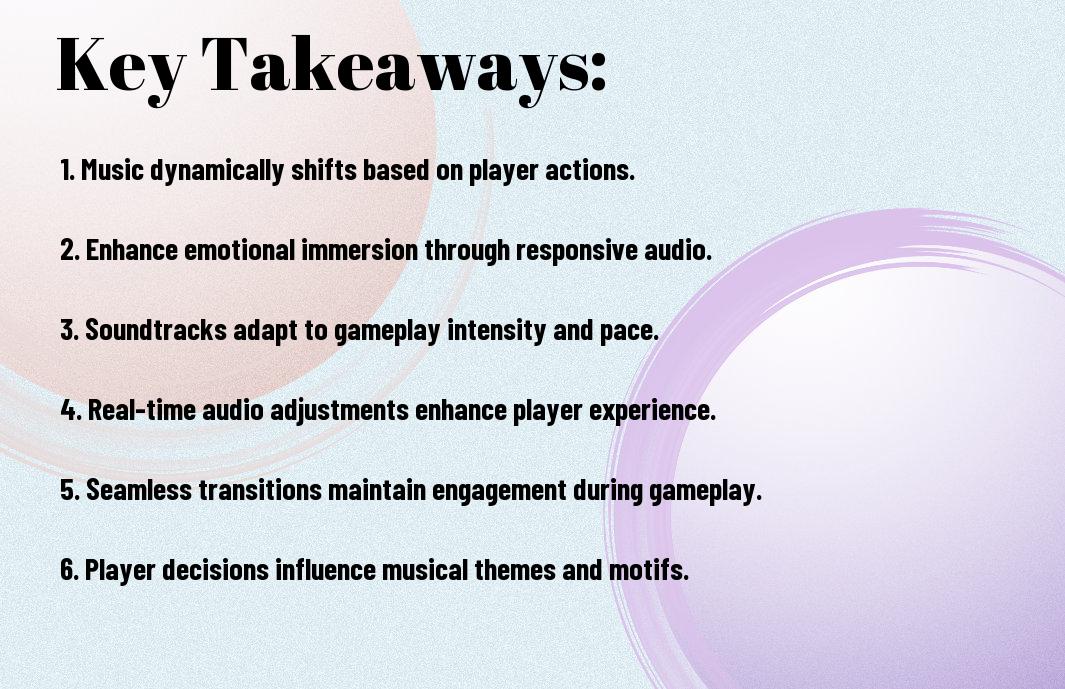
Key Takeaways:

  • Adaptive soundtracks are designed to respond to the player’s actions and emotions, creating a more immersive gaming experience by adjusting the music in real-time.
  • These soundtracks use algorithms and audio cues to detect changes in gameplay, such as shifts in pace, mood, or environment, and adapt the music accordingly.
  • Adaptive music can enhance the emotional impact of a game, making moments of tension or triumph feel more intense and satisfying.
  • The technology behind adaptive soundtracks allows for a high degree of customization, enabling developers to create unique musical experiences tailored to their game’s specific needs.
  • Adaptive soundtracks can also be used to convey important information to the player, such as warning them of impending danger or highlighting hidden secrets.
  • By responding to the player’s actions, adaptive soundtracks can create a sense of agency and interactivity, drawing the player deeper into the game world.
  • The use of adaptive soundtracks is becoming increasingly popular in the gaming industry, with many developers incorporating this technology into their games to create a more engaging and dynamic audio experience.

The Foundations of Adaptive Audio

Before plunging into the world of adaptive soundtracks, you need to understand the basics of how music interacts with your gameplay. You’ll discover that adaptive audio is a complex system that enhances your gaming experience by responding to your actions.

Dynamic Music Systems

Following the introduction to adaptive audio, you’ll explore dynamic music systems, which allow your soundtrack to evolve based on your progress and decisions. You’ll find that this technology enables a more immersive experience, as the music adapts to your gameplay style.

State-Based Transitions

Prior to mastering adaptive soundtracks, you should grasp state-based transitions, which enable your music to shift seamlessly between different states, such as exploration or combat. You’ll learn how this technique creates a cohesive and engaging audio experience tailored to your actions.

Even as you explore deeper into state-based transitions, you’ll notice how they allow your music to respond to specific events or changes in your gameplay, creating a unique and dynamic soundtrack that complements your experience. You’ll appreciate how this technique enhances the overall immersion and emotional impact of your game, making your journey even more enjoyable and engaging.
Musical Layers and Intensity

The complexity of adaptive soundtracks lies in their ability to adjust to your gameplay, creating a unique experience each time you play. This is achieved through various techniques that allow the music to shift and change in response to your actions.

Vertical Layering Techniques

Vertically, you can think of adaptive soundtracks as comprising multiple layers of music that can be added or removed in real-time, allowing the soundtrack to swell or diminish in intensity based on your progress and actions.

Horizontal Re-sequencing

At the heart of adaptive soundtracks is the ability to re-sequence music horizontally, allowing the soundtrack to change and adapt to your gameplay in a non-linear fashion, creating a unique experience each time you play.

Hence, as you navigate through the game, the music adjusts to your pace and actions, creating a dynamic and immersive experience that draws you deeper into the game world, with the soundtrack responding to your every move, creating a truly personalized experience.

Player Action Response

Your actions in the game have a significant impact on the adaptive soundtrack, as it adjusts to your every move, creating a unique experience.

Combat and Tension Triggers

Tensely, the music shifts when you encounter enemies, heightening the sense of urgency and excitement, drawing you deeper into the game.

Environmental Adaptation

Triggering a change in the soundtrack, your surroundings influence the music, with different environments calling for distinct melodies and rhythms.

To fully immerse yourself in the game, you’ll notice that the adaptive soundtrack responds to your exploration of new areas, adapting its tone and pace to match the atmosphere of each location, making your experience even more engaging and realistic, as you navigate through the game’s world, your actions and surroundings continually influencing the music.

Emotional Intelligence in Game Music

Many games now incorporate adaptive soundtracks that adjust to your emotions and gameplay, creating a more immersive experience. You can feel the music responding to your actions, intensifying the emotional impact of the game.

Mood Mapping

Around the time you start playing, the game’s soundtrack begins to map your mood, adjusting its tempo and tone to match your emotions, drawing you deeper into the game world.

Character-Based Themes

Musically, the soundtrack can be tailored to your character’s personality, with unique themes that reflect their traits and backstory, allowing you to connect with them on a deeper level.

It is through these character-based themes that you become more invested in the story, as the music evokes emotions and empathy, making your experience more personal and engaging, and you start to feel like you are an integral part of the game’s narrative.

Technical Implementation

Now that you’re familiar with adaptive soundtracks, it’s time to investigate the technical aspects. You’ll need to consider how to integrate this technology into your game, and there are various approaches to achieve this.

Middleware Solutions

Behind the scenes, middleware solutions can simplify the process of implementing adaptive soundtracks. You can utilize existing tools to streamline the integration of dynamic audio into your game, saving you time and resources.

Real-time Audio Processing

About the technical details, real-time audio processing is a key component of adaptive soundtracks. You’ll need to ensure that your game can process and adjust the audio in real-time, responding to the player’s actions and environment.

Audio processing is a complex task, and you’ll need to consider factors such as latency, audio quality, and computational resources. As you research deeper into real-time audio processing, you’ll discover the various techniques and algorithms used to create seamless and immersive adaptive soundtracks, allowing you to enhance your gameplay experience with dynamic and interactive audio.

Impact on Player Experience

To create a more engaging experience, adaptive soundtracks adjust to your actions, making you feel like you’re part of the game. This dynamic music enhances your emotional connection, drawing you deeper into the virtual world.

Immersion Enhancement

Toward a more realistic experience, adaptive soundtracks simulate the atmosphere, responding to your every move, making you feel fully immersed in the game environment.

Psychological Effects

Across various studies, it’s been shown that music has a significant impact on your emotional state, influencing your mood and behavior during gameplay, making you more invested in the outcome.

For instance, when you’re navigating a challenging level, the adaptive soundtrack can intensify, increasing your tension and focus, or, in contrast, provide a soothing melody during exploration, helping you unwind and appreciate the game’s scenery, ultimately affecting your overall experience and enjoyment of the game.

Conclusion

As a reminder, adaptive soundtracks enhance your gaming experience by reacting to your gameplay. You can immerse yourself in a more dynamic environment as the music adjusts to your actions. Your engagement is elevated, creating a unique experience with each playthrough. You will appreciate the personalized touch that adaptive soundtracks bring to your games.

FAQ

Q: What are Adaptive Soundtracks and how do they enhance my gaming experience?

A: Adaptive Soundtracks are dynamic music systems that adjust to your gameplay in real-time, creating a unique and immersive experience. They use advanced algorithms to analyze your actions, progress, and emotions, and respond with music that complements the mood and atmosphere of the game. This technology allows the soundtrack to evolve with your gameplay, making each playthrough feel distinct and engaging. By adapting to your decisions and performance, Adaptive Soundtracks draw you deeper into the game world, amplifying the emotional impact and tension of key moments.

Q: How do Adaptive Soundtracks respond to my gameplay, and what factors influence the music?

A: Adaptive Soundtracks use a variety of factors to determine the music, including your character’s health, the environment, the time of day, and your progress through the game’s story. The system can also take into account your actions, such as combat, exploration, or puzzle-solving, and adjust the music accordingly. For example, during intense combat sequences, the music may become faster-paced and more aggressive, while exploration phases may feature more subdued and atmospheric soundscapes. The goal is to create a seamless and responsive audio experience that enhances your emotional connection to the game.

Q: Can I influence the Adaptive Soundtrack, or is it entirely controlled by the game’s algorithms?

A: While the Adaptive Soundtrack is primarily driven by the game’s algorithms, some games may offer options for you to influence the music. This can be done through in-game choices, character customization, or even external settings. For instance, you may be able to select a preferred music style or adjust the intensity of the soundtrack to suit your mood. Additionally, some games may incorporate player feedback, allowing you to provide input on the music and shape the Adaptive Soundtrack to your liking. However, the core functionality of the Adaptive Soundtrack is designed to be automatic, ensuring a dynamic and engaging audio experience that complements your gameplay without requiring manual intervention.

How often should brain training sessions be conducted for optimal results

You may be wondering how frequently you should schedule your brain training sessions to see the best outcomes. According to Dr. Renee Clauselle, a clinical psychologist specializing in neuropsychology, in her blog post on FAQs About Brain Training, the key to optimal results lies in consistency and regularity. Stay tuned to discover the science-backed approach to the frequency of brain training sessions for your cognitive enhancement.

Key Takeaways:

  • Consistency is key: Regular brain training sessions are important to see optimal results.
  • Frequency: Aim for 3-5 brain training sessions per week for best outcomes.
  • Listen to your body: Pay attention to how your brain feels and adjust training frequency accordingly.

The Science Behind Brain Training

Neuroplasticity and Cognitive Development

A common misconception is that our brains are static and unchanging. However, cognitive research has shown that our brains possess neuroplasticity, the ability to reorganize and adapt in response to experiences. This means that by engaging in brain training activities, you can stimulate your brain to form new neural connections, leading to improved cognitive functions such as memory, attention, and problem-solving skills.

The Role of Repetition in Learning and Memory

Any effective brain training program incorporates the principle of repetition. When you repeat a specific task or activity, you strengthen the neural pathways associated with that skill. This process, known as long-term potentiation, is crucial for encoding information into your long-term memory. By regularly repeating brain training exercises, you not only enhance your cognitive abilities but also ensure that these improvements are retained over time.

Behind every successful brain training session lies a combination of neuroplasticity and the strategic use of repetition. By understanding the science behind these principles, you can tailor your brain training routine to optimize your results. Note, consistency is key when it comes to improving your cognitive skills through brain training.

The Frequency of Brain Training Sessions

The Myth of Daily Brain Training

To achieve optimal results from brain training, you don’t need to do it every single day. In fact, the myth of daily brain training may not be the most effective approach. Your brain needs time to rest and consolidate the information it has learned. Overloading it with daily training sessions can lead to burnout and diminishing returns. Instead of cramming sessions into your daily routine, consider spacing them out strategically to allow your brain to absorb and retain the information better.

The Benefits of Spaced Repetition

Any expert on brain training will emphasize the benefits of spaced repetition. This technique involves spacing out your training sessions over time, allowing your brain to review and reinforce the information at optimal intervals. By spacing out your sessions, you are importantly telling your brain that this information is important and worth remembering. This approach has been proven to enhance retention and improve long-term learning outcomes.

Frequency is key when it comes to brain training. By strategically spacing out your sessions, you not only enhance the effectiveness of your training but also make the most of your time and effort. Note, quality over quantity is the mantra here. So, instead of daily sessions, opt for regular, spaced-out training to unlock your brain’s full potential.

Optimal Session Duration and Intensity

The Importance of Focus and Concentration

With brain training, the quality of your sessions is just as crucial as the quantity. It’s imperative to maintain a high level of focus and concentration during each session to maximize its effectiveness. Distractions can significantly impact the outcomes of your training, so finding a quiet and comfortable environment where you can fully immerse yourself in the exercises is key. By dedicating your full attention to the tasks at hand, you ensure that your brain is truly challenged and pushed to its limits.

Balancing Challenge and Enjoyment

One of the keys to optimizing your brain training sessions is finding the right balance between challenge and enjoyment. The tasks should be challenging enough to stimulate your brain and promote growth but not so difficult that they become frustrating. Engaging in activities that you find enjoyable can help maintain your motivation and keep you coming back for more. Keep in mind, the goal is to stretch your cognitive abilities while still having fun in the process.

Session duration and intensity can vary depending on your personal preferences and schedule. Some people find that shorter, more frequent sessions work best for them, while others prefer longer, more intense sessions less frequently. Experiment with different schedules to see what works best for you and allows you to stay engaged and motivated throughout your brain training journey.

Individual Differences in Brain Training Needs

Keep in mind that each individual is unique, and their brain training needs may vary. To determine the optimal frequency for your brain training sessions, it’s imperative to consider various factors that influence how often you should train your brain. For more information on this topic, you can check out How Often Should You Train Your Brain to Focus?.

Age and Cognitive Ability

Training frequency can be influenced by factors such as age and cognitive ability. Younger individuals may benefit from more frequent sessions to harness the brain’s neuroplasticity, while older adults might require a different approach to accommodate cognitive changes. Tailoring the frequency of brain training to your age and cognitive ability can enhance the effectiveness of your sessions.

Learning Style and Personality Traits

To optimize your brain training routine, consider your learning style and personality traits. Some people may thrive with shorter, more frequent sessions, while others might prefer longer, less frequent ones. Understanding how your learning style and personality traits impact your brain training can help you design a schedule that maximizes your cognitive gains.

Additionally, individuals with extraverted personalities may benefit from group brain training sessions, where social interaction enhances motivation and engagement. On the other hand, introverted individuals might excel in solitary brain training activities that allow for deep focus and introspection. Adapting your brain training approach to align with your unique learning style and personality can lead to more fulfilling and effective results.

Scheduling Brain Training Sessions

Creating a Realistic and Sustainable Routine

Unlike physical exercise, where you can see immediate results from working out multiple times a week, brain training requires a different approach. To see optimal results, it’s crucial to create a realistic and sustainable routine for your brain training sessions. Consistency is key, so it’s better to train your brain for shorter periods more frequently rather than in long, sporadic sessions.

Creating a schedule that fits into your daily life is crucial for maintaining a brain training routine. Consider setting aside specific times during the week dedicated to training your brain and stick to them. By integrating these sessions into your schedule, you are more likely to make brain training a habit that becomes a natural part of your routine.

Avoiding Burnout and Mental Fatigue

On the journey to improving your cognitive abilities, it’s important to be mindful of avoiding burnout and mental fatigue. Overtraining your brain can have adverse effects, leading to decreased performance and motivation. To prevent burnout, it’s vital to balance your brain training sessions with adequate rest and relaxation.

Fatigue

Understanding the signs of mental fatigue is crucial in managing your brain training schedule effectively. If you notice a decline in focus, irritability, or difficulty retaining information, these may be indicators that you need to give your brain a break. It’s important to listen to your body and mind, allowing them to recharge before diving back into your brain training activities.

Measuring Progress and Adjusting Frequency

Once again, it is important to measure your progress when engaging in brain training sessions. Tracking your cognitive improvement over time can provide valuable insights into how effective your current training regimen is.

Tracking Cognitive Improvement

Cognitive improvement can be tracked through various means, such as cognitive assessments, memory tests, and problem-solving exercises. By regularly evaluating your cognitive abilities, you can better understand which areas are improving and where you may need to focus more attention.

Adapting to Changing Needs and Goals

On your brain training journey, it is crucial to adapt to your changing needs and goals. As you progress and improve in certain areas, you may find that your initial training frequency needs adjustment to continue challenging yourself and seeing results.

Plus, as your cognitive abilities strengthen, you may want to set new goals to push your limits and continue enhancing your brain’s performance. Being flexible and open to adjusting your training frequency based on your evolving needs will help you achieve optimal results in the long run.

Conclusion

Presently, it is evident that the frequency of brain training sessions can significantly impact the results you achieve. To optimize the benefits of brain training, it is recommended that you conduct sessions regularly, ideally 3 to 5 times a week. Consistency is key when it comes to improving cognitive function and enhancing brain health. By committing to regular brain training sessions, you can see noticeable improvements in memory, attention, and overall cognitive abilities over time.

Do not forget, just like physical exercise, the more you engage in brain training activities, the more you can strengthen and improve your mental faculties. So, make it a habit to incorporate brain training into your weekly routine and watch as your cognitive abilities flourish. By investing time and effort into your brain health, you can ultimately enhance your quality of life and cognitive well-being in the long run.

FAQ

Q: How often should brain training sessions be conducted for optimal results?

A: The frequency of brain training sessions depends on individual preferences and schedules. However, for optimal results, it is recommended to engage in brain training exercises at least 3-5 times a week.

Q: Are there specific times of the day that are better for brain training sessions?

A: There is no specific time of the day that is universally better for brain training sessions. It ultimately depends on your personal preferences and when you feel most alert and focused. Some individuals prefer mornings for brain training, while others find evenings more conducive.

Q: How long should each brain training session be for maximum effectiveness?

A: The duration of each brain training session can vary, but it is generally recommended to aim for sessions that last between 20 to 30 minutes. This allows for focused concentration and cognitive engagement without causing mental fatigue.

Are there any specific breeds that benefit more from brain training than others

With a wide range of dog breeds, you may wonder if some benefit more from brain training than others. In the article “Is Dog Training More Helpful for Some Breeds than Others?” by Innovative K9 Academy, you can explore how certain breeds excel in mental stimulation and intelligence tasks. Understanding the unique characteristics of different breeds can help you tailor your dog’s training to optimize their cognitive abilities and overall well-being.

Is Dog Training More Helpful for Some Breeds than Others?

Key Takeaways:

  • Highly intelligent breeds: Breeds such as Border Collies, Poodles, and German Shepherds tend to benefit more from brain training activities due to their high intelligence levels.
  • Working and hunting breeds: Breeds like Labrador Retrievers, Australian Shepherds, and Beagles, which were originally bred for specific tasks, can benefit greatly from mental stimulation through brain training exercises.
  • Energetic breeds: Dogs with high energy levels, such as Jack Russell Terriers, Siberian Huskies, and Dalmatians, can benefit from brain training to help channel their energy in a positive and productive way.

The Science Behind Brain Training

How Brain Training Works

With brain training, you engage your pet in various mental exercises designed to stimulate their cognitive functions. These activities could include puzzles, interactive toys, or even obedience training that requires them to think and problem solve. By challenging your pet’s brain in this way, you are vitally giving them a mental workout that keeps their mind sharp and active.

The Role of Neuroplasticity

Brain training capitalizes on the concept of neuroplasticity, which is your pet’s brain’s ability to adapt and reorganize itself in response to new experiences and learning. This means that the more you engage your pet’s brain through training and mental stimulation, the stronger their neural connections become. As a result, your pet becomes more alert, adaptable, and better able to learn new things.

Understanding the role of neuroplasticity is crucial in grasping the importance of brain training for your pet. Just like how exercising your body improves your physical health, exercising your pet’s brain through training can have long-term benefits for their cognitive function and overall well-being.

Breed-Specific Traits and Brain Training

Breeds with High Energy Levels

Training certain breeds with high energy levels can be especially beneficial when it comes to brain training. Breeds such as Border Collies, Australian Shepherds, and Jack Russell Terriers thrive on mental stimulation and challenging tasks. Engaging these breeds in activities that require problem-solving skills can help channel their energy in a positive way and keep them mentally sharp.

Breeds with Independent Nature

Breeds with independent natures, like Siberian Huskies, Afghan Hounds, and Basenjis, can also benefit greatly from brain training. While these breeds may not be as eager to please as some others, they are intelligent and enjoy activities that allow them to use their instincts and intelligence. Brain training can help establish a stronger bond with these breeds and provide them with the mental stimulation they need to thrive.

Understanding the unique traits and characteristics of your dog’s breed can help tailor brain training exercises to suit their specific needs. Whether your dog is high-energy or independent, incorporating brain training into their routine can lead to a happier, more fulfilled pup.

Top Breeds That Benefit from Brain Training

Keep in mind that while all dog breeds can benefit from brain training, some breeds are particularly well-suited for these activities. Here are a few breeds that tend to excel in brain training exercises:

Border Collies: The Ultimate Problem-Solvers

With their extraordinary intelligence and high energy levels, Border Collies are often considered the ultimate problem-solvers in the dog world. These dogs thrive on mental stimulation and challenges. Brain training activities such as puzzle toys, agility training, and obedience exercises can keep your Border Collie engaged and happy.

Poodles: Intelligent and Trainable

Training your Poodle can be a rewarding experience due to their high intelligence and trainable nature. Poodles are quick learners and are eager to please their owners, making them excellent candidates for brain training exercises. By engaging your Poodle in activities that stimulate their minds, you can help prevent boredom and ensure a well-rounded, happy pet.

That said, it’s crucial to vary the training routines to keep your Poodle interested and motivated. Try incorporating new games, tricks, and challenges to keep their minds sharp and active. Do not forget, a mentally stimulated Poodle is a happy and well-behaved Poodle.

German Shepherds: Loyal and Focused

With their unwavering loyalty and laser-like focus, German Shepherds are natural candidates for brain training. These intelligent and obedient dogs thrive on engaging activities that challenge their minds. Brain training exercises not only help stimulate your German Shepherd mentally but also strengthen your bond with them.

Shepherds are known for their versatility and are often used in various working roles due to their intelligence and ability to learn complex tasks. Engaging your German Shepherd in brain training activities can help channel their energy positively and provide them with the mental enrichment they need to stay happy and healthy.

Breeds That Need Extra Mental Stimulation

Bulldogs: Overcoming Bred-In Traits

To some extent, breeds like Bulldogs have specific characteristics due to their breeding history that may benefit from brain training more than others. Bulldogs are known for their laid-back demeanor and sometimes stubborn nature. Because of this, they might not always be receptive to traditional training methods. Engaging them in brain games and puzzles can help overcome their innate traits and keep them mentally sharp.

Shih Tzus: Challenging Their Independent Nature

To address the independent streak of Shih Tzus, providing mental stimulation is crucial. These adorable dogs can have a mind of their own and may not always see the point of following commands. By introducing brain-training exercises, you can help challenge their intellect and keep them focused. This type of mental activity can also strengthen the bond between you and your Shih Tzu, as they learn to rely on your guidance during training sessions.

Shih Tzus are known for their lively and clever personalities, making them excellent candidates for brain training. While they may sometimes display a stubborn side, engaging their minds in challenging tasks can help channel their energy and prevent boredom-related behaviors.

Chihuahuas: Building Confidence and Focus

With their small size and big personalities, Chihuahuas can greatly benefit from brain training to boost their confidence and focus. These pint-sized pups are often underestimated in their intelligence and problem-solving abilities. By incorporating brain games into their routine, you can help build their self-assurance and improve their concentration. This mental stimulation can also prevent behavioral issues that may arise from a lack of mental challenge.

That said, Chihuahuas are resilient little dogs that thrive on mental stimulation. Introducing them to brain-training activities can not only enhance their cognitive abilities but also provide them with a sense of accomplishment and mental enrichment.

The Impact of Brain Training on Behavioral Issues

Despite the belief that certain dog breeds may benefit more from brain training than others, it’s necessary to understand that all breeds can benefit from mental stimulation. One significant way brain training can positively impact your dog is by addressing behavioral issues. By engaging your dog’s mind with various puzzles, interactive games, and training exercises, you can help reduce unwanted behaviors such as anxiety and fear-based reactions.

Reducing Anxiety and Fear-Based Behaviors

Behavioral issues like anxiety and fear-based reactions can manifest in destructive behavior, excessive barking, or withdrawal. Through consistent brain training activities, you can provide your dog with an outlet to release pent-up energy and anxiety. Puzzles that encourage problem-solving and training exercises that build confidence can help your dog feel more secure in unfamiliar or stressful situations.

Improving Socialization and Communication

On top of addressing anxiety and fear-based behaviors, brain training can also improve your dog’s socialization skills and communication with you and other animals. Engaging in activities that require interaction with you or other dogs can enhance your dog’s ability to understand social cues and respond appropriately. This can lead to more harmonious interactions at the dog park, on walks, or during visits with other pets.

Training Methods and Activities

Once again, when it comes to brain training for your dogs, the key is to keep them engaged and challenged. There are several training methods and activities that can help stimulate your dog’s mind and provide them with the necessary mental exercise they need to stay sharp and focused.

Interactive Toys and Puzzle Feeders

Any dog can benefit from interactive toys and puzzle feeders, but some breeds may particularly enjoy the challenge they provide. Breeds known for their intelligence and problem-solving abilities, such as Border Collies, Poodles, and Australian Shepherds, can thrive when given tasks that require them to figure out how to access their treats or toys.

Scent Work and Nose Games

Nose games and scent work activities are great for all dogs, but they can be especially beneficial for breeds with a keen sense of smell, such as Bloodhounds, Beagles, and German Shepherds. These activities tap into your dog’s natural instincts and provide mental stimulation by allowing them to use their sense of smell to search for hidden objects or treats.

Understanding how to engage your dog’s sense of smell in training can help them focus and stay mentally sharp. Incorporating scent work into your routine can also strengthen the bond between you and your furry friend.

Agility Training and Obstacle Courses

On top of mental stimulation, agility training and obstacle courses provide physical exercise and coordination challenges for your dog. Breeds that excel in agility training, such as Shetland Sheepdogs, Jack Russell Terriers, and Golden Retrievers, can benefit greatly from these activities.

Agility courses not only keep your dog physically fit but also require them to problem-solve as they navigate through the obstacles. This type of training can help improve your dog’s focus, obedience, and overall well-being.

Final Words

Now that you have examined into the world of brain training for dogs, you may be wondering if there are certain breeds that benefit more from these activities than others. While all dogs can benefit from mental stimulation, some breeds are known to excel in tasks that require cognitive engagement. Breeds like Border Collies, Poodles, German Shepherds, and Golden Retrievers are often praised for their intelligence and ability to learn new tricks quickly. However, it’s important to remember that every dog is unique, and with the right training and patience, any breed can benefit from brain training activities.

FAQ

Q: Do specific dog breeds benefit more from brain training than others?

A: While all dog breeds can benefit from brain training, certain breeds known for their high intelligence and trainability, such as Border Collies, Poodles, German Shepherds, and Golden Retrievers, may respond particularly well to brain training exercises.

Q: Are there breeds that may find brain training more challenging?

A: Breeds that are typically less responsive to training or have independent personalities, like Afghan Hounds, Basenjis, Bulldogs, and Beagles, may find brain training exercises more challenging. However, with patience and consistency, all breeds can still benefit from mental stimulation.

Q: Can mixed breed dogs also benefit from brain training?

A: Yes, mixed breed dogs can benefit just as much as purebred dogs from brain training. The level of benefit a dog receives from brain training is more dependent on the individual dog’s personality, energy levels, and motivation, rather than their breed. It’s important to tailor the brain training exercises to suit your dog’s needs and preferences.

How can brain training be incorporated into a dog's daily routine

Routine. Just like us, your furry friend thrives on mental stimulation. By incorporating brain training into your dog’s daily activities, you not only provide entertainment but also promote cognitive health. In this guide, we will explore creative ways to keep your dog’s mind sharp and engaged. Check out The Importance of Mental Stimulation for Your Dog’s Well-being to learn more about the benefits of mental exercises for your furry companion.

Key Takeaways:

  • Consistency: Incorporating brain training into a dog’s daily routine requires consistent practice.
  • Short sessions: Keep brain training sessions short to maintain the dog’s interest and focus.
  • Variety: Use a variety of brain training activities to keep the dog mentally stimulated and engaged.

Why Brain Training Matters for Dogs

The Unleash the Genius: Brain Training For Dogs is crucial for your furry friends. Mental stimulation plays a significant role in keeping your dog’s mind sharp, engaged, and healthy. Just like humans, dogs benefit from exercises that challenge their cognitive abilities and problem-solving skills.

The Importance of Mental Stimulation

Dogs thrive on mental stimulation. Engaging your dog in brain training activities can improve their overall well-being and behavior. Mental workouts not only tire them out physically but also stimulate their brains, providing a sense of accomplishment and satisfaction. Incorporating brain training into your dog’s routine can enhance their focus, memory, and learning abilities, making them happier and more content companions.

Preventing Boredom and Destructive Behavior

Destructive behaviors in dogs, such as chewing, excessive barking, or digging, are often a result of boredom and lack of mental stimulation. When your dog doesn’t have enough outlets for their energy and intelligence, they may resort to destructive activities to keep themselves entertained. By introducing brain training exercises into your dog’s daily routine, you can prevent boredom and destructive behavior, keeping them mentally engaged and fulfilled. This will not only benefit your dog’s mental health but also promote a harmonious and peaceful environment for both you and your furry friend.

Identifying Your Dog’s Learning Style

If you want to incorporate brain training into your dog’s daily routine effectively, it’s crucial to first identify your dog’s learning style. Just like humans, dogs have different ways of processing information and learning new tasks. Understanding your dog’s learning style can help you tailor the training methods to suit their needs and maximize the effectiveness of the brain-training activities.

Visual, Auditory, or Kinesthetic Learners

On your journey to identifying your dog’s learning style, consider whether they are visual, auditory, or kinesthetic learners. Visual learners respond well to demonstrations and visual cues, so using hand signals or showing them how to perform a task can be effective. Auditory learners, on the other hand, learn best through sounds and verbal cues. For these dogs, using words of praise or a specific command can help them grasp new concepts. Kinesthetic learners learn by doing, so hands-on activities and physical interactions work best for them.

Observing Your Dog’s Preferences

On your quest to pinpoint your dog’s learning style, pay attention to their preferences during training sessions. Do they seem more engaged when you use verbal cues or hand signals? Are they more responsive to treats or praise as rewards? Observing how your dog responds to different stimuli can give you valuable insights into their learning preferences and help you tailor the brain-training activities accordingly.

On the auditory front, some dogs might respond better to a high-pitched, enthusiastic tone of voice, while others may prefer a calmer, soothing voice. Experiment with different tones and cues to see which ones elicit the best response from your furry friend.

Simple Brain Training Exercises

Despite being a fun activity, brain training exercises for your dog are crucial for keeping their mind active and engaged. Hide-and-seek games are a fantastic way to incorporate cognitive stimulation into your dog’s daily routine. By hiding treats or a favorite toy around the house and encouraging your furry friend to find them, you are not only providing mental exercise but also reinforcing their natural hunting instincts.

Hide-and-Seek Games

Exercises like hide-and-seek games can help improve your dog’s problem-solving skills and enhance their sense of smell. Your pup will get a mental workout as they use their keen sense of smell to track down the hidden treasure. This game is not only mentally stimulating but also provides physical exercise as your dog moves around the house searching for the hidden items.

Scent Work and Nose Games

Hide-and-seek games appeal to your dog’s natural curiosity and foraging instincts, providing mental stimulation and satisfying their desire to hunt for rewards. Engaging in scent work and nose games will keep your dog mentally sharp and entertained. Additionally, these activities can help build your bond with your furry companion as you work together to solve challenges.

With scent work and nose games, you can introduce your dog to new scents, objects, and environments, keeping their senses sharp and their minds active. This type of brain training taps into your dog’s innate abilities and provides a rewarding and enriching experience for them.

Interactive Toy Play

Work with interactive toys is another excellent way to engage your dog’s brain and keep them entertained. Interactive toys, such as puzzle feeders or treat-dispensing toys, require your dog to think and problem-solve to access the hidden treats. This mental stimulation can help prevent boredom and destructive behaviors in your furry friend.

A variety of interactive toys are available on the market, catering to different skill levels and interests of dogs. By rotating these toys and introducing new ones regularly, you can keep your dog’s brain challenged and engaged. Interactive toy play is not only mentally stimulating but also a fun and rewarding way to bond with your canine companion.

Incorporating Brain Training into Daily Routines

Morning Mental Warm-Ups

For your dog, starting the day with some mental warm-ups can set a positive tone for the rest of the day. You can incorporate brain training into your morning routine by engaging your furry friend in activities that stimulate their cognitive abilities. Simple games like hide and seek with their favorite toy or treats can get their mental gears turning.

Lunchtime Learning Sessions

Morning mental exercises can pave the way for more structured learning sessions during lunchtime. Use this midday break to work on more challenging tasks that require focus and problem-solving skills. For instance, you can introduce interactive puzzles or toys that require your dog to think strategically to receive a reward.

Evening Wind-Down Activities

Daily brain training doesn’t have to stop when the sun sets. Wind down your evening with calming activities that still engage your dog’s mind. You can incorporate activities like scent work or gentle obedience training to help your dog relax and unwind after a long day.

It’s important to remember that consistency is key when integrating brain training into your dog’s daily routine. By making these activities a regular part of their day, you’ll not only stimulate their cognitive abilities but also strengthen your bond through shared experiences.

Advanced Brain Training Techniques

  1. Problem-Solving Toys and Puzzles

An excellent way to challenge your dog’s cognitive abilities is by introducing problem-solving toys and puzzles into their daily routine. These toys often require your dog to think critically and use their problem-solving skills to access treats or toys hidden within. By engaging your dog’s mind in this way, you are providing them with mental stimulation that can keep them sharp and focused. This type of brain training can also help alleviate boredom and prevent behavioral issues that may arise from a lack of mental stimulation.

  1. Agility Training and Obstacle Courses

Training your dog in agility and obstacle courses is not only a great form of physical exercise but also an excellent way to challenge their cognitive abilities. Agility training requires your dog to navigate through a series of obstacles, following your commands and making quick decisions along the way. This type of training can improve your dog’s coordination, focus, and problem-solving skills. It’s a fun and engaging way to keep your dog mentally sharp while also strengthening your bond through teamwork.

Training
Agility training and obstacle courses provide a dynamic and stimulating environment for your dog to learn and grow. It allows them to use their natural instincts and intelligence to overcome challenges while having fun in the process.

  1. Trick Training and Cognitive Challenges

For a more personalized approach to brain training, you can incorporate trick training and cognitive challenges into your dog’s routine. Teaching your dog new tricks not only improves their cognitive function but also strengthens your communication and bond with them. By introducing a variety of tricks and challenges, you keep your dog engaged and constantly learning, which can prevent mental stagnation and keep their brain active and healthy.

Courses
Introducing structured trick training and cognitive challenges can provide your dog with a sense of accomplishment as they master new skills. It also offers a great way to break up their routine and introduce variety into their training sessions. With consistent practice and positive reinforcement, your dog can develop impressive cognitive abilities and showcase their talents in a fun and rewarding way.

Overcoming Common Challenges

Dealing with Distractions and Interruptions

To make the most of your brain training sessions with your dog, it’s important to minimize distractions and interruptions as much as possible. Set up a quiet and comfortable space for training, free from loud noises or other pets. Keep your training sessions relatively short to maintain your dog’s focus, and be sure to eliminate any potential distractions such as toys or food that may divert your dog’s attention away from the task at hand. Do not forget, consistency is key in training, so try to keep your sessions consistent and distraction-free.

Managing Frustration and Impatience

To effectively incorporate brain training into your dog’s routine, it’s imperative to manage any feelings of frustration or impatience that may arise during the training process. Remember that learning takes time, and your dog may not always grasp a new concept immediately. Stay patient, positive, and encouraging throughout the training sessions. If you find yourself feeling frustrated, take a short break, regroup, and return to the training with a calm and focused mindset. Your dog will pick up on your emotions, so staying patient and optimistic is key to a successful training experience for both of you.

Overcoming challenges such as distractions and impatience in brain training sessions with your dog requires a combination of patience, consistency, and a positive attitude. By staying focused, managing your emotions, and creating a suitable training environment, you can help your dog reach their full potential and enjoy the learning process together.

Adapting to Your Dog’s Learning Pace

When incorporating brain training into your dog’s daily routine, it’s imperative to adapt to your dog’s individual learning pace. Just like humans, dogs have varying levels of intelligence and different learning speeds. Pay attention to your dog’s responses during training sessions and adjust the difficulty of tasks accordingly. If your dog is struggling with a particular exercise, consider breaking it down into smaller steps or providing additional guidance to help them understand. By adapting to your dog’s learning pace, you can ensure that they stay engaged, motivated, and make progress in their training.

Dealing with the varying learning pace of your dog requires flexibility and attentiveness on your part. By observing your dog’s behaviors and adjusting your training techniques accordingly, you can create a customized training plan that suits their individual needs and maximizes their learning potential. Do not forget, every dog is unique, so be patient and adaptive in your approach to brain training.

Conclusion

Considering all points, incorporating brain training into your dog’s daily routine can provide mental stimulation, prevent boredom, and strengthen the bond between you and your furry friend. By engaging in activities such as puzzle toys, scent work, obedience training, and interactive games, you can keep your dog’s mind sharp and active.

Remember to tailor the brain training activities to your dog’s individual needs, preferences, and abilities. Make it a fun and rewarding experience for both you and your dog by offering praise, treats, and plenty of encouragement. With consistency and patience, you can help your dog stay mentally engaged and lead a fulfilling, enriched life.

Q: How can brain training benefit a dog’s daily routine?

A: Brain training exercises helps stimulate a dog’s mental abilities, preventing boredom and promoting overall mental well-being. It can also help improve their behavior by keeping them engaged and providing an outlet for their mental energy.

Q: What are some examples of brain training activities for dogs?

A: Some examples of brain training activities for dogs include puzzle toys, scent games, obedience training, agility courses, and interactive feeding toys. These activities challenge their problem-solving skills and keep them mentally sharp.

Q: How can brain training be incorporated into a dog’s daily routine?

A: Brain training can be incorporated into a dog’s daily routine by setting aside dedicated time each day for mental stimulation activities. This can include short training sessions, interactive playtime, or feeding them using puzzle feeders. Consistency is key to seeing the benefits of brain training in your dog.

What signs indicate that a dog is enjoying and benefiting from brain training

You know your furry friend best, and you’ve noticed they thrive on stimulation. But how can you tell if your dog is truly benefitting from brain training activities? As you engage your pup in mental workouts, watch for signs like increased focus, problem-solving prowess, and a sense of accomplishment. When your dog is eager to learn, exhibits improved behavior, and shows enthusiasm for training sessions, you can be sure they are not only enjoying but also reaping the numerous benefits of brain training. Keep an eye out for these positive indicators to ensure your pup’s mental well-being and growth!

Key Takeaways:

  • Engagement: A dog that is actively participating in brain training exercises, showing enthusiasm and excitement, is likely enjoying the mental stimulation.
  • Progress: Observe your dog’s progress in the training sessions, whether they are learning new tricks or tasks, as improvement indicates they are benefiting from the challenges.
  • Bonding: Brain training can strengthen the bond between you and your dog, as they will look forward to the interactive and rewarding sessions with you.

Body Language Signs

Your canine companion communicates a lot through their body language. Observing these cues can give you insight into whether they are enjoying and benefiting from brain training. If you notice any signs that your dog might benefit from obedience training, check out 7 Signs Your Dog Needs Obedience Training for further assistance.

Relaxed Posture

Body language speaks volumes when it comes to your dog’s state of mind during brain training sessions. A relaxed posture, where your dog appears calm, loose, and content, is a positive indicator that they are enjoying the mental workout. Signs like a slightly wagging tail, soft eyes, and a gently panting mouth signify that your dog is in a comfortable and receptive state. These cues suggest that they are engaged with the training activities and are benefiting from the mental stimulation they provide.

Engaged Facial Expressions

Facial expressions are key indicators of your dog’s emotional state and level of engagement during brain training. When your furry friend shows bright eyes, perked ears, and a focused gaze on you or the training task at hand, it’s a clear sign that they are actively participating and enjoying the mental challenge. This level of attentiveness and interest in the training activities indicates that your dog is benefiting from the cognitive stimulation and is likely finding the brain training sessions rewarding and fulfilling.

It’s important to pay attention to your dog’s facial expressions as they can convey a wealth of information about their experience and enjoyment of brain training. Engaged facial expressions show that your dog is mentally stimulated, focused, and eager to learn, all of which are positive signs that they are benefiting from the training sessions.

Behavioral Indicators

While engaging in brain training activities with your dog, it’s crucial to pay attention to their behavioral indicators to determine if they are enjoying and benefiting from the exercises. According to 9 Cost-Effective Ways To Keep Your Dog Mentally Stimulated, some signs can help you assess your dog’s progress and satisfaction with the training sessions.

Increased Focus and Attention

Increased focus and attention are key indicators that your dog is benefiting from brain training. If you notice your dog becoming more engaged in the tasks, offering undivided attention, and staying focused for longer durations, it’s a positive sign that the training is stimulating their mind effectively. Your dog’s willingness to participate actively and complete tasks with enthusiasm showcases their enjoyment of the mental challenges presented to them.

Improved Problem-Solving Skills

Behavioral changes indicating improved problem-solving skills can also demonstrate the benefits of brain training for your dog. You may observe your dog approaching puzzles or tasks with a newfound sense of strategy and efficiency. They might start utilizing different techniques to solve problems, showcasing their cognitive development. Additionally, dogs that are benefiting from brain training often exhibit increased curiosity and a desire to explore new ways to solve challenges.

Problem-solving skills are a crucial aspect of your dog’s mental well-being, and observing enhancements in this area is a clear indication that the brain training exercises are proving to be beneficial.

Physical Responses

Reduced Stress and Anxiety

Keep a close eye on your dog’s physical responses during brain training sessions. Any signs of reduced stress and anxiety, such as relaxed body language, slow blinking, and a calm demeanor, indicate that your dog is enjoying the mental stimulation. These physical cues are a clear indication that your furry companion is benefiting from the brain training exercises.

Increased Energy and Enthusiasm

An increase in energy levels and enthusiasm is another clear sign that your dog is benefiting from brain training. Any sudden bursts of playfulness, wagging tails, and eagerness to engage in mental tasks are all positive indicators that your dog is enjoying the training sessions. This surge in energy and enthusiasm is a direct result of the mental stimulation and challenges that brain training provides.

Understanding your dog’s physical responses to brain training is crucial in gauging their enjoyment and benefits from the exercises. By observing their behavior closely, you can tailor the training sessions to keep them engaged and motivated, leading to a happier and healthier pup.

Cognitive Development

Now, let’s probe into how brain training can enhance your dog’s cognitive development, ultimately leading to a sharper and more engaged mind.

Enhanced Memory and Recall

Development in memory and recall is a crucial aspect of cognitive growth in dogs. Through brain training activities that engage your dog’s mental faculties, such as puzzle toys and scent games, you can help strengthen their memory and recall abilities. When your dog starts to remember the location of hidden treats or the sequence of commands during training sessions, it’s a clear sign that their memory is improving. This enhanced memory not only indicates that your dog is enjoying the brain training activities but also reflects the positive impact on their cognitive development.

Improved Learning Abilities

Improved learning abilities are another key benefit of brain training for dogs. By introducing new challenges and puzzles, you can stimulate your dog’s problem-solving skills and encourage them to think critically. As your dog becomes more adept at solving tasks and understanding complex commands, you’ll notice a significant improvement in their ability to learn new things quickly and adapt to different situations. This increased capacity for learning is a positive sign that your dog is not only benefiting from brain training but also enjoying the mental stimulation it provides.

Memory, problem-solving, and learning are all interconnected aspects of cognitive development in dogs. When you see your furry friend eagerly tackling new challenges, remembering past lessons, and adapting to novel tasks with ease, you can be confident that their cognitive abilities are flourishing through brain training.

Emotional Intelligence

Increased Confidence and Self-Esteem

Once again, one of the signs that your dog is benefiting from brain training is increased confidence and self-esteem. As your dog learns new tricks and solves challenging puzzles, they start to believe in their abilities and become more sure of themselves. You may notice your dog walking with their head held high and a spring in their step, proud of their achievements. This boost in confidence can have a positive impact on your dog’s overall well-being and interactions with other dogs and people.

Better Coping Mechanisms

Increased mental stimulation from brain training can also help your dog develop better coping mechanisms when faced with stressful or unfamiliar situations. As your dog’s brain is challenged and engaged, they learn to think more critically and problem-solve, which can translate to real-life scenarios. For example, if your dog encounters a new noise or object that makes them anxious, they may be better equipped to assess the situation and react calmly due to the cognitive skills they’ve developed through brain training.

Emotional intelligence is crucial for dogs to navigate the complexities of their environment and interact effectively with their surroundings. Brain training can play a significant role in enhancing your dog’s emotional intelligence by promoting mental agility, adaptability, and resilience. Through activities that stimulate their brain, your dog can become more attuned to their emotions and better equipped to handle various challenges they may encounter.

Social Benefits

Improved Interactions with Humans

Unlike traditional obedience training, brain training exercises encourage your dog to engage with you in a more interactive and stimulating way. As your dog learns to solve puzzles and complete challenges, you will notice a boost in enthusiasm and responsiveness during your training sessions. This enhanced interaction can strengthen the bond between you and your furry friend, creating a more fulfilling relationship.

Enhanced Canine Social Skills

Socialization is important for dogs to develop good behavior and communication skills with other dogs and humans. Brain training can help improve your dog’s social skills by boosting their confidence and problem-solving abilities. As your dog becomes more skilled at following cues and understanding your instructions, they will feel more comfortable in various social situations.

Understanding how to navigate social interactions with humans and other animals can greatly benefit your dog’s overall well-being. By engaging in brain training exercises, your furry companion can learn to communicate effectively, interpret social cues, and behave appropriately in different environments. These skills are not only useful for obedience but can also lead to more positive and enjoyable interactions with both humans and fellow four-legged friends.

Conclusion

Now you have a better understanding of what signs indicate that a dog is enjoying and benefiting from brain training. By observing your furry friend’s behavior closely, you can see if they are engaged, focused, and happy during training sessions. Do not forget, it is imperative to choose the right toys and activities that match your dog’s interests and intelligence level. If you are looking for more tips and guidance on brain training and mental stimulation for your canine companion, check out Your Guide to Brain Training and Mental Stimulation Toys to enhance your dog’s cognitive abilities and overall well-being.

Q: How can I tell if my dog is enjoying brain training activities?

A: Signs that your dog is enjoying brain training activities include eagerness to participate, high energy levels during training sessions, wagging tail, focused attention on tasks, and excitement when presented with new challenges.

Q: What behaviors indicate that my dog is benefiting from brain training?

A: Positive changes in your dog’s behavior, such as increased problem-solving skills, improved focus and concentration, heightened responsiveness to commands, eagerness to learn new tasks, and reduced anxiety or boredom are indications that your dog is benefiting from brain training.

How often should I engage my dog in brain training activities?

A: It is recommended to engage your dog in brain training activities regularly, ideally a few times a week. Consistency is key to seeing progress in your dog’s cognitive abilities and overall well-being. However, it’s important to balance brain training with physical exercise and mental stimulation to provide a well-rounded approach to your dog’s development.

HT-fff Skip to content