
As you immerse yourself in your favorite video game, you may have noticed that the music seems to adapt to your actions, amplifying the excitement and tension. This is thanks to adaptive soundtracks, a technology that adjusts the music in real-time based on your gameplay. To learn more about this innovative technology, you can explore The Role Of Adaptive Music In Modern Video Games, and discover how it enhances your gaming experience.
Key Takeaways:
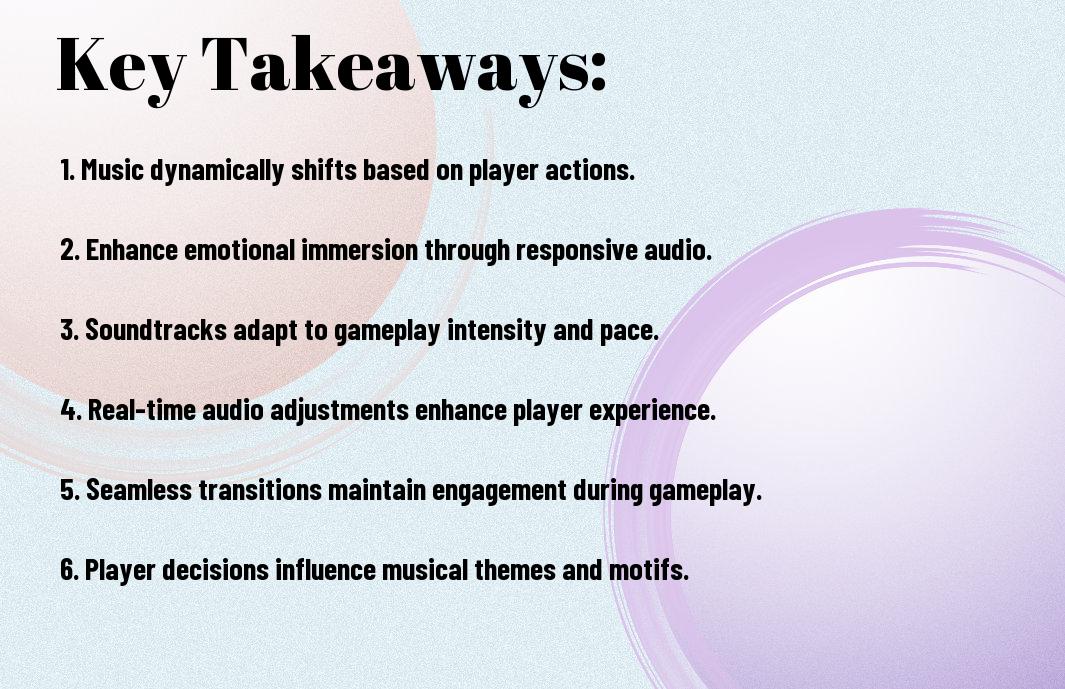
- Adaptive soundtracks are designed to respond to the player’s actions and emotions, creating a more immersive gaming experience by adjusting the music in real-time.
- These soundtracks use algorithms and audio cues to detect changes in gameplay, such as shifts in pace, mood, or environment, and adapt the music accordingly.
- Adaptive music can enhance the emotional impact of a game, making moments of tension or triumph feel more intense and satisfying.
- The technology behind adaptive soundtracks allows for a high degree of customization, enabling developers to create unique musical experiences tailored to their game’s specific needs.
- Adaptive soundtracks can also be used to convey important information to the player, such as warning them of impending danger or highlighting hidden secrets.
- By responding to the player’s actions, adaptive soundtracks can create a sense of agency and interactivity, drawing the player deeper into the game world.
- The use of adaptive soundtracks is becoming increasingly popular in the gaming industry, with many developers incorporating this technology into their games to create a more engaging and dynamic audio experience.
The Foundations of Adaptive Audio
Before plunging into the world of adaptive soundtracks, you need to understand the basics of how music interacts with your gameplay. You’ll discover that adaptive audio is a complex system that enhances your gaming experience by responding to your actions.
Dynamic Music Systems
Following the introduction to adaptive audio, you’ll explore dynamic music systems, which allow your soundtrack to evolve based on your progress and decisions. You’ll find that this technology enables a more immersive experience, as the music adapts to your gameplay style.
State-Based Transitions
Prior to mastering adaptive soundtracks, you should grasp state-based transitions, which enable your music to shift seamlessly between different states, such as exploration or combat. You’ll learn how this technique creates a cohesive and engaging audio experience tailored to your actions.
Even as you explore deeper into state-based transitions, you’ll notice how they allow your music to respond to specific events or changes in your gameplay, creating a unique and dynamic soundtrack that complements your experience. You’ll appreciate how this technique enhances the overall immersion and emotional impact of your game, making your journey even more enjoyable and engaging.
Musical Layers and Intensity
The complexity of adaptive soundtracks lies in their ability to adjust to your gameplay, creating a unique experience each time you play. This is achieved through various techniques that allow the music to shift and change in response to your actions.
Vertical Layering Techniques
Vertically, you can think of adaptive soundtracks as comprising multiple layers of music that can be added or removed in real-time, allowing the soundtrack to swell or diminish in intensity based on your progress and actions.
Horizontal Re-sequencing
At the heart of adaptive soundtracks is the ability to re-sequence music horizontally, allowing the soundtrack to change and adapt to your gameplay in a non-linear fashion, creating a unique experience each time you play.
Hence, as you navigate through the game, the music adjusts to your pace and actions, creating a dynamic and immersive experience that draws you deeper into the game world, with the soundtrack responding to your every move, creating a truly personalized experience.
Player Action Response
Your actions in the game have a significant impact on the adaptive soundtrack, as it adjusts to your every move, creating a unique experience.
Combat and Tension Triggers
Tensely, the music shifts when you encounter enemies, heightening the sense of urgency and excitement, drawing you deeper into the game.
Environmental Adaptation
Triggering a change in the soundtrack, your surroundings influence the music, with different environments calling for distinct melodies and rhythms.
To fully immerse yourself in the game, you’ll notice that the adaptive soundtrack responds to your exploration of new areas, adapting its tone and pace to match the atmosphere of each location, making your experience even more engaging and realistic, as you navigate through the game’s world, your actions and surroundings continually influencing the music.
Emotional Intelligence in Game Music
Many games now incorporate adaptive soundtracks that adjust to your emotions and gameplay, creating a more immersive experience. You can feel the music responding to your actions, intensifying the emotional impact of the game.
Mood Mapping
Around the time you start playing, the game’s soundtrack begins to map your mood, adjusting its tempo and tone to match your emotions, drawing you deeper into the game world.
Character-Based Themes
Musically, the soundtrack can be tailored to your character’s personality, with unique themes that reflect their traits and backstory, allowing you to connect with them on a deeper level.
It is through these character-based themes that you become more invested in the story, as the music evokes emotions and empathy, making your experience more personal and engaging, and you start to feel like you are an integral part of the game’s narrative.
Technical Implementation
Now that you’re familiar with adaptive soundtracks, it’s time to investigate the technical aspects. You’ll need to consider how to integrate this technology into your game, and there are various approaches to achieve this.
Middleware Solutions
Behind the scenes, middleware solutions can simplify the process of implementing adaptive soundtracks. You can utilize existing tools to streamline the integration of dynamic audio into your game, saving you time and resources.
Real-time Audio Processing
About the technical details, real-time audio processing is a key component of adaptive soundtracks. You’ll need to ensure that your game can process and adjust the audio in real-time, responding to the player’s actions and environment.
Audio processing is a complex task, and you’ll need to consider factors such as latency, audio quality, and computational resources. As you research deeper into real-time audio processing, you’ll discover the various techniques and algorithms used to create seamless and immersive adaptive soundtracks, allowing you to enhance your gameplay experience with dynamic and interactive audio.

Impact on Player Experience
To create a more engaging experience, adaptive soundtracks adjust to your actions, making you feel like you’re part of the game. This dynamic music enhances your emotional connection, drawing you deeper into the virtual world.
Immersion Enhancement
Toward a more realistic experience, adaptive soundtracks simulate the atmosphere, responding to your every move, making you feel fully immersed in the game environment.
Psychological Effects
Across various studies, it’s been shown that music has a significant impact on your emotional state, influencing your mood and behavior during gameplay, making you more invested in the outcome.
For instance, when you’re navigating a challenging level, the adaptive soundtrack can intensify, increasing your tension and focus, or, in contrast, provide a soothing melody during exploration, helping you unwind and appreciate the game’s scenery, ultimately affecting your overall experience and enjoyment of the game.
Conclusion
As a reminder, adaptive soundtracks enhance your gaming experience by reacting to your gameplay. You can immerse yourself in a more dynamic environment as the music adjusts to your actions. Your engagement is elevated, creating a unique experience with each playthrough. You will appreciate the personalized touch that adaptive soundtracks bring to your games.
FAQ
Q: What are Adaptive Soundtracks and how do they enhance my gaming experience?
A: Adaptive Soundtracks are dynamic music systems that adjust to your gameplay in real-time, creating a unique and immersive experience. They use advanced algorithms to analyze your actions, progress, and emotions, and respond with music that complements the mood and atmosphere of the game. This technology allows the soundtrack to evolve with your gameplay, making each playthrough feel distinct and engaging. By adapting to your decisions and performance, Adaptive Soundtracks draw you deeper into the game world, amplifying the emotional impact and tension of key moments.
Q: How do Adaptive Soundtracks respond to my gameplay, and what factors influence the music?
A: Adaptive Soundtracks use a variety of factors to determine the music, including your character’s health, the environment, the time of day, and your progress through the game’s story. The system can also take into account your actions, such as combat, exploration, or puzzle-solving, and adjust the music accordingly. For example, during intense combat sequences, the music may become faster-paced and more aggressive, while exploration phases may feature more subdued and atmospheric soundscapes. The goal is to create a seamless and responsive audio experience that enhances your emotional connection to the game.
Q: Can I influence the Adaptive Soundtrack, or is it entirely controlled by the game’s algorithms?
A: While the Adaptive Soundtrack is primarily driven by the game’s algorithms, some games may offer options for you to influence the music. This can be done through in-game choices, character customization, or even external settings. For instance, you may be able to select a preferred music style or adjust the intensity of the soundtrack to suit your mood. Additionally, some games may incorporate player feedback, allowing you to provide input on the music and shape the Adaptive Soundtrack to your liking. However, the core functionality of the Adaptive Soundtrack is designed to be automatic, ensuring a dynamic and engaging audio experience that complements your gameplay without requiring manual intervention.