
As you examine your favorite video game, you may wonder what goes on behind the scenes to bring the game to life. You likely notice the engaging storyline, impressive graphics, and smooth gameplay, but have you ever stopped to think about the people who make it all happen? You are about to discover the unsung heroes of game development, the individuals who work tirelessly to create an immersive experience for you, the player, and shape the gaming industry into what it is today.
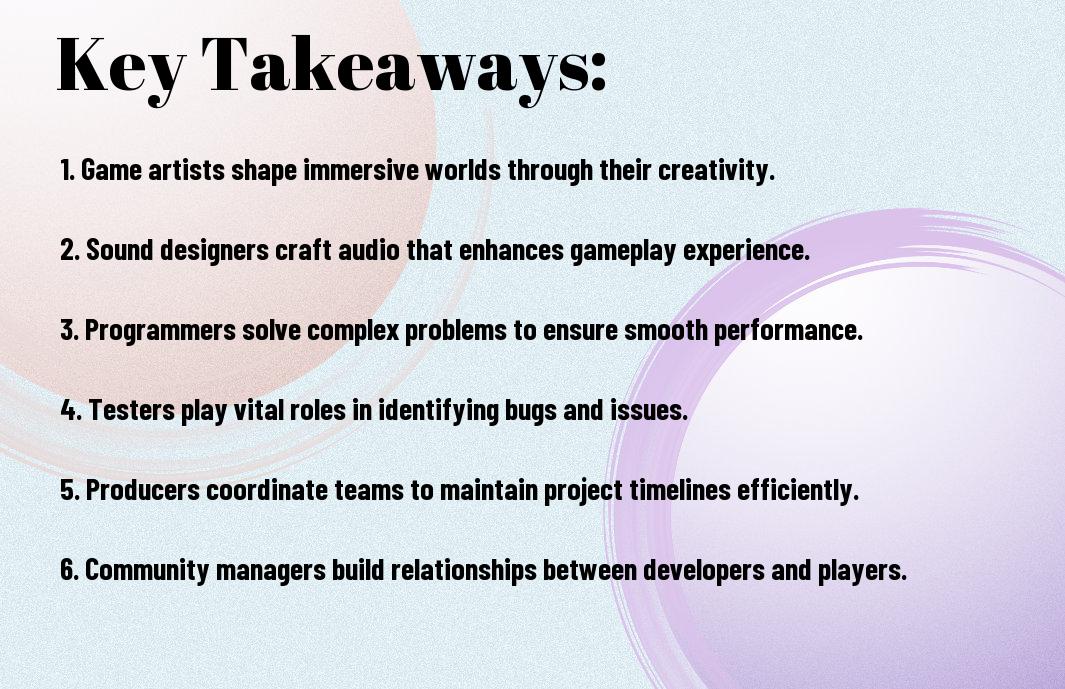
Key Takeaways:
- Game development involves a wide range of roles beyond programming and design, including artists, writers, and testers who contribute significantly to the final product.
- These unsung heroes work tirelessly behind the scenes to ensure that games are polished, engaging, and free of bugs, often without receiving the same level of recognition as other team members.
- Quality assurance testers, in particular, play a vital role in identifying and reporting issues that can make or break a game’s success, yet their work is often underappreciated.
- Localizers and translators are also imperative in making games accessible to a global audience, adapting dialogue, text, and cultural references to suit different regions and languages.
- The work of game developers is highly collaborative, with each team member bringing their unique skills and perspectives to the table to create a cohesive and immersive gaming experience.
- Understanding the diverse roles and contributions of game development team members can foster a greater appreciation for the complexity and effort that goes into creating engaging and interactive games.
- By acknowledging the efforts of these behind-the-scenes heroes, the gaming industry can work towards a more inclusive and equitable environment that values and recognizes the contributions of all team members.
The Engine Room Warriors
To get a glimpse into the world of game development, you need to look beyond the surface level. The engine room warriors are the backbone of the industry, working tirelessly behind the scenes to bring your favorite games to life.
Tools Programmers
Around every corner, you’ll find tools programmers creating software that simplifies the development process, allowing designers and artists to focus on their craft, and you to enjoy a seamless gaming experience.
Build Engineers
Any game’s success relies on the build engineers who ensure that the game is stable, optimized, and runs smoothly on various platforms, giving you the best possible experience.
Hence, as you probe deeper into the world of build engineers, you’ll discover that their role involves collaborating with developers, testing, and troubleshooting to guarantee that the final product meets your expectations, and their attention to detail is what sets great games apart from good ones, allowing you to fully immerse yourself in the gaming world.

Quality Assurance Teams
Now, as you explore into the world of game development, you’ll find that Quality Assurance Teams play a vital role in ensuring your gaming experience is smooth and enjoyable.
Bug Hunters
Alongside these teams, a group akin to detectives, meticulously search for errors, working tirelessly to identify and document issues that might affect your gameplay.
Playtest Coordinators
Above all, the playtest coordinators oversee the testing process, managing schedules and resources to guarantee that your game is thoroughly tested and meets the highest standards.
It is your playtest coordinators who work behind the scenes, organizing and executing playtesting sessions, analyzing feedback, and collaborating with developers to resolve issues, ultimately enhancing your overall gaming experience.
Art Support Specialists
Many game development studios rely on art support specialists to bring their games to life. You may not be familiar with these behind-the-scenes heroes, but their contributions are invaluable to the gaming industry.
Technical Artists
Around the time when a game’s art style is defined, technical artists step in to ensure that the vision is technically achievable, helping you understand how to balance aesthetics with performance.
Asset Managers
Artistically, asset managers play a key role in organizing and maintaining the vast library of assets that you will encounter in a game, from characters and environments to special effects.
Support for your game’s development comes in many forms, and asset managers are there to provide it, ensuring that all assets are properly implemented, updated, and optimized, allowing you to focus on the overall gaming experience.
Audio Engineering Crew
Unlike other aspects of game development, audio engineering is often overlooked, yet it plays a significant role in creating an immersive experience. You can learn more about the unsung heroes of game development at Game Dev Heroes 2025 – Recognising the unsung heroes of the gaming industry, where you’ll discover the talented individuals behind your favorite games.
Sound Implementation Engineers
After the audio assets are created, sound implementation engineers take over, ensuring that every sound effect, music cue, and voice line is perfectly integrated into the game, enhancing your overall gaming experience.
Audio QA Specialists
Across the game development process, audio QA specialists test and refine the audio, identifying and fixing issues to ensure that the sound design meets the highest standards, making your gameplay more engaging and realistic.
A key aspect of audio QA specialists’ work is their attention to detail, as they verify that every audio element, from sound effects to dialogue, is properly implemented and functioning as intended, allowing you to fully immerse yourself in the game world.
Production Support Staff
Keep in mind that production support staff are the backbone of your game development team, ensuring that your project runs smoothly. You can learn more about the importance of these roles by checking out this article on Who are your unsung heroes of game development?
Project Coordinators
Often, project coordinators are the ones who keep your team on track, managing schedules and resources to ensure your game is completed on time and within budget.
Development Operations
Opposite to what you might think, development operations is not just about fixing problems, but also about preventing them from arising in the first place, making it a vital part of your game development process.
Development of a game is a complex process, and having a solid development operations team in place can make all the difference in your project’s success, allowing you to focus on creating an amazing gaming experience for your players.
Localization Teams
After the game’s core development is complete, you’ll find the localization teams working tirelessly to bring the game to a global audience. They ensure that the game’s language, cultural references, and overall feel are tailored to each region, making it accessible and enjoyable for players worldwide.
Cultural Consultants
Concurrently, experts similar to advisors play a vital role in ensuring the game’s cultural sensitivity and accuracy. They help you navigate the complexities of different cultures, allowing your game to resonate with players from diverse backgrounds.
Translation Managers
Meanwhile, professionals similar to coordinators oversee the translation process, guaranteeing that your game’s text, audio, and visuals are accurately translated and localized for each region.
At the heart of the translation management process, you’ll find a team of skilled linguists and project managers who work together to ensure that every aspect of the game is carefully translated and adapted for different languages and cultures, allowing you to fully immerse yourself in the game, regardless of your native language or location.
Summing up
Upon reflecting on the behind-the-scenes of game development, you gain a deeper appreciation for your favorite games. You see the dedication and hard work of the unsung heroes who bring these games to life. As you consider the countless hours and efforts that go into creating an immersive gaming experience, you develop a new respect for the developers, designers, and testers who work tirelessly to ensure your enjoyment. Your understanding of the game development process is now more nuanced, giving you a fresh perspective on the games you play.
FAQ
Q: Who are the unsung heroes of game development and what roles do they play?
A: The unsung heroes of game development are the individuals who work tirelessly behind the scenes to bring a game to life. They include level designers, sound engineers, and QA testers, among others. These professionals are responsible for creating engaging gameplay experiences, composing immersive soundtracks, and ensuring that the game is free from bugs and glitches. Without their hard work and dedication, games would not be the same, and their contributions are necessary to the overall success of a game.
Q: What challenges do the unsung heroes of game development face, and how do they overcome them?
A: The unsung heroes of game development face numerous challenges, including tight deadlines, limited resources, and high expectations from gamers and publishers. To overcome these challenges, they must be highly skilled, creative, and collaborative. For example, level designers must use their expertise to create engaging and challenging levels, while sound engineers must use their knowledge of acoustics and audio design to create an immersive soundtrack. Additionally, QA testers must be meticulous and thorough in their testing to identify and report bugs and glitches. By working together and using their unique skills and expertise, the unsung heroes of game development can overcome the challenges they face and create high-quality games.
Q: How can gamers and the gaming community show appreciation for the unsung heroes of game development?
A: Gamers and the gaming community can show appreciation for the unsung heroes of game development in several ways. One way is to acknowledge their contributions through social media and online forums, highlighting the hard work and dedication that goes into creating a game. Another way is to support game developers by purchasing their games and providing constructive feedback. Additionally, gamers can attend industry events and conferences, where they can meet and learn from the unsung heroes of game development. By showing appreciation and support, gamers can help to boost the morale and motivation of these professionals, encouraging them to continue creating high-quality games that entertain and engage gamers around the world.

